

Millions of citizens in Africa are unable to obtain essential services that they are entitled to as new digital ID systems continue being imposed across the continent, requiring them to provide biometric and personal information, new research reveals.
The systems require them to provide this critical information as a condition of accessing their human rights and government services such as voting, social protection payments, education and healthcare.
Already marginalised groups struggle to register for biometric digital-ID due to disability, illiteracy or associated costs – like mobile data, phone access or electric power for phone charging – further deepening existing inequalities.
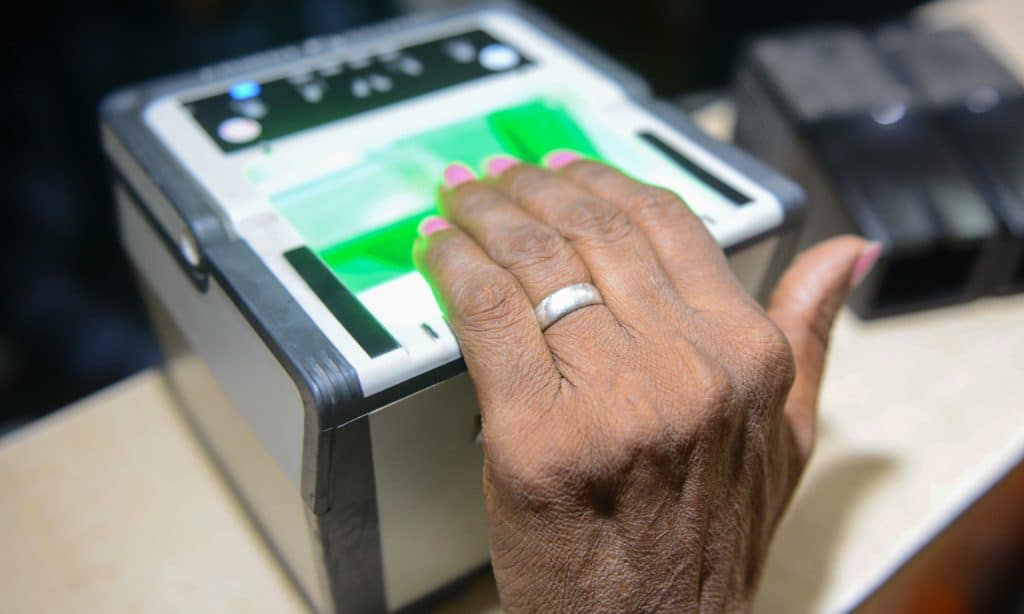
Many citizens also choose not to enrol for biometric digital-IDs, which use identifiers such as fingerprint and iris scans or facial recognition, due to fears of data leaks or mistrust in their government.
The findings come from a new African Digital Rights Network report published by the Institute of Development Studies (IDS). It provides the most comprehensive and up-to-date account of biometric digital-ID use in ten countries across Africa.
Most of the digital-ID systems – estimated to cost at least US$1bn to install across Africa – currently lack adequate legal frameworks to protect citizens from exposure to human rights violations and robust digital security to prevent unauthorised access to sensitive data. They also lack accountability mechanisms for remedy and redress when data entry errors, breaches or system failures occur.
Subscribe to our Telegram channel for the latest updates.
Follow the latest developments with instant alerts on breaking news, top stories, and trending headlines.

Dr Tony Roberts, Research Fellow, Institute of Development Studies and co-editor of the report, said:
“Worryingly, fundamental human rights, like education, healthcare and the right to vote are rapidly becoming conditional on enrolment in biometric digital-ID systems.
“While some may benefit from the convenience of digital-ID systems to access essential services, it is locking out millions of citizens who cannot enrol in biometric digital-ID systems, particularly those with disabilities. Some people with visual impairments have to pay people to help them use their digital-ID on mobile phones to access their social protection payments.”
‘Gbenga Sesan, Executive Director of Paradigm Initiative and co-editor of the report, said:
“Many citizens do not want to enrol for a biometric digital-ID because they have good reason not to trust their governments with their biometrics and personal information. We have found examples of massive data breaches and in some countries personal data used to surveil and target peaceful critics of the government and opposition leaders.
“The interests, rights and freedoms of all Africans, but especially those most directly at risk of exclusion and disadvantage, must be central to any biometric digital-ID systems.”
The research raises questions regarding why governments and tech companies are introducing biometric ID systems across African countries – estimated at collectively costing over one billion dollars to implement – that citizens have not asked for. In some countries, citizens have protested against the systems, and the public opposition has caused delays or difficulties in getting citizens registered for a biometric digital ID.
The authors conclude that as governments adopt biometric digital ID systems to speed up identification and service delivery, robust legislation must first be in place to protect citizens rights and data privacy. Importantly, the research also recommends that biometric digital-IDs should not be imposed top-down but instead be developed in participation with citizens, to ensure that the benefits of digital-ID are shared equitably.
The report ‘Biometric Digital-ID in Africa: Progress and Challenges to Date – Ten Country Case Studies’ includes in-depth studies on the evolving digital-ID systems in ten countries, including Botswana, Namibia, Malawi, Côte d’Ivoire, Senegal, Democratic Republic of the Congo (DRC), Liberia, Ethiopia, Egypt and Tunisia. Each country report is authored by African researchers, coordinated by the African Digital Rights Network in collaboration with Paradigm Initiative.