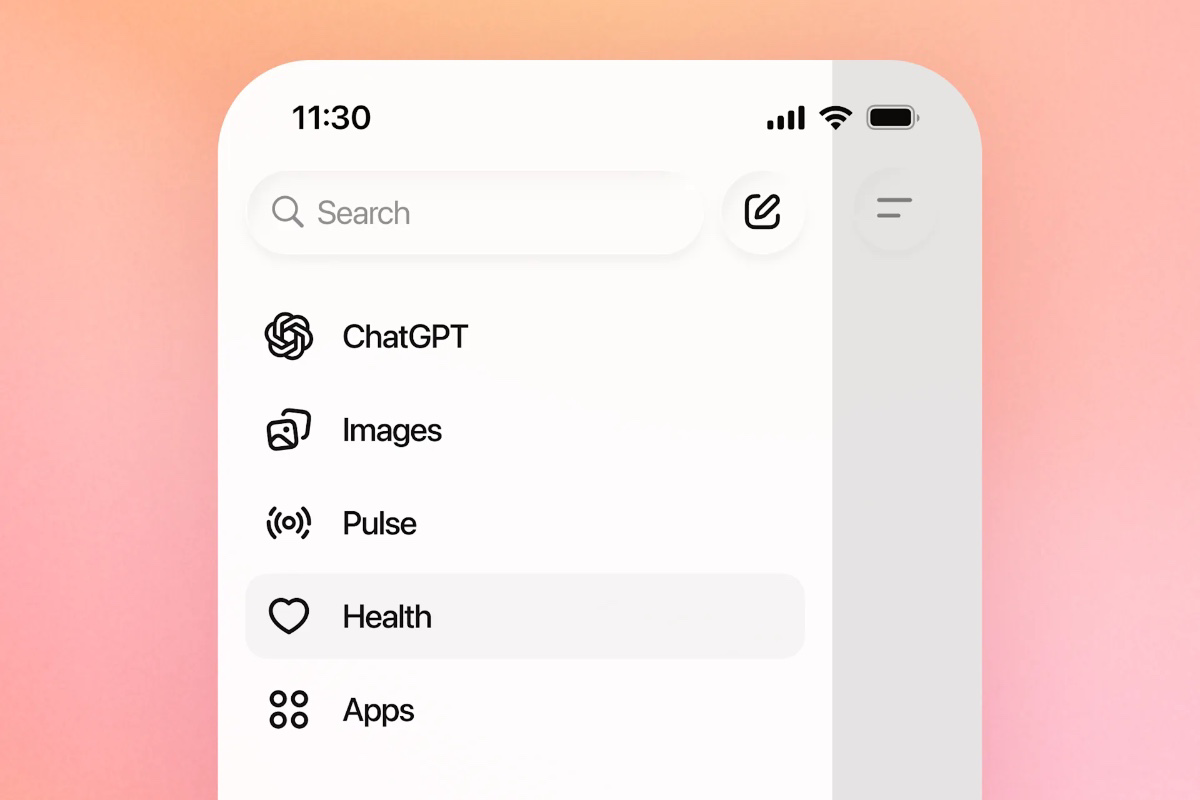
OpenAI has launched ChatGPT Health, a new feature that places health-related conversations in a separate, protected space within ChatGPT.
A direct response to how people already use the service, OpenAI says more than 230 million users ask health and wellness questions every week.
Until now, those conversations sat beside everyday chats. With Health, they are ring-fenced. The company says this separation is meant to stop sensitive health details from appearing in unrelated discussions, while still allowing users to return to them when needed.
The Health section operates as its own environment. If someone begins discussing a medical concern in a regular chat, the system is designed to prompt a move into Health, where added privacy applies.
At the same time, limited context from general chats, such as lifestyle habits or fitness goals, may be used to make health discussions more relevant. The flow works one way only. Health information does not feed back into standard conversations.
A major part of the rollout is data connection. Users will be able to link medical records and wellness apps, including Apple Health, Function and MyFitnessPal, so conversations are grounded in personal information rather than general advice.
OpenAI says these health chats will not be used to train its models, and that the feature uses extra layers of encryption and isolation because of the sensitivity of the data involved.
Fidji Simo, OpenAI’s chief executive for applications, described the product as an answer to long-standing problems in healthcare, including high costs, limited access, overbooked doctors and poor continuity of care.
The aim, she said, is to help people feel more prepared and informed when dealing with their own health, not to replace medical professionals.
However, systems like ChatGPT generate responses based on patterns, not on an understanding of truth, and can sometimes produce inaccurate information. OpenAI acknowledges this risk.
In its own terms, the company states that it is “not intended for use in the diagnosis or treatment of any health condition.”
ChatGPT Health has been developed with input from hundreds of doctors across dozens of specialities, according to OpenAI. Their feedback has impacted how the feature explains results, flags potential risks and encourages follow-up with clinicians when necessary.
Even so, the company stresses that the tool is meant to support everyday understanding, not clinical decision-making.
Access will begin with a limited group of users in the coming weeks, with a wider rollout planned after further testing. Some integrations, including medical record connections, will initially be available only in the United States.