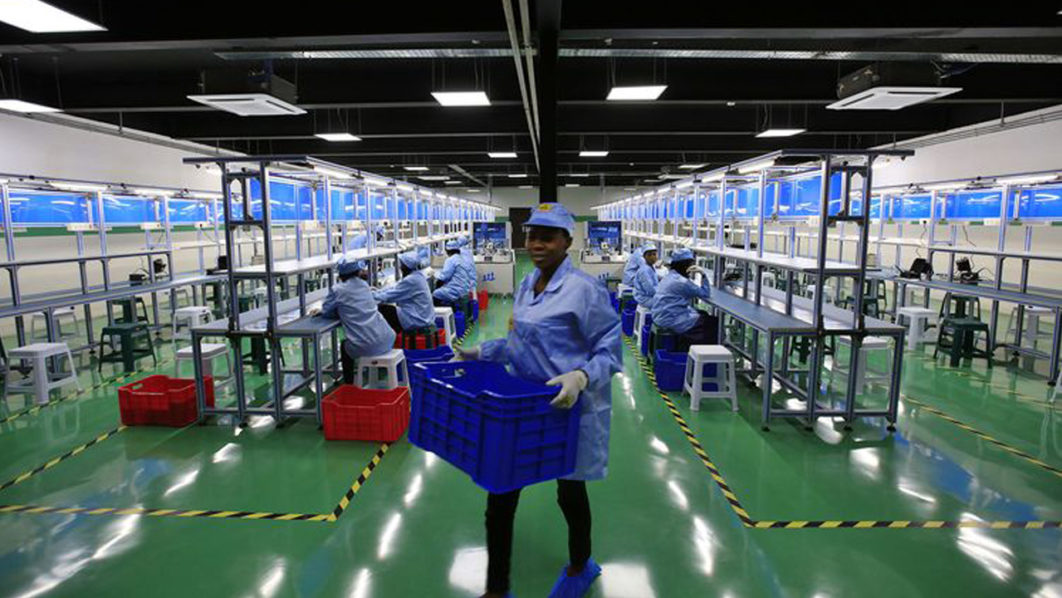
Nigerian industrial plants are currently losing between 10% and 15% of their total energy consumption due to poor maintenance cultures and outdated operational habits. This was the central revelation from a comprehensive Cleaner Production Assessment (CPA) conducted by the Manufacturers Association of Nigeria (MAN) across 42 industries in four geopolitical zones.
The findings, presented during a National Stakeholders’ Sensitisation Workshop in Lagos, highlight a significant gap between Nigeria’s industrial practices and global benchmarks. The study, supported by the GEF-UNIDO Industrial Energy Efficiency (IEE) and Resource Efficiency Cleaner Production (RECP) project, indicates that simple operational adjustments could save factories millions in overhead costs.
The study, which looked into 42 different companies across four geopolitical zones, shows that while CEOs are busy worrying about the next diesel price hike, their factories are literally leaking money through aging pipes, idle machines, and a total lack of data.
Why You Can’t Manage What You Don’t Measure
One of the biggest shockers from the assessment is that most Nigerian factories are operating blind. They have one big utility meter at the gate, but inside the factory, there is almost zero sub-metering.
Obafemi Adejumo, a lead expert who presented the technical findings in Lagos, pointed out that this makes it impossible to pinpoint which production line is the real energy hog. Without sub-meters, a manager cannot tell if a spike in the bill is coming from a faulty motor in the basement or an air conditioner left running in an empty boardroom.
Adejumo called this a serious data gap. The study suggests that if factories just started tracking energy by department, they could save an average of 500 megawatt-hours per plant every year. In an economy where every kobo counts, that is a massive amount of lost profit that could be recovered just by paying attention to the numbers.
The Silent Killers: Air Leaks and Steam Waste
The audit didn’t just look at the bills; it went onto the factory floors to see where the physical waste was happening. It turns out that compressed air systems the invisible force that powers everything from bottling lines to heavy tools are the biggest offenders.
According to the report, these systems account for 25% of all electricity waste in Nigerian plants. Most of this isn’t because the machines are old, but because they are leaking.
Other areas where energy simply vanishes include:
Steam Systems: These accounted for 30% of losses due to poor insulation and leaky valves.
Lighting: Inefficient bulbs and lights left on in broad daylight add another 18% to the waste pile.
Idle Equipment: In sectors like textiles and leather, machines are often left humming for hours while workers are on break or waiting for raw materials to arrive.
In one real-life example from a food plant in Lagos, the audit team found so many air leaks that fixing them allowed the company to shut down one entire compressor. That is an instant, massive drop in the daily electricity and diesel spend, achieved without buying a single new machine.
Water: The Free Resource That Actually Costs Millions
It isn’t just power being wasted. Jacob Oladipo, the National Project Coordinator for the GEF-UNIDO project, warned that Nigerian manufacturers have a very dangerous habit of treating water as if it is free.
Most factories pump water from boreholes and don’t bother to meter it. They use fresh water for a single task and then send it straight down the drain. Oladipo argued that by recycling water a core part of the ISO 14001 standard factories could slash their pumping costs and reduce their environmental impact.
“If you don’t know how much you are using, you have no idea how much you are throwing away,” he warned.
Survival of the Smartest: A Message for the Boardroom
For Segun Ajayi-Kadir, MAN’s Director-General, this isn’t just a technical issue it’s a survival issue. With the African Continental Free Trade Area (AfCFTA) in full swing, Nigerian goods won’t stand a chance against cheaper imports if our local production costs are bloated by 15% waste.
Duro Kuteyi, the CEO of Spectra Industries Ltd, echoed this, saying the audit has finally shown industrialists exactly where they are “losing money.” The takeaway is clear: energy efficiency isn’t just a job for the engineers in overalls. It’s a boardroom priority. Whether it’s catching the waste heat from a generator to use in a boiler or just fixing a N5,000 pipe leak, the era of ignoring the small things is over.