

Instant payment systems in Nigeria now handle more than a billion transactions annually, revealing how strongly digital finance has taken root across the country.
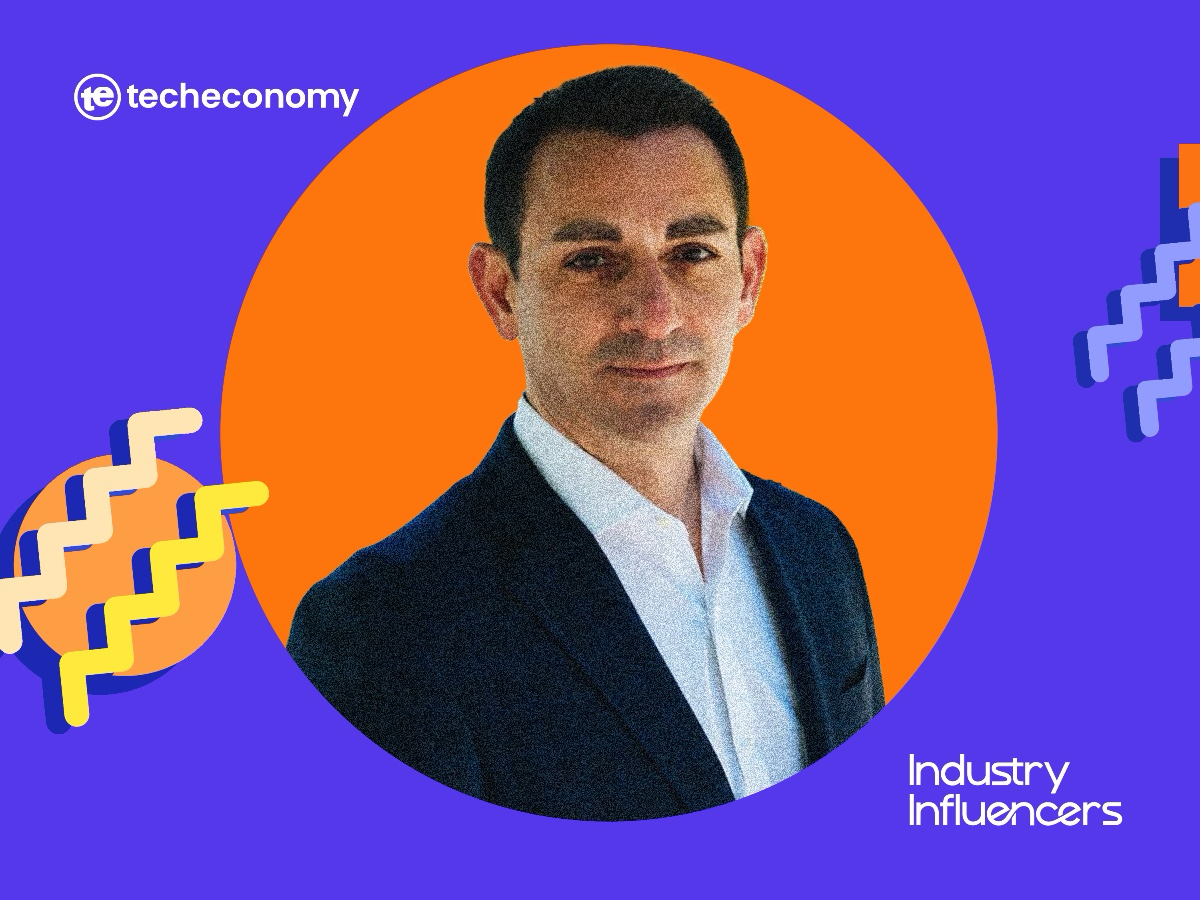
In a conversation with Brad Levy, chief executive of ThetaRay, a company focused on the “wiring” of trust through AI-powered monitoring that helps banks and fintechs scale safely while detecting and reporting financial crime, we examined what this speed means for risk, regulation, and trust in the financial system.
Levy argues that old ways of tracking money flows no longer hold up.
Nigeria’s banking and fintech sector has expanded, almost faster than the systems built to regulate it. Payments now move in seconds, and fraud patterns move just as quickly.
Regulators are responding with stronger policies and expectations.
For Levy, the transition is apparent. Systems built for manual checks cannot keep pace with today’s transaction volumes or the complexity of digital crime networks. He describes a system under stress, where scale has exposed the limits of human-led monitoring.
Across banks and fintechs, the gap in readiness varies. Some institutions are already adopting artificial intelligence and real-time oversight. Others still rely on older compliance models that struggle to connect customer data with live transaction behaviour.
The Central Bank of Nigeria’s recent direction on automated anti-money laundering (AML) systems sets a firm line, forcing the industry to move from gradual improvement to immediate action. Institutions now have to rethink how they see compliance, not as a back-office task, but as core infrastructure.
In this interview, Levy, who has spent his career building the plumbing of the global financial markets, first with nearly two decades at Goldman Sachs, then leading Symphony and MarkitSERV, explains what has changed, what still slips through the cracks, and why Nigeria’s approach may affect how digital finance is policed far beyond its borders.
TE: The Central Bank’s move makes automated AML systems effectively non-negotiable. From your vantage point, what changed in the risk sector to push regulators from guidance to outright mandates?
Brad Levy (BL): The math simply stopped working for manual oversight. Nigeria has one of the most vibrant digital payment ecosystems in the world. You can’t monitor millions of instant transactions using spreadsheets and human eyes.
The CBN’s March 2026 mandate recognises that guidance doesn’t stop automated, bot-driven crime. By mandating these systems, Nigeria is making a strategic move to protect the integrity of the Naira and ensure the country stays effectively connected to the global financial map.
TE: You’ve worked closely with financial institutions in Nigeria, where do most banks and fintechs actually stand today in terms of AML capability, and how wide is the gap?
BL: The divide is significant, though it’s closing fast. We see forward-leaning institutions like Sterling Bank already moving toward a future-proof posture by putting AI at the centre of their monitoring. On the other hand, plenty of firms are still stuck in a “box-ticking” mindset.
The gap is most obvious when you look at the CBN’s anti-money laundering automation mandate. Most legacy systems can’t provide a unified view of the customer or link KYC/KYB data to transaction behaviour.
The 18-month window for banks is tight, but the real pressure is the three-month requirement to submit a roadmap. If financial institutions haven’t started their gap analysis yet, they’re already behind.
TE: There’s a lot of talk about AI in compliance, but in practical terms, what kinds of financial crime patterns are still slipping through traditional monitoring systems that AI is better at catching?
BL: Traditional systems are built on rules. They look for what we already know, like whether a transfer is over a certain dollar amount. Modern criminals have moved past that. They use smurfing or complex networks of mules to make illicit flows look like normal, low-value activity. AI catches the anomalies.
It identifies patterns that look wrong even if we haven’t seen that specific tactic before. For a bank, it’s the difference between chasing 5,000 false alarms and actually finding the criminal network hidden in the noise.
TE: For Nigerian institutions, this goes beyond a tech upgrade to an operational shift. What are the biggest implementation challenges you’re seeing on the ground, especially around data quality, cost, and internal expertise?
BL: The biggest hurdle is fragmented data. AI is only as good as what you feed it, and many institutions have their KYC data sitting in a different silo than their transaction logs. There is also a lingering perception that compliance is just a “tax” on doing business.
I argue it’s a strategic asset. When you use AI to reduce false positives by 90%, you aren’t just satisfying the CBN; you’re making the entire bank more efficient. Your investigators can finally focus on real risks instead of low-value busywork.
TE: Do you see this directive as a Nigeria-specific response or part of a regulatory change across Africa? And how might it reshape expectations for cross-border transactions over the next few years?
BL: Nigeria is the blueprint for the continent. We’re seeing similar shifts everywhere, from the EU’s new AML Authority to tightening rules in the US. This is Nigeria’s “mobile phone” moment. Just as the continent skipped landlines to go straight to mobile, Nigeria is leapfrogging the failing, manual era of compliance.
By hard-coding AI and transparency into the banking system, Nigeria is making itself a much safer destination for global capital. This mandate turns compliance into a bridge for international trade rather than a barrier.