
The screens in trading rooms flickered with uneasy calm on Wednesday. Oil prices hovered around $95 per barrel, steady, but tense, like a held breath across global markets.
Thousands of miles away, in policy circles and financial institutions, the implications were already clear. The Middle East, long a fault line for global energy supply, was once again stirring with uncertainty. Whispers of disrupted shipments and escalating tensions were enough to keep investors cautious, governments alert, and vulnerable economies on edge.
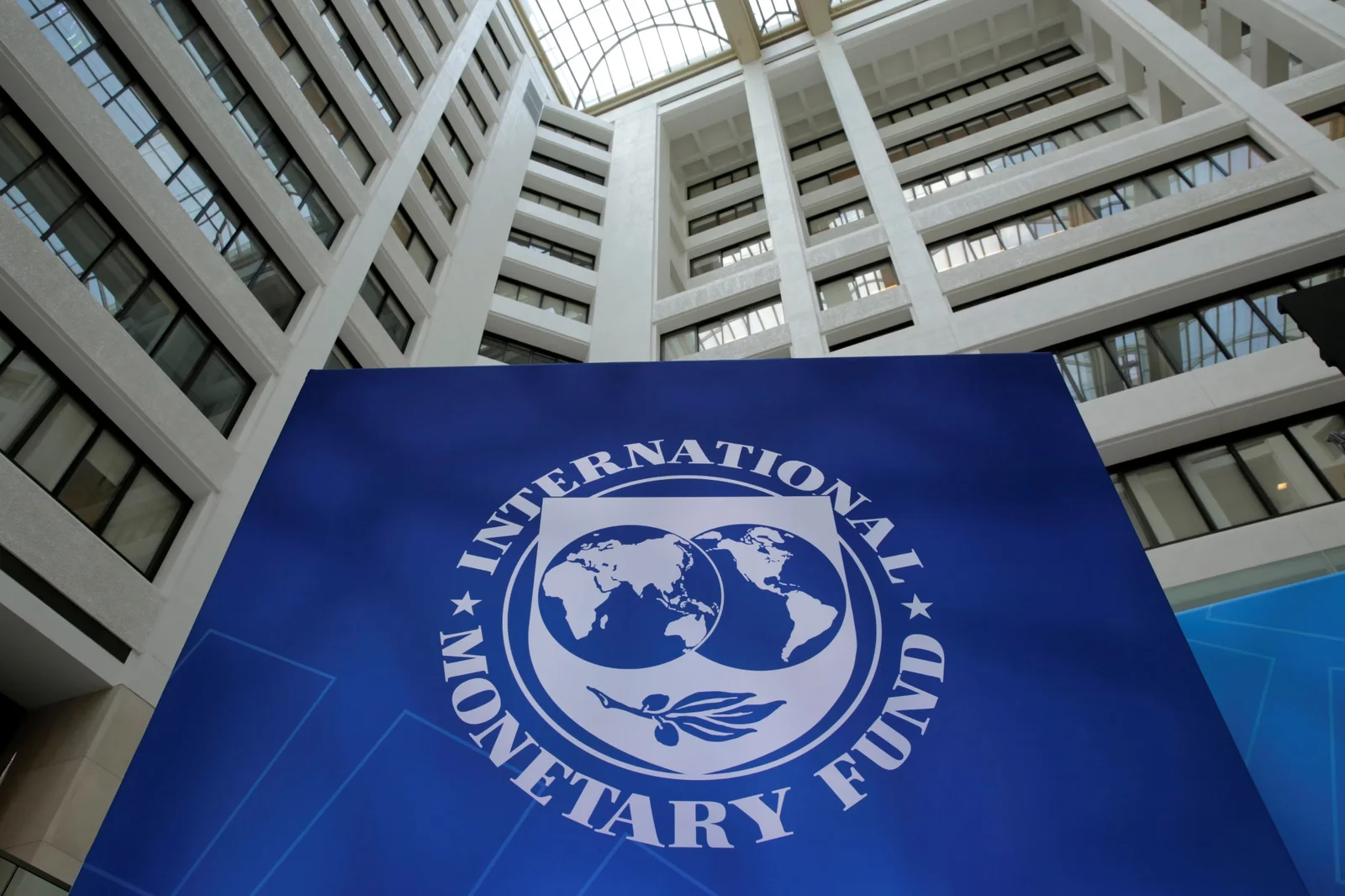
In Washington, officials at the International Monetary Fund (IMF) had been watching closely. For countries like Nigeria, where public finances and economic stability remain closely tied to global oil dynamics, the stakes were particularly high.
Behind closed doors, conversations were shifting from observation to action.
By Tuesday, the Fund signalled it was preparing a substantial financial buffer, potentially as much as $50 billion, to support Nigeria and other at-risk economies.
The aim was not to eliminate the shock, but to soften its impact: to give governments room to breathe if oil markets turned volatile, and to steady economies that could be shaken by forces far beyond their borders.
The timing was deliberate. While there were faint signs of diplomatic engagement between the United States and Iran, offering a glimmer of de-escalation, the broader outlook remained uncertain. One misstep in the region could tighten supply, spike prices, and send ripple effects across already fragile economies.
So the world waits—markets steady but cautious, policymakers alert, and institutions like the IMF quietly positioning themselves for what might come next.
Because in a global economy so deeply interconnected, a tremor in one region rarely stays there.
However, oil traders are closely watching developments after comments from US President Donald Trump suggesting that the Iran conflict may be “very close to over,” a statement that has helped temper short-term panic in energy markets.
But amid the uncertainty, the Managing Director of the IMF, Kristalina Georgieva, yesterday disclosed that the multilateral institution was considering a range of support measures for Nigeria and other vulnerable African economies that are presently burdened by the fallout from the escalating Middle East crisis, which has deeply strained macroeconomic conditions in a lot of energy-importing countries.
Speaking at the unveiling of the ‘Global Policy Agenda’ during the ongoing IMF/World Bank Spring Meetings in Washington DC, she indicated that the Fund was preparing to scale up its crisis response, with potential financing support projected at between $20 billion and $50 billion for countries facing heightened external shocks and limited fiscal space.
Georgieva said: “Let me first say that we have been very loud on the asymmetric impact of this war, and I have in my office a map of countries and where they fall in terms of their dependency on imports and their fiscal space.
“And it pains me that the majority of sub-Saharan African countries are in this quadrant of vulnerability, and therefore we are very determined to use this week to identify which are the countries that most urgently need support and then come out of the week with discussions around the way we would support them.
“But let me emphasise that the most important thing we do for our members is to help them help themselves, to have strong policies during good times, to build buffers so that during bad times, they can protect their people. And I am impressed by how much countries have done, including countries in Sub-Saharan Africa.
“We have been closely watching the events in the Middle East. The war has already caused immense hardship and pain for people in the region and around the world. This is an asymmetric shock, with the biggest burden falling on countries that import energy and have limited policy space. In many cases, these are low-income or fragile economies. These economies need attention and an important focus of our discussions this week is how we can best support them.
“As our Global Policy Agenda makes clear, the IMF serves as the firefighter for our member countries, and we are committed to helping them navigate this complex landscape.
“We anticipate near-term demand for IMF financial support to range from $20-$50 billion. This represents prospective demand for new programmes from at least a dozen countries, most of them in Sub-Saharan Africa.”
She reiterated that the fund was coordinating closely with the International Energy Agency (IEA), the World Bank, and other partners, including at the regional level, to maximise a combined response in mitigating this crisis.
The IMF boss further noted that in the short term, maintaining macroeconomic and financial stability was key. According to her, while countries were naturally inclined to act boldly in response to a supply shock, they are advised to look before leaping.
Georgieva said: “On monetary policy, for countries where monetary policy was well calibrated before the shock and expectations remain anchored, ‘wait and see’ is the right approach. In other countries, early policy action may be required.
“On fiscal policy, we have been warning for some time that public debt is constraining fiscal space. Global public debt is on track to breach 100 percent of GDP in 2029, a level not seen since the aftermath of World War II.
“So, to maintain their fiscal policy credibility, policymakers need to strike a careful balance between safeguarding fiscal sustainability and protecting the most vulnerable. The good news is that many countries have so far avoided untargeted tax cuts, energy subsidies, and price controls.”
Georgieva revealed that she had a meeting with African Consultative Group on Tuesday, with ministers and central bank governors seeking policy advice.
Georgieva urged nations that need help financially not to hesitate to ask, so as to protect their economies and their people.
At a separate briefing on the Fiscal Monitor, Division Chief, Fiscal Affairs Department, IMF, Davide Furceri, pointed out that fiscal pressures were expected to persist, although unevenly distributed, with a clear divergence between oil-importing and oil-producing countries.
For oil exporters such as Nigeria, higher crude prices could generate temporary windfalls, he stressed, highlighting the importance of deploying such gains prudently to rebuild fiscal buffers and ease debt pressures.
Furceri said: “In Africa, we have seen not only energy prices going back, but we have also seen fertiliser prices going down, see increase in shipping costs. And these are the increasingly different types of prices. So, they are going to reduce output production, but also consumption. And in some countries that are more vulnerable, is a risk that is going to affect poverty and food security.
“So, the fiscal pressures stemming from all these costs are not likely to be federal. However, again, there is a differentiation between oil desperate countries, such as, for example, Nigeria, or other countries for which the oil price is going to generate some windfall.
“In those cases, it’s important these countries use this with windfall in revenue to clear as earlier and be the fiscal buffer and reduce interest rate. In the case of Nigeria, as well as other countries that have implemented the subsidy reform, (this) implies that the fiscal cost from increased energy prices is going to be lower.”
(Source: ThisDay)