
ADVERTISEMENT
Thursday, April 16, 2026
Tech | Business | Economy
  • Login
No Result
View All Result
  • Technology
    • Trends
    • Telecoms
      • Broadband
    • ConsumerTech
      • Gadgets and Appliances
      • Apps
      • Accessories
      • Reviews
      • Unboxing
    • EnterpriseTECH
    • Security & Data Protection
    • How To
    • GameTech
  • Business
    • Company News
    • StartUPs
      • Founder’s Story
      • Funding
    • Deals
    • People & Moves
    • SME & Entrepreneur Focus
      • BUSINESS SENSE FOR SMEs
    • Competition & Market Positioning
    • Commerce & Mobility
    • Travel
    • WomenPreneurs
  • Economy
    • Macroeconomic Trends
      • Macro Monday
      • TE Insights
    • Finance
      • Banks
      • Fintech
      • Insurance
      • Digital Assets
      • Personal Finance
    • Policies
      • Tech & Society
    • Market Analysis
    • Jobs & Workforce Economy
  • Features
    • Guest Writer
      • Chidiverse
      • Digital Assets
    • EventDIARY
    • IndustryINFLUENCERS
    • MarkTECH
    • TBS
    • NewsEXTRA
  • Editorial
  • Brand Content
  • TECHECONOMY TV
  • Multilanguage switcher
Thursday, April 16, 2026
Tech | Business | Economy
No Result
View All Result
Tech | Business | Economy
No Result
View All Result

Home » Africa’s Forex Market in 2026: Key Trends Every Trader Should Watch

Africa’s Forex Market in 2026: Key Trends Every Trader Should Watch

Here are six worth paying close attention to.

Destiny Eseaga by Destiny Eseaga
April 16, 2026
in Market Analysis
Reading Time: 4 mins read
0
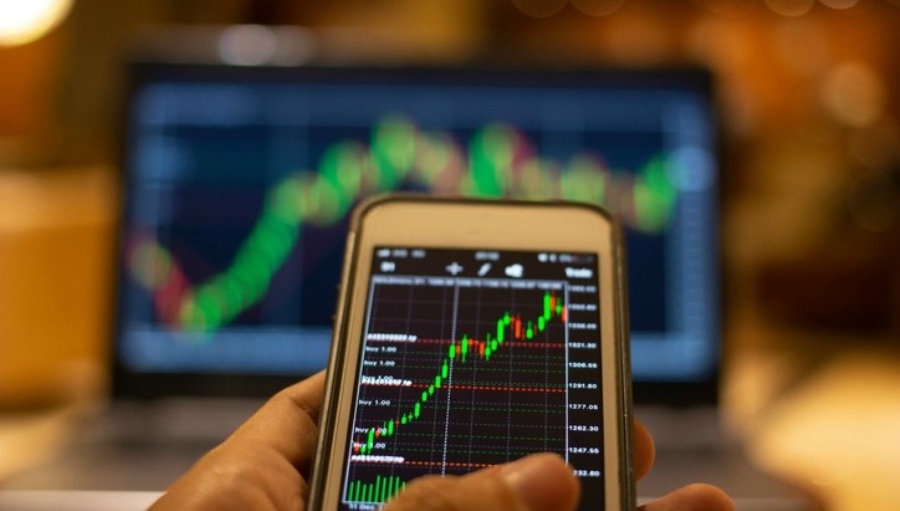
Forex trading

Forex trading

The forex market across Africa is witnessing more participants and more regulatory attention than it did just a few years ago.

This growth is part of a bigger picture: Sub-Saharan Africa is expected to expand by 4.3% in 2026, while global forex turnover already hit an estimated $9.6 trillion daily in April 2025. However, there’s more to it than macroeconomic figures.

The trends reshaping the market are happening from within. Here are six worth paying close attention to.

1. Trading Has Moved to the Phone

The number of people accessing the market via mobile phones exceeds those accessing it via traditional bank systems. GSMA states that in Sub-Saharan Africa alone, there are more than 1.1 billion registered mobile money accounts.

The International Monetary Fund states that digitalisation and increased usage of the internet are changing payment systems in the Sub-Saharan Africa region.

Subscribe to our Telegram channel for the latest updates.

Follow the latest developments with instant alerts on breaking news, top stories, and trending headlines.

Join Channel

Mobile access changes traders’ behaviour. It lowers the barrier to entry and speeds up deposits and withdrawals. Therefore, brokers who can provide a quality mobile trading experience will have a huge advantage.

2. Regulators Are Watching

The market is becoming more structured and more transparent. In South Africa, the FSCA regulates market conduct for financial institutions. In Kenya, the Capital Markets Authority regulates capital markets and maintains a licensing system that includes online forex brokers.

Nigeria’s SEC has publicly warned that online retail forex trading can be subject to abuse when unregulated. It also provides tools for investors to check operators’ registrations.

As a result, in 2026, more traders are likely to favour brokers that can show clear licensing, transparent operations, and stronger investor safeguards.

3. Volatility Varies by Country

A common mistake is perceiving the African market as one entity. In reality, according to RegTech Afrika, there are 21 countries out of a total of 54 that have a chance of seeing their currencies depreciate in 2025, with some of them losing value by as much as 6% or more.

A trader watching the rand, naira, shilling, or cedi, regional headlines needs more than regional headlines. Country-level macro data, central bank moves, and the US dollar will still play a major role.

4. Cross-Border Payment Infrastructure Is Quietly Improving

Platforms like PAPSS are helping make payments across African countries faster and easier to complete in local currencies. According to official announcements of PAPSS, it has become operational in 18 countries across Africa, with its latest launch in Algeria in 2025.

It has also become operational in Kenya through a partnership with KCB Group, as well as in Rwanda through a partnership with Bank of Kigali.

Step by step, Africa is becoming a more financially connected continent.

5. Execution Quality Is the New Standard

Data from the BIS shows that in April 2025, three-quarters of FX trades were intermediated by the global centers of the United Kingdom, the United States, Singapore, and Hong Kong. Therefore, the best liquidity and best prices are still linked to global conditions.

For local markets, this raises the bar. Forex traders are becoming increasingly aware that tight spreads, while important, mean little without reliable prices and execution.

Brokers like JustMarkets that can bring all of these elements together are in a much stronger position than competitors.

JustMarkets Trading app

6. Education as a Necessity

Regulatory disclosures from major global brokers illustrate how tough it is to trade without proper knowledge.

According to publicly available disclosures, between 70% and 80% of retail investor accounts lose money when trading CFDs.

Forex traders who understand risk management and which financial news to follow have a better chance of surviving the market.

Brokers who invest in education are more likely to be seen by traders as valuable partners rather than mere facilitators.

The Market Rewards the Prepared

Africa’s forex market in 2026 is shaped by volatility, stricter rules, and mobile-first trading. The traders who combine market knowledge with the right tools and the right broker will find real opportunity here, while those who don’t adapt will find the market increasingly unforgiving.


0Shares

Previous Post

Building Systems that outlive Founders

Next Post

Creating Safer Digital Spaces is our Collective Responsibility

Destiny Eseaga

Destiny Eseaga

My name is Destiny Eseaga, a communication strategist, journalist, and researcher, deeply intrigued by the political economy of Nigeria and the broader world context. My passion lies in the world of finance, particularly, capital markets, investment banking, market intelligence, etc

Related Posts

IMF Raises Nigeria’s Economic Growth Forecast to 4.4% from 4.2% | Downgrades Nigeria's 2026 Growth

IMF Downgrades Nigeria’s 2026 Growth to 4.1%

April 15, 2026
counting naira new notes - capital inflows | Nigeria and European Tech Giant | Naira performing currency in Africa

ANALYSIS: Naira Emerges Africa’s Second Best Performer amid US/Iran Conflict

April 13, 2026

How Africa’s Top 10 Economies Compare on Data, Voice & SMS Tariffs

April 13, 2026
Load More
Next Post
Lilian Kariuki TikTok SSA Safety Advisory Council (Online)

Creating Safer Digital Spaces is our Collective Responsibility

Leave a Reply Cancel reply

Your email address will not be published. Required fields are marked *

I agree to the Terms & Conditions and Privacy Policy.

This site uses Akismet to reduce spam. Learn how your comment data is processed.

Techeconomy Podcast
Techeconomy Podcast

The Techeconomy Podcast is a thought-leadership show exploring the powerful intersection of technology, business, and the economy, with a strong focus on Africa’s fast-evolving digital landscape.

BUILDING TRUST IN AFRICA ECOSYSTEM
byTecheconomy

Africa’s digital economy is growing fast, but growth without trust cannot last.Join us for the February Edition of the Techeconomy Business Series as industry experts explore how trust, security, innovation, and user experience are shaping Africa’s evolving digital ecosystem.

BUILDING TRUST IN AFRICA ECOSYSTEM
February 27, 2026
Techeconomy
Navigating a Career in Tech Sales
January 29, 2026
Techeconomy
How Technology is Transforming Education, Health, and Business
November 27, 2025
Techeconomy
INNOVATION IN MOBILE BANKING
October 30, 2025
Techeconomy
The Rise of AI: Impact on Jobs & Businesses
September 25, 2025
Techeconomy
Search Results placeholder
  • About Us
  • Careers
  • Contact Us

© 2026 TECHECONOMY.

No Result
View All Result
  • Technology
  • Business
  • Economy
  • Features
  • Editorial
  • Brand Content
  • TECHECONOMY TV

© 2026 TECHECONOMY.

Welcome Back!

Login to your account below

Forgotten Password?

Retrieve your password

Please enter your username or email address to reset your password.

Log In
This website uses cookies. By continuing to use this website you are giving consent to cookies being used. Visit our Privacy and Cookie Policy.