As organisations across Africa intensify their focus on financial discipline, cost optimisation, and governance, a critical vulnerability is becoming increasingly apparent: the lack of accurate, real-time visibility into IT assets such as laptops, desktops, and distributed computing equipment.
In many African organisations, assets are deployed across cities, regions, and in some cases countries often without a consistent mechanism to verify their status in real time.
In environments shaped by distributed operations, varying infrastructure conditions, and increasingly mobile workforces, maintaining an accurate view of assets has become significantly more complex.
At the same time, businesses are under pressure to maximise existing capital, delay unnecessary procurement, and extract greater value from deployed assets.
Despite this, many organisations continue to rely on static asset registers and manual tracking processes that fail to reflect operational reality.
The result is a growing disconnect between what is recorded on balance sheets and what actually exists within the business assets that cannot be verified, devices that are unaccounted for, and capital tied up in resources that are not delivering value.
“This is a silent but significant challenge,” said Valene Nagiah, head of Asset Tracking and Management at V-Track. “Many organisations believe they have asset visibility, but in practice, they are operating on assumptions. In environments where teams are distributed and assets are constantly moving, those assumptions quickly break down.”
Across key African markets in Southern, East, and West Africa, organisations are managing increasingly complex asset environments without the systems required to maintain continuous visibility. As digital transformation accelerates, this gap is becoming more pronounced turning what was once an operational issue into a financial and governance priority.
This lack of visibility is increasingly being linked to measurable business impact, including avoidable procurement spend, underutilised assets, audit exposure, and heightened security risk. In environments where assets move between offices, remote locations, and employees, gaps in visibility can quickly translate into both financial loss and operational vulnerability.
In response, organisations are beginning to shift away from periodic audits and spreadsheet-based tracking toward continuous, intelligence-driven asset management.
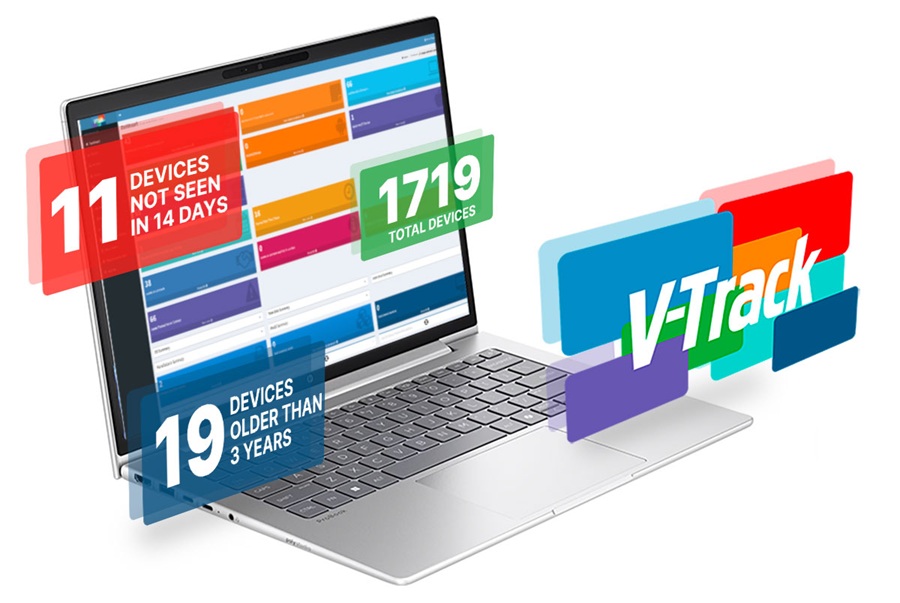
V-Track, an established asset intelligence platform supporting organisations across African markets, is enabling this shift by moving asset management from static record-keeping to real-time, verifiable control.
The platform allows organisations to:
- Verify the existence, location, and status of assets in real time
- Align IT asset data with financial reporting and audit requirements
- Identify and recover underutilised or unaccounted assets
- Strengthen governance, compliance, and cybersecurity frameworks
- Optimise capital allocation through accurate utilisation insights
“What is changing is the expectation of control,” added Valene Nagiah. “IT assets are no longer just operational tools they are financial assets that need to be actively managed. Organisations that can continuously verify and track these assets are able to reduce waste, improve accountability, and make better financial decisions.”
The challenge is particularly pronounced in African operating environments, where organisations often manage assets across multiple regions, remote locations, and decentralised teams. Without continuous visibility, maintaining accurate records and ensuring accountability becomes increasingly difficult.
Combined with rising cybersecurity risks and tighter regulatory scrutiny, this creates a growing imperative for organisations to ensure that every asset is accounted for, secured, and delivering value throughout its lifecycle.
In this context, IT asset visibility is fast becoming a foundational layer of financial and operational control. Organisations that close this gap are better positioned to improve governance, reduce unnecessary expenditure, and strengthen overall business resilience.
“Organisations that cannot see their assets cannot control their costs,” said Nagiah. “Closing that visibility gap is no longer optional it is essential to operating effectively in today’s environment.”
V-Track supports organisations in bridging this gap by providing continuous, accurate insight into asset environments and enabling finance and IT teams to operate with greater alignment, accountability, and control.