


For more than 20 years, accessing the internet has worked almost the same way. You type something into the Google Search bar and Google returns a variety of links that suit what you want.
This experience has become very popular and familiar so much so that “Googling” itself turned into a globally used verb.
However, according to Google, that era is now changing permanently or maybe redefined.
During the keynote presentation by Liz Reid at this year’s edition of the Google I/O event, she officially declared that Google Search is now AI Search; a statement that shows the trajectory of the internet currently.
It was not just marketing language; it represents the biggest transformation of Google Search since the company launched in 1998.
What Exactly Does this Mean?
Google Search has evolved many times over the years. From voice search, to image recognition and, recently, AI overviews. However, these upgrades cannot be compared with the scale of what was announced at the Google I/O 2026 event.
Google is not just adding AI features to search like the recent AI overviews. This time, the company is redesigning the entire interface around AI itself.
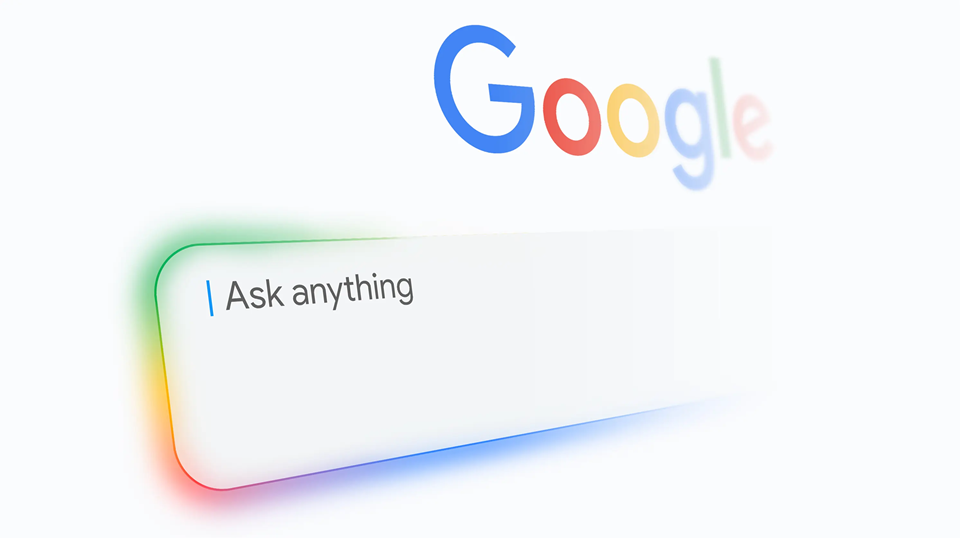
The main part of this transformation is the newly redesigned search box which is now powered deeply by Gemini. For the first time in nearly 25 years, Google is changing not only how the Search Bar looks, but also how it behaves.
Instead of encouraging short keyword phrases, the new Search interface is now optimised to be more conversational. This implies that users can now ask longer and more detailed questions naturally and get answers. They can also follow up with previous queries without needing to start all over again in a new tab.
Gemini will also be able to perform tasks directly from within the search itself, making it feel less like a tool for finding websites to a personal assistant.
Some of the new Google Search features announced at the Google I/O 2026 include:
- AI agents inside Search that can help users complete tasks like booking restaurants, purchasing tickets, researching products or planning activities automatically.
- More Personal Intelligence support, allowing Gemini-powered Search to understand a user’s preferences more deeply and personalise responses across more regions globally.
- A smarter AI shopping experience featuring an intelligent shopping cart that can track the prices of specific products and compare them, and even help complete purchases automatically.
- More advanced conversational follow-up capabilities that allow users to continue refining searches naturally without repeating information multiple times.
Naturally, this raises concerns.
For some time now, publishers, creators and webmasters have worried about the growing dominance of AI overviews in Google Search results.
People fear that if Google continues to answer questions from users directly using AI, fewer people may actually visit websites. And honestly, this is very understandable, even Google recognises this.
So the company repeatedly emphasised during the I/O 2026 that classic search results are not disappearing anytime soon. This is good news for users who still prefer exploring the internet manually.
According to Google, AI Search is supposed to improve information discovery, not try to replace the open web entirely.
The company also argues that AI-powered Search can actually help users ask better questions, discover deeper information faster and complete tasks more efficiently than before.
Google believes the future of Search is not about removing websites, but about reducing friction between users and information.
However, what is undeniable, is that Google Search has entered its biggest identity shift in its history. For over 25 years, Google defined what searching the internet looked like. Now the company is trying to change it again for the AI era.



