Wealth continuity is not merely a family matter but an economic one, Francis Onyemachi writes:
A new report has highlighted a growing concern in the future of many Nigerian family-owned businesses, warning that inadequate succession planning and heavy dependence on founders could put decades of wealth creation at risk.
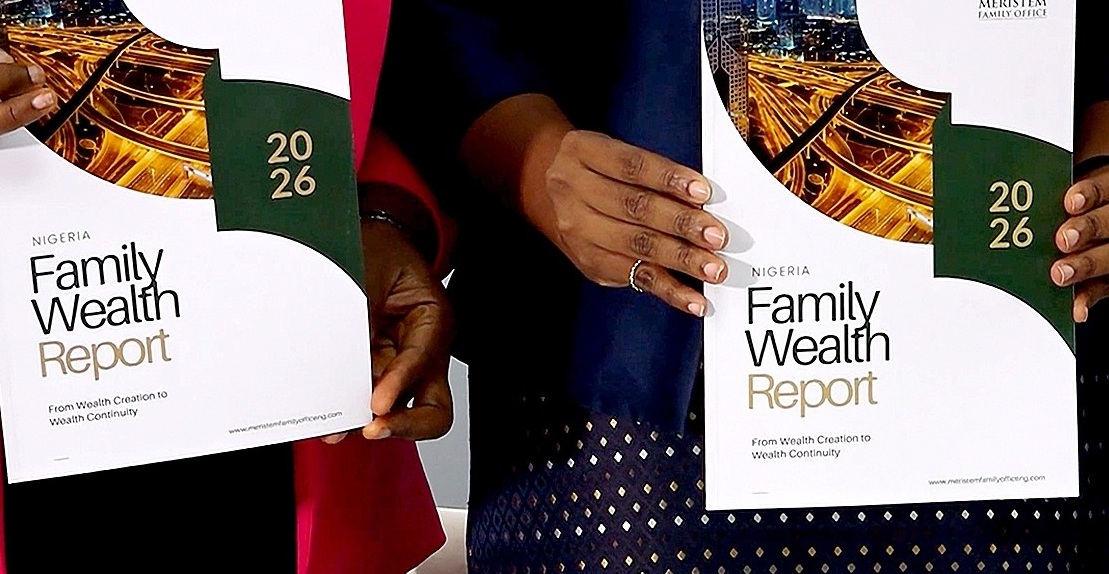
The Nigeria Family Wealth Report 2026, released by Meristem Family Office and titled “From Wealth Creation to Wealth Continuity,” examines how affluent families in Nigeria can preserve and grow wealth across generations.
The report found that only 20% of respondents have a clearly documented succession plan, while 40% identified overreliance on founders as one of the biggest threats to long-term business sustainability.
According to the report, many successful businesses are heavily dependent on the founder’s relationships, judgment, authority and personal credibility.
While these qualities usually drive growth and business success, they can become major vulnerabilities when leadership transitions occur without proper governance structures, documented processes and knowledge transfer mechanisms.
“Many successful businesses remain closely tied to the founder’s judgment, relationships, credibility and authority. These strengths can drive growth, but they become a risk when knowledge, ownership and responsibility have not been transferred into stronger systems,” the report stated.
The findings reveal a growing challenge for Nigeria’s family-business ecosystem, which contributes significantly to employment, investment and economic activity across multiple sectors.
The report also found that operating businesses and real estate dominate the portfolios of wealthy Nigerian families, with both asset classes ranking among the top two holdings for 80% of respondents.
However, Meristem warned that such assets require active management, clear ownership structures, proper documentation and succession frameworks to remain productive and valuable across generations.
Beyond naming a successor, the report stressed that effective succession planning should include leadership development, institutional knowledge transfer, ownership clarity, decision-making structures and strategies to ensure business stability during periods of transition.
Meristem introduced the concept of “Complete Wealth,” arguing that sustainable prosperity extends beyond financial assets such as businesses, property, cash and investments.
The report says enduring wealth also depends on capable people, transferable knowledge, shared values, disciplined financial management and a clearly defined family purpose.
The study further noted concerns about next-generation involvement in family enterprises. While many younger family members are educated abroad and pursuing careers outside traditional family businesses, the report cautioned against interpreting this trend as a lack of interest.
Survey results showed that 40% of respondents described the next generation as primarily focused on their own career paths.
However, the report identified mentorship, early exposure to the business and structured participation in family affairs as key strategies for improving readiness and strengthening long-term commitment.
cnoted that preserving family wealth is becoming more complex amid currency volatility, regulatory and tax changes, technological disruption, talent shortages, increased global mobility and expanding investment opportunities beyond Nigeria.
The report warned that wealth becomes particularly vulnerable when concentrated in a single business, sector, geography, currency or decision-maker.
It also argued that wealth continuity is not merely a family matter but an economic one. Successful transitions within family-owned enterprises help preserve jobs, sustain supplier networks, retain institutional knowledge and keep productive capital within the economy.
Conversely, poorly managed transitions can lead to business decline, fragmented assets, family disputes and the destruction of value built over generations.
Meristem urged founders, family business leaders, advisers, policymakers and financial institutions to begin succession and governance conversations early, rather than waiting until circumstances force difficult decisions.
For many Nigerian families, the report concludes, the challenge is not about creating wealth but ensuring it survives beyond the founder.