Quick Read:
- MTN Chairman Breaks Silence on Xenophobia and Every Nigerian in South Africa Should Read This
- Former South African Deputy Minister of Finance turns eulogy into one of the most direct interventions by a major African business leader on South Africa’s immigration crisis

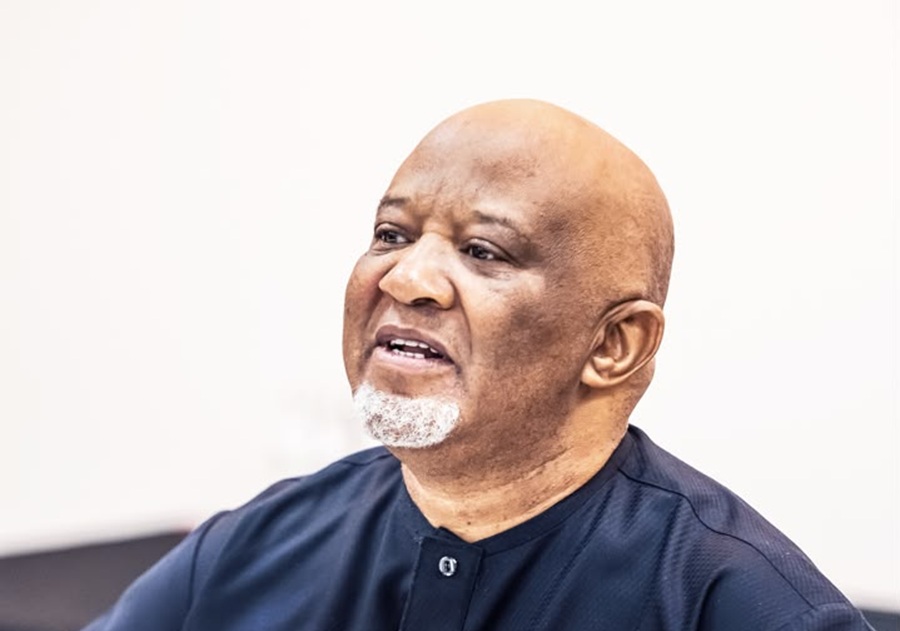
Mcebisi Jonas, MTN Group chairman used the funeral service of Zimbabwean-born activist and public servant Thokozani Damasane to deliver a sweeping and unsparing condemnation of the ongoing anti-foreigner sentiment in South Africa and how it is a symptom of state failure being cynically exploited by politicians with no interest in genuine solutions.
The speech, which drew on philosophy, personal memory, and sharp political analysis, has circulated widely since the service and is being discussed across South African civil society as one of the most substantive interventions by a senior business figure into a crisis that has repeatedly damaged South Africa’s standing on the African continent.
Jonas, who served as South Africa’s Deputy Minister of Finance before his transition to the private sector, is now chairman of MTN Group – the Johannesburg-headquartered telecommunications giant that operates across 19 African markets and has a direct commercial stake in continental integration and political stability.
A Question Asked on the Drive to the Funeral
Jonas told mourners that the central question of his remarks had come to him as he drove to the service. He had been listening, he said, to voices calling for foreigners to leave South Africa – and the contrast between that sentiment and the life he was about to commemorate stopped him.
“I was thinking, what is home to Damasane?” he said. “Because I understand, and I understood very early in life, that home is where humanity is. Home is about humanness. It is about the good of humanity and striving for the good of humanity.”
Thokozani Damasane was born and educated in Zimbabwe before relocating to South Africa during the post-apartheid transition period. Jonas described him as arriving “as an outcast” into a country still finding its post-liberation footing – and choosing, nonetheless, to commit himself entirely to its struggles and its people.
“He immersed himself deeply into the struggles, into the pains of South Africans, and he became one of us,” Jonas said. “In Damasane’s strength, our strength as South Africa and South Africans are reflected. And in his weaknesses, our own weaknesses are reflected.”
“The Problem is the Failure of the State”
The speech’s most politically charged passage came when Jonas turned directly to the question of whether removing foreign nationals would address South Africa’s underlying socioeconomic crises and answered with a categorical no.
“Foreigners can leave tomorrow – inequality will be with us,” he told the congregation. “Foreigners will leave tomorrow – unemployment will be with us. Foreigners will leave tomorrow – our police will remain corrupt. Foreigners will leave tomorrow – our politicians will still be concerned with one thing: being elected and re-elected.”
He placed responsibility for the crisis squarely on the state. “The problem is the failure of the state. The state doesn’t manage immigration. It doesn’t manage its borders. It doesn’t enforce law enforcement. It doesn’t manage education. What are you expecting?”
Jonas argued that this failure created fertile ground for political manipulation. “When people feel the burn, they become vulnerable to politicians whose sole purpose is to be elected and re-elected. Some of them have no credibility whatsoever. But they lead marches and tell our people that the problem is not us – it is foreigners.”
Tribe as a Colonial Technology
In a passage that drew significant attention from those present, Jonas offered a sustained historical critique of tribalism, arguing that ethnic identity and the violence it enables, is a colonial inheritance rather than an authentic African value.
“The tribe is a product of colonial powers,” he said. “You would notice that it is so dominant in areas where the English conquered, because they used something called the principle of indirect rule. You have got to divide these people by psychologically enhancing the notion that one is different from the other. That’s how the notion of tribe was born.”
He argued that this colonial logic had mutated into the engine driving contemporary xenophobic violence.
“You would see in the streets, it’s no longer about whether you are from South Africa or not from South Africa. It’s about the tribe, it’s about who you are, you are not like us, and you are different, and therefore we have to persecute you. Something fundamental has been lost in our country. Something fundamental has been lost in our nations.”
Jonas was equally direct in his criticism of liberation movements, including South Africa’s own, for sustaining ethnic divisions for political purposes.
“Liberation movements still sustain this thing of tribes – Zulu and Xhosa – and we sustain this thing as if it is real. It is in our heads. We’re creating it because it makes us feel big. Identity politics – we must banish them in our country. Ethno-nationalism is something that in this country we must banish.”
A Damasane Warning, Recalled
Jonas recounted a conversation he had witnessed between Damasane and a young man who had challenged the right of foreigners to be in South Africa. Damasane’s response, Jonas said, had stayed with him ever since.
“Damasane said to this guy: just wait fifteen or twenty years. You will also be wanting to leave your country.”
Jonas told mourners those words now carry a weight Damasane may not have anticipated.
“As I stand up today, I look at South Africa. The level of oppression and inequality, the level of exclusion of our people, the level of corruption, the betrayal of the dream of liberation – those words of Damasane ring very loud in my ears.”
“South Africa is Nothing Without Africa”
Jonas closed with a call for what he described as a return to “national consciousness” – one rooted in continental solidarity and economic interdependence rather than ethnic exclusion.
“We are a nation embedded in Africa,” he said. “And without Africa, our growth as a country – economically – our fortune is intertwined with the growth of Africa. South Africa is nothing without Africa. And Africa is nothing without South Africa.”
He also reframed the question of legacy and identity for Damasane’s children, who were present. “Sometimes this thing called meritocracy is measured in wealth. No. It is values, it is principle, it is integrity. And your father had all of that.”
“We cannot judge people by their origin,” he told mourners. “We cannot determine the legal status of people by their origin.”
Context: A Crisis With Continental Consequences
Jonas’s intervention comes at a particularly sensitive moment for South Africa’s relationships across the continent. Episodes of xenophobic violence – directed primarily at nationals from Zimbabwe, Mozambique, Nigeria, Malawi, and other African countries – have recurred throughout the post-apartheid period, with particularly severe outbreaks in 2008, 2015, and intermittently since.
The consequences have extended well beyond South Africa’s borders. Nigeria and Ghana have both previously summoned South African ambassadors following attacks on their nationals.
Several African governments have issued travel advisories. The African Union has called repeatedly for South Africa to act decisively. South African retailers and telecommunications companies, including MTN, have faced retaliatory pressure and boycott campaigns in affected countries.
For Jonas, the stakes of the debate are therefore not only moral but directly tied to the commercial and diplomatic interests of the institution he chairs. MTN’s pan-African footprint spanning West, East, and Southern Africa depends on a South Africa that is seen as a trustworthy, stable, and welcoming partner to the rest of the continent.
In that context, his decision to use a funeral eulogy, rather than a shareholder meeting or policy forum, to deliver so direct a political and moral argument is itself significant. It suggests a calculation that the moment – and the man being honoured – required a kind of plain speaking that formal platforms do not always permit.
Who Was Thokozani Damasane?
Damasane worked across multiple spheres of South African public life following his arrival from Zimbabwe. He was known within policy and civic circles for the clarity of his analytical mind, his commitment to progressive causes, and, as several speakers at the funeral noted, an authentic, unimitated way of engaging with the world around him.
Jonas invoked Frantz Fanon in explaining what made Damasane significant. Fanon – born in Martinique, educated in France, and the foremost theorist of the Algerian Revolution – was himself, Jonas noted, “born elsewhere” and “not a Muslim,” and yet became “one of the most respected theoreticians of the Algerian Revolution.” The parallel to Damasane, Jonas said, was deliberate: both men entered societies in which they were structurally outsiders, and both chose commitment over comfort.
“Each generation must, out of relative obscurity, discover its mission, fulfil it, or betray it,” Jonas quoted Fanon as saying. “Damasane understood the mission. And he did not betray it.”
Damasane is survived by his family.
(N.B:- Additional background from MTN Group public statements and prior interventions by Mcebisi Jonas contributed to this report).