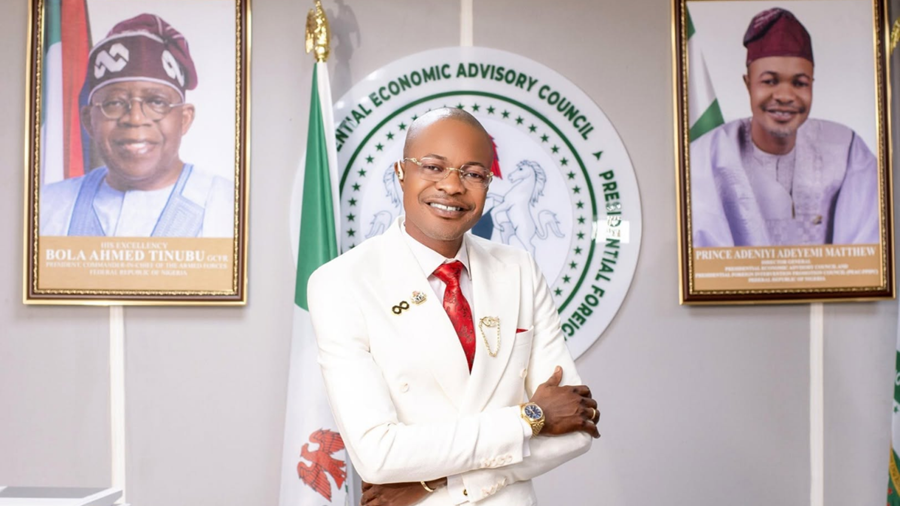
When the Presidency released a detailed statement explaining that Prince Adeniyi Adeyemi Matthew allegedly headed a fictitious “Presidential Foreign Intervention Promotion Council” and “Presidential Economic Advisory Council,” it appeared intended to put an end to weeks of controversy.
Instead, it ignited an even bigger debate.
In a statement signed by Bayo Onanuga, special adviser to the President on Information and Strategy, the Presidency maintained that Adeyemi was never appointed by President Bola Tinubu or the Office of his Chief of Staff, Femi Gbajabiamila.
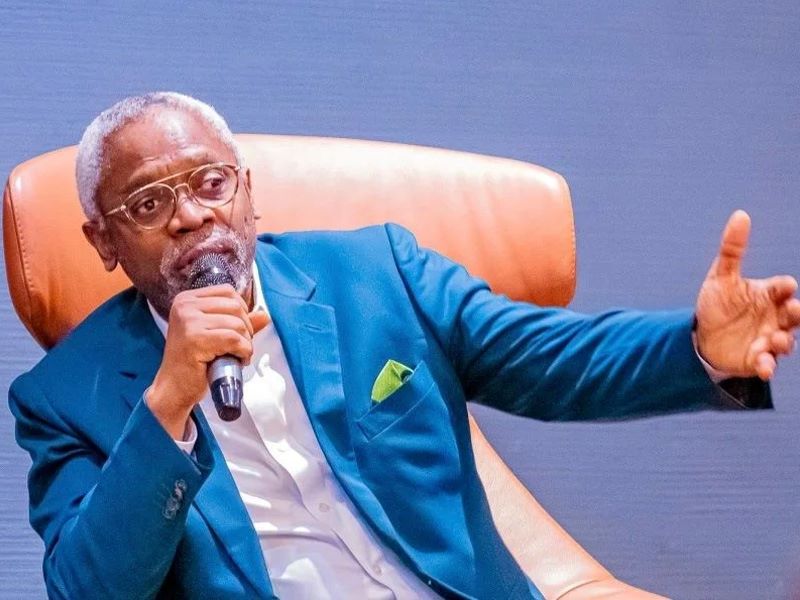
The accusations
Adeyemi recently accused Chief of Staff to the President of bribery, alleging Gbajabiamila demanded N400 million and an additional N200 million to facilitate his appointment as head of a government agency.
Adeyemi alleged that Gbajabiamila demanded 48% of his agency’s take-off grant of N27.4 billion.
He further claimed that Gbajabiamila received N400 million through a proxy to secure him the appointment, with an outstanding balance of N200 million.
He challenged the Presidency to conduct an independent panel, demanding that Gbajabiamila produce all official documents signed since taking office for forensic examination.
Femi Gbajabiamila denied all the allegations.
According to the government, the Office of the Chief of Staff had petitioned security agencies as early as October 2025 after discovering forged appointment letters and fake presidential documents allegedly used by Adeyemi to present himself as a Director-General of a non-existent agency.
The statement further disclosed that investigations by the Nigeria Police uncovered forged documents, multiple bank accounts linked to fictitious organisations, and alleged attempts to obtain diplomatic privileges under false pretences.
Adeyemi was subsequently charged before the Federal High Court on counts including forgery, impersonation and obtaining by false pretence.
The Presidency insists the matter is now before the courts and has urged politicians and members of the public to refrain from prejudging the case.
Social media asks different questions
Rather than debating whether Adeyemi should face trial, many Nigerians on X focused on what they describe as glaring institutional contradictions.
One of the most shared reactions came from X user @nnamdyy, who argued that the Presidency’s explanation raises more questions than it answers.
He questioned how someone allegedly operating a fake agency could reportedly maintain an office within the Federal Secretariat, meet senior government officials, operate dozens of bank accounts, receive correspondence from public institutions and allegedly appear in budget documents if the organisation never existed.
Similarly, @oluomoofderby asked whether Nigerians were expected to believe that an individual could secure office space within the Federal Secretariat, open accounts with the Central Bank of Nigeria using forged documents and still evade internal verification systems.
“The statement lacks credibility and raises more questions than answers,” the user wrote.
Another widely circulated response came from @DanielOtabor, who described the Presidency’s communication as damaging to public confidence.
He referenced publicly reported meetings involving Adeyemi with senior government officials, including the Deputy Speaker of the House of Representatives, and questioned how a supposedly fictitious council allegedly appeared in the 2026 federal budget with an allocation exceeding ₦1.3 billion.
“If everyone was deceived,” he argued, “then Nigerians are looking at one of the biggest institutional failures in recent history.”
Budget controversy dominates discussion
The issue that generated the strongest reaction was the alleged inclusion of the council in the 2026 Appropriation Act.
Several users, including @Nimsy01, @officialchidire and @abdulherphyz, questioned how an agency the Presidency says was exposed as fraudulent in late 2025 could still reportedly appear in a budget signed months later.
Their argument is that if the government had already identified the agency as fictitious, Nigerians deserve an explanation of how it allegedly remained within official budget documents and whether any public funds were eventually released.
Others argued that the issue is no longer simply about one individual but about possible weaknesses in government verification, budgeting and inter-agency coordination.
Two competing narratives
The controversy has effectively produced two competing narratives. The Presidency maintains that Adeyemi orchestrated an elaborate impersonation scheme that deceived several institutions before security agencies intervened.
According to the government, the existence of meetings, correspondence and other engagements does not validate the legitimacy of the agency but rather demonstrates the extent of the alleged fraud.
Many Nigerians, however, argue that the scale of official interactions reportedly involving the agency suggests either institutional negligence or a more complex story than has so far been presented.
They are calling for greater transparency, particularly regarding the reported budget allocation, official meetings and the verification processes across government institutions.
The credibility challenge
Whether the courts eventually uphold the Presidency’s account or not, the controversy underscores a broader challenge confronting public institutions in Nigeria.
In an era where official documents, photographs and budget records are rapidly scrutinised online, public trust depends not only on issuing denials but also on providing explanations that address every major inconsistency raised by citizens.
For many Nigerians, the central question is no longer whether Adeyemi is guilty of forgery. That determination belongs to the courts.
The bigger question is whether the federal government’s internal controls are robust enough to prevent an alleged impostor from interacting with ministries, agencies, lawmakers and other public institutions over an extended period.
Until those questions are answered with documentary evidence and the judicial process runs its course, the debate is unlikely to subside.
Human rights lawyer Femi Falana also re-echoes these as he said the presidency lacks the constitutional authority to clear anyone accused of committing a crime, following its statement dismissing allegations involving Chief of Staff to the President, Femi Gbajabiamila.
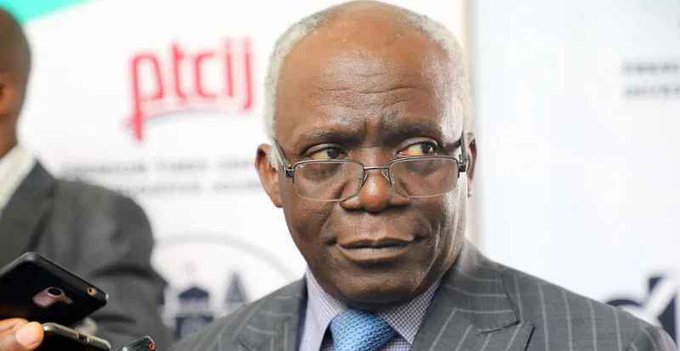
Mr Falana spoke while reacting to the statement issued by presidential spokesman Bayo Onanuga.
According to Punch Newspaper’s report, Falana said only law enforcement and anti-corruption agencies have the power to investigate and determine issues involving allegations of fraud or corruption.
“The Presidency is not in a position to clear anybody. It is the duty of the police and anti-graft agencies to investigate cases of official corruption,” he said.
“The Presidency can only refer Femi Gbajabiamila, as well as the other individual, to the ICPC because allegations of fraud and corruption have been raised.”
Falana also questioned reports that funds were allocated to the agency Adeyemi claimed to represent.
“The government will have to explain to Nigerians how a sum of N24 billion was budgeted for an unknown agency, as well as how that agency had accounts with the Central Bank of Nigeria,” he said.