- Equaling 2% of GDP
Nigeria’s Federal Government on Sunday rejected claims that it spent roughly ₦8 trillion, equivalent to about 2% of GDP, outside the approved budget, calling the allegations a misrepresentation of observations by the International Monetary Fund.
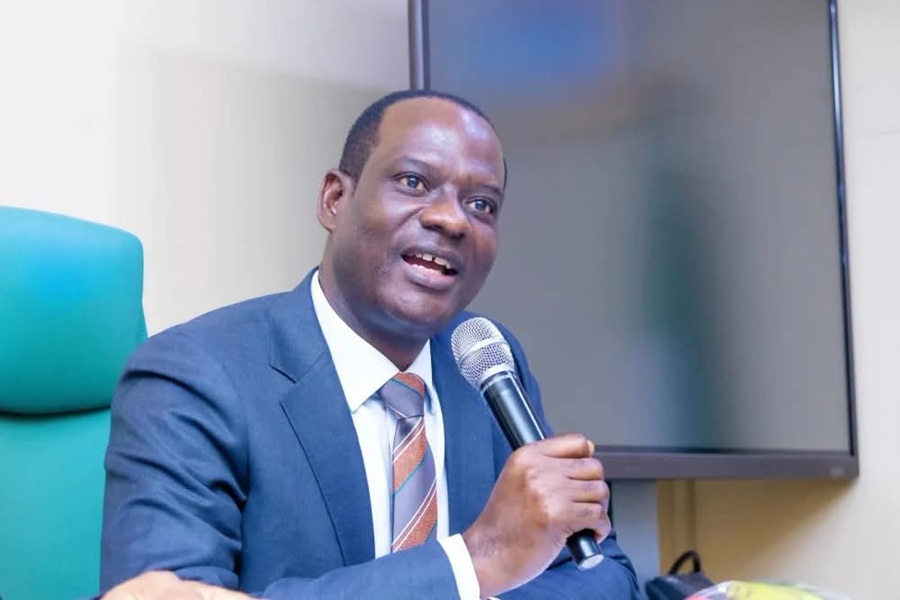
In a detailed statement signed by Taiwo Oyedele, finance minister and coordinating minister of the Economy, the government said recent public commentary had wrongly interpreted remarks by IMF Resident Representative Christian Ebeke and the Fund’s 2026 Article IV Consultation Report as evidence of illegal or secret expenditure.
“The Federal Government does not operate a ‘shadow budget’ or expend public funds outside the constitutional and statutory framework,” the statement said.
Oyedele emphasized that all federal spending complies with Sections 80–83 and 162 of the 1999 Constitution (as amended), requiring authorization through Appropriation Acts, Supplementary Appropriation Acts, or other laws passed by the National Assembly.
He noted that multi-year capital projects, statutory transfers, debt service, and special interventions established by law are standard features of public finance and not evidence of off-budget activity.
The government challenged critics to identify specific projects allegedly executed without legislative approval and provide verifiable evidence rather than conjecture.
Background:
- Ebeke’s July 1 Remarks and IMF Report
The controversy stems from comments made by IMF Resident Representative Christian Ebeke on July 1 in Lagos to business executives.
Ebeke stated that Nigeria had about 2% of GDP in public spending, roughly ₦8–8.8 trillion based on recent nominal GDP levels, that was not recorded in official budgets.
This created a statistical discrepancy, making the reported fiscal deficit appear smaller than the government’s actual financing needs.
“These unreported expenditures are linked in part to large government projects carried out off-budget,” Ebeke said, adding that improving transparency is critical because such spending raises concerns about procurement processes and oversight.
He noted that authorities had begun addressing the issue through repeal and re-enactment of prior budget laws to bring some spending onto the books, though updated implementation reports were still needed.
This aligns with the IMF’s 2026 Article IV Consultation (Executive Board concluded June 1, 2026; staff report published around June 8–9).
The report highlighted a statistical discrepancy of 2.7% of GDP in 2025 consolidated government operations, which “could reflect spending not captured by the Office of the Accountant General.”
It also referenced additional capital spending outside the previous budget perimeter that is now being incorporated.
Executive Directors expressed concerns about off-budget spending and called for faster progress on budget processes, public financial management (PFM), fiscal reporting, transparency, and accountability.
The IMF has acknowledged Nigeria’s reform progress under President Bola Ahmed Tinubu, including fuel subsidy removal, foreign exchange unification, and revenue measures, but consistently flagged gaps in fiscal data comprehensiveness and budget credibility as areas needing improvement.
Political Reactions
Opposition figures quickly amplified the IMF comments.
Atiku Abubakar, former vice president of Nigeria called for an immediate probe into the alleged ₦8.8 trillion in unrecorded spending, describing it as fiscal impunity.
Other critics, including activist Omoyele Sowore and Labour Party leader Peter Obi, used the disclosure to question government accountability.
Government Context and Reforms
The Finance Ministry statement clarified distinctions between appropriation, authorization, financing, and statistical reporting under international standards (such as Government Finance Statistics).
Many items cited in public debate, statutory allocations to agencies and development commissions, cost-of-collection retained by revenue agencies, Federal Capital Territory spending, special interventions for security/infrastructure, and debt service, are established by Acts of the National Assembly and disclosed in various fiscal reports, even if their presentation differs from the annual Appropriation Act.
Oyedele noted that President Tinubu had already moved to address overlapping budgets. In his December 19, 2025 presentation of the 2026 Appropriation Bill to the National Assembly, Tinubu requested an end to multiple and overlapping budgets and the adoption of a single, cohesive framework. The 2026 budget was subsequently passed and signed into law.
Nigeria continues PFM reforms, including digitalization of financial processes, treasury management improvements, and efforts to align budget presentation with international standards. These have been positively noted by the IMF and credit rating agencies, the statement said.
“Public debate is both welcome and essential in a democratic society,” Oyedele added. “However, it should be based on facts and an accurate understanding of Nigeria’s constitutional and fiscal framework. Mischaracterising technical observations as evidence of unlawful expenditure neither advances informed public discourse nor strengthens democratic accountability.”
The government reaffirmed its commitment to prudent fiscal management, transparency, and working with the National Assembly and oversight institutions to strengthen governance in line with international best practices.
The episode underscores persistent challenges in Nigeria’s fiscal transparency at a time when accurate data on deficits, borrowing needs, and public investment is critical for investor confidence, debt sustainability assessments, and coordination between fiscal and monetary policy.
While the government frames the IMF observations as technical reporting issues rather than illegality, and points to ongoing reforms including budget harmonization, the public and political reaction highlights how statistical discrepancies can quickly become flashpoints in a high-debt, low-revenue environment.
Continued progress on bringing all spending within a unified, timely reporting framework will be closely watched by markets and multilateral partners.