Africa’s cryptocurrency story is often measured by soaring peer-to-peer trading volumes, rising adoption rates, and the continent’s growing appetite for alternative financial infrastructure.
Yet beneath those impressive numbers lies another story, one about the people and systems working to make digital asset transactions faster, safer, and more trusted for everyday users.
For millions of Africans, peer-to-peer (P2P) trading has become the bridge between local currencies and the global digital economy.
It enables users to buy and sell digital assets using familiar payment methods such as bank transfers and mobile money. But as P2P trading expanded across the continent, one challenge became increasingly difficult to ignore: payment confirmation remained largely manual.
A typical P2P transaction required a buyer to complete a fiat payment, return to the exchange, and manually mark the order as paid.
The merchant would then independently verify the payment before releasing the crypto asset. In high-volume markets, this process created delays, increased operational pressure, and exposed merchants to false payment claims, third-party payment risks, and avoidable disputes.
This was more than a user experience challenge. It was a question of trust.
Addressing that challenge required more than introducing another product feature. It demanded a deep understanding of African payment behaviour, merchant operations, fraud patterns, and the realities of scaling digital finance across fragmented payment ecosystems.
That is where Sunny Joseph Imohimi‘s work became particularly significant.
During his time at Binance, Sunny served as Regional Growth Manager for Africa, operating at the intersection of product execution, P2P market growth, merchant operations, payment optimisation, and regional strategy.
His responsibilities spanned more than forty African markets, where Binance P2P had become one of the primary gateways connecting local fiat currencies with the global digital asset economy.
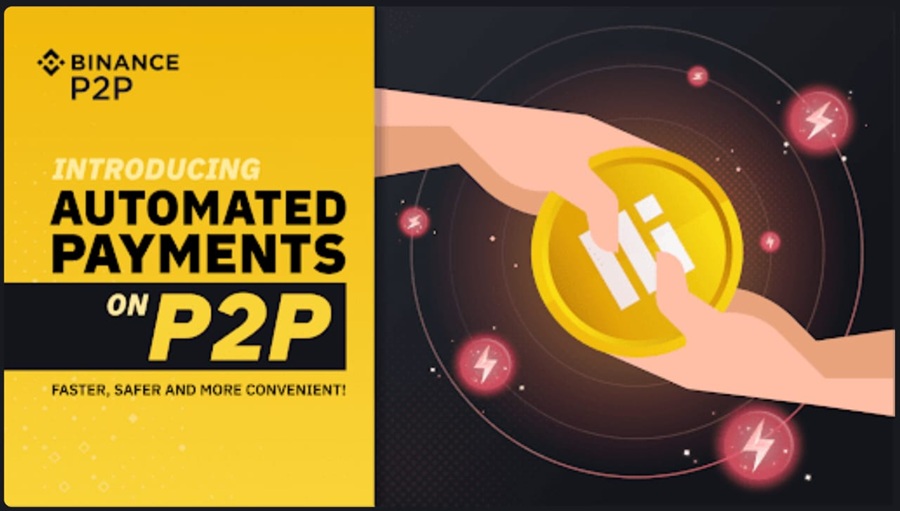
One of the clearest examples of that work was his contribution to the African rollout and market execution of Binance P2P’s automated payment feature, known across the ecosystem as Instant Pay.
The feature was designed to address one of the most persistent weaknesses in P2P trading: the gap between a buyer claiming payment had been made and a merchant confirming that genuine fiat payment had actually been received.
By automating payment verification through supported payment channels and enabling the release of escrowed crypto once payment was confirmed, Instant Pay shifted P2P trading away from manual confirmation and toward automated payment trust.
For African P2P markets, this represented a significant evolution.
Instead of relying entirely on buyers to manually mark orders as paid and merchants to verify every payment before releasing assets, the automated payment flow enabled the platform to confirm when the correct fiat payment had been received. Once payment was verified, the crypto asset held in escrow could be released automatically.
The result was a faster, safer, and more efficient trading experience.
Users benefited from quicker and more seamless transactions. Merchants spent less time manually verifying payments and gained greater confidence before releasing assets. Across the marketplace, automated payment confirmation helped reduce false payment claims, partial payments, duplicate payments, third-party payment risks, and avoidable disputes, strengthening trust throughout the trading process.
Sunny’s contribution extended well beyond supporting a product announcement. According to accounts of the rollout, he contributed across the execution chain by providing market insights, advising on local payment partner integration, supporting technical and operational coordination, shaping go-to-market communication, preparing internal product messaging, guiding merchant education, and helping ensure the launch reflected the realities of African P2P users and merchants.
This blend of product understanding and market execution is often what separates a successful product launch from meaningful product impact.
Africa is far from a uniform payment market. Nigeria, Ghana, Kenya, South Africa, Francophone Africa, and other regions each have distinct banking systems, payment behaviours, liquidity dynamics, regulatory environments, and fraud risks.
A global product succeeds in such markets only when it is thoughtfully localised, clearly communicated, and adopted by the right merchants and users.
Sunny recognised that the feature needed to be positioned as more than a convenience. It had to be understood as infrastructure for trust.
That distinction mattered. Users did not simply need faster trades; they needed confidence that the payment process was secure. Merchants needed certainty that payments had genuinely been received before crypto assets were released.
The platform itself required an operating model capable of supporting greater scale without increasing dispute risk.
Viewed through that lens, Instant Pay became more than a backend improvement. It represented part of a broader shift in African P2P trading, from manual payment confirmation to automated payment trust.
The early rollout across priority African markets, including Nigeria, Kenya, and Ghana, demonstrated the potential of that shift. It supported high volumes of automated transactions and showed that payment automation could succeed in markets where trust, speed, and local payment behaviour are critical to adoption.
For users, the value was immediate: transactions became faster and more reliable. For merchants, the gains were operational: fewer manual checks, reduced delays, and greater confidence before asset release.
For the broader ecosystem, the impact was structural. Automated payment confirmation made P2P trading more scalable, more secure, and better aligned with the expectations of modern digital finance.
This is why Sunny’s contribution is noteworthy within Africa’s fintech evolution.
At a time when cryptocurrency adoption across the continent was accelerating, he helped operationalise one of the most practical improvements to the P2P trading experience. His work connected global product capability with local market realities, helping transform a worldwide product feature into a solution tailored for African payment ecosystems.
This type of execution is rarely visible from the outside, yet it is often what determines whether digital products succeed in emerging markets.
Technology companies can build products globally, but local adoption depends on operators who understand their markets deeply enough to translate innovation into everyday usage. They must understand merchant needs, user concerns, fraud patterns, payment infrastructure, and how to introduce new product behaviour in ways that inspire confidence.
Sunny’s work on Binance Instant Pay fits squarely within that category.
It reflects a practical approach to innovation, not simply creating technology, but ensuring that technology works effectively for real users under real operating conditions.
Before joining Binance, Sunny contributed to Bolt’s expansion across multiple Nigerian cities, helping scale mobility infrastructure in one of Africa’s most commercially dynamic markets.
Beyond crypto and fintech, he also founded Arkcess Technology Limited, a smart access control and residential infrastructure company focused on simplifying estate and community management through technology.
Despite spanning mobility, fintech, blockchain, and property technology, a consistent philosophy runs through his work: technology should remove friction from everyday life rather than add complexity.
That philosophy is particularly relevant in African digital finance, where innovation is measured not only by technical sophistication but by practical impact. Does it reduce delays? Does it strengthen trust? Does it make users safer? Does it help merchants operate more efficiently? Does it make financial participation easier for more people?
In the case of Binance Instant Pay, those questions found compelling answers.
Automated payment confirmation helped transform one of the most critical transaction flows in African P2P crypto trading. It demonstrated how payment automation could reduce friction, strengthen trust, and improve user experience at scale.
More broadly, it reinforced an important truth about Africa’s digital economy: the continent does not simply need access to global technology. It needs technology that is thoughtfully localised, trusted by users, and executed around African realities.
Sunny Joseph Imohimi’s contribution to the rollout places him among the African fintech operators helping shape the future of digital payments across emerging markets.
His work illustrates that the future of blockchain in Africa will be defined not by speculation alone, but by practical utility, trusted payment infrastructure, and products that make digital value transfer simpler, safer, and more reliable for everyday users.
Across Africa, many of the most meaningful technological breakthroughs are not the ones that attract the loudest headlines.
They are the systems quietly improving how people transact, build trust, and participate in the digital economy every day.
That is the story behind automated P2P payments in Africa. And it is one that Sunny Joseph Imohimi helped bring to life.