

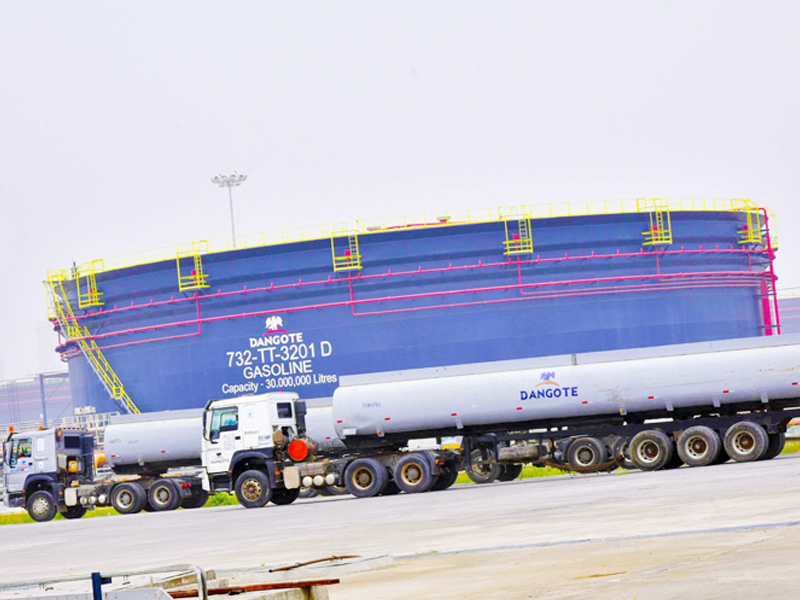
The Dangote Petroleum Refinery has implemented its fifth price adjustment for Premium Motor Spirit (PMS) in less than three weeks, raising its gantry price to ₦1,275 per litre as global supply chain disruptions continue to squeeze the domestic market.
The latest petrol price hike, by Dangote Refinery announced on Saturday morning, March 21, 2026, comes barely hours after a previous increase to ₦1,245.
This rapid succession of price reviews reflects a deepening volatility in Nigeria’s deregulated downstream sector, driven largely by international crude oil price fluctuations and logistics bottlenecks linked to geopolitical tensions.
The March Price Trajectory: A ₦501 Leap
The Dangote Refinery began the month with a gantry price of ₦774 per litre of petrol on March 2. Since then, the trajectory has been steeply upward:
- March 2: ₦774 to ₦874 (12.9% increase)
- Mid-March: Subsequent rises to ₦1,050 and ₦1,175.
- March 20: Hike to ₦1,245.
- March 21: Final adjustment to ₦1,275 per litre.
Cumulatively, the ex-depot price has surged by ₦501 per litre, a staggering 64.7% increase within just 20 days. Coastal prices have followed a similar trend, rising approximately 8.9% to ₦1,646,748 per metric tonne.
The Global Supply Gap Factor
The refinery maintained that these adjustments are necessary to reflect prevailing market realities. While the facility was expected to stabilize domestic supply, it is currently operating within a global environment where traditional supply routes from the Middle East are choked due to conflict.

This has turned the 650,000-barrel-per-day facility into a primary target for other African nations. At least three countries, South Africa, Ghana, and Kenya, have reportedly made formal inquiries to secure fuel volumes from the Lagos-based refinery, further tightening local availability and driving price competition.
Impact on the Digital and SME Economy
For the businesses covered by Techeconomy, this surge represents a significant operational headwind.
With transport fares and commodity prices expected to rise in response to the new ₦1,275 benchmark, the cost of logistics and “last-mile” delivery is likely to face a fresh wave of inflationary pressure.
The refinery has clarified that customers with valid bank guarantees will be accommodated under existing credit arrangements, provided they cover the price differential. However, the new price regime is effective immediately for all unloaded gantry and coastal volumes.
This story illustrates the deregulated reality. Even with local refining, the Nigerian market remains tethered to global oil dynamics.
For tech startups and manufacturers, these five price hikes in one month make energy cost forecasting nearly impossible, emphasizing the urgent need for a shift toward more stable renewable energy alternatives.