
ADVERTISEMENT
No Result
View All Result
  • Technology
    • Trends
    • Telecoms
      • Broadband
    • ConsumerTech
      • Gadgets and Appliances
      • Apps
      • Accessories
      • Reviews
      • Unboxing
    • EnterpriseTECH
    • Security & Data Protection
    • How To
    • GameTech
  • Business
    • Company News
    • StartUPs
      • Founder’s Story
      • Funding
    • Deals
    • People & Moves
    • SME & Entrepreneur Focus
      • BUSINESS SENSE FOR SMEs
    • Competition & Market Positioning
    • Commerce & Mobility
    • Travel
    • WomenPreneurs
  • Economy
    • Macroeconomic Trends
      • Macro Monday
      • TE Insights
    • Finance
      • Banks
      • Fintech
      • Insurance
      • Digital Assets
      • Personal Finance
    • Policies
      • Tech & Society
    • Market Analysis
    • Jobs & Workforce Economy
  • Features
    • Guest Writer
      • Chidiverse
      • Digital Assets
    • EventDIARY
    • IndustryINFLUENCERS
    • MarkTECH
    • TBS
    • NewsEXTRA
  • Editorial
  • Brand Content
  • TECHECONOMY TV
  • Multilanguage switcher
  • Login
Monday, April 13, 2026
Tech | Business | Economy
Monday, April 13, 2026
Tech | Business | Economy
No Result
View All Result
Tech | Business | Economy
No Result
View All Result

Home » Infostealer Malware Compromised Over 1 Million Banking Accounts in 2025

Infostealer Malware Compromised Over 1 Million Banking Accounts in 2025

…as financial threats move to credential theft

Joan Aimuengheuwa by Joan Aimuengheuwa
April 13, 2026
in Security & Data Protection
Reading Time: 3 mins read
0
one million online banking accounts were compromised

Payment cards

More than one million online banking accounts were compromised by infostealers last year, as financial cyberthreats shifted toward credential theft and data reuse.

According to a Kaspersky report, attackers are moving away from traditional PC banking malware and increasingly relying on social engineering and dark web marketplaces, while mobile financial malware continues to grow.

Traditional financial phishing has not gone away. Pages that mimicked e-shops dominated the financial phishing landscape (48.5% in 2025, up 10.3% from 2024), followed by banks (26.1% in 2025, down by 16.5% from 2024) and payment systems (25.5% in 2025, up by 6.2% from 2024).

The decline in bank phishing may suggest that these services are becoming increasingly difficult to successfully impersonate, and fraudsters are turning to easier ways to access users’ finances.

Attackers are adapting campaigns to regional digital habits. In the Middle East, financial phishing is overwhelmingly concentrated on e-commerce (85.8%), indicating a heavy reliance on online retail lures, whereas in Africa bank-related phishing leads (53.75%), which may indicate that user account security there is still insufficient.

Subscribe to our Telegram channel for the latest updates.

Follow the latest developments with instant alerts on breaking news, top stories, and trending headlines.

Join Channel

Latin America shows a more balanced distribution but with a higher share of e-commerce and bank targeting, while APAC and Europe display a more even spread across all three categories, pointing to diversified attack strategies.
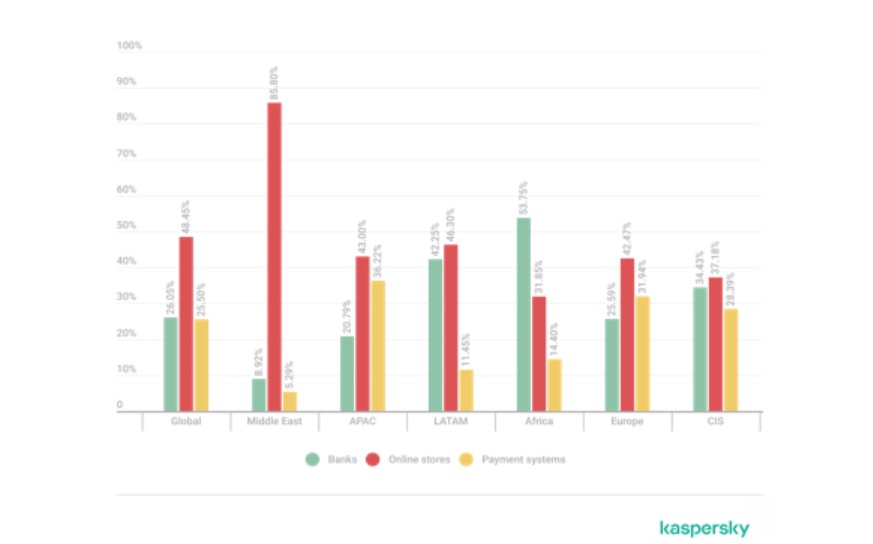
One million banking accounts in 2025
The distribution of detections of financial phishing pages by category (banks/online stores/payment systems), globally and per region, 2025 | Credit: Kaspersky

In 2025, the decline in users affected by financial PC malware continued as users increasingly rely on mobile devices to manage their finances.

iux

Contrary to PC banking malware, mobile banker attacks grew by 1.5 times in 2025 compared to the previous year.

Complementing traditional financial malware, infostealers played a significant role in enabling financial crime both on PCs and mobile devices by harvesting login credentials, cookies, bank card numbers, crypto wallet seed phrases, and autofill data from browsers and applications, which attackers then used for account takeovers or direct banking fraud.

Kaspersky data pointed to a surge in infostealer detections (up by 59% globally, 53% in Africa and 26% in the Middle East, on PCs from 2024 to 2025), fueling credential-based attacks.

According to Kaspersky Digital Footprint Intelligence (DFI), in 2025 over one million online banking accounts served by the world’s 100 largest banks fell victim to infostealers: credentials for these accounts were being freely shared on the dark web.

The countries with the highest median number of compromised accounts per bank were India, Spain, and Brazil.

74% of payment cards that were compromised by infostealer malware, published on dark web resources and identified by Kaspersky DFI team in 2025, remained valid as of March 2026.

This means that attackers could still use cards that had been stolen months or even years prior.

“The dark web has become a central hub for financial cybercrime. Stolen credentials and bank cards that have been harvested by infostealers are aggregated, repackaged, and sold there, while phishing kits targeted at users of financial products are offered as ready-to-use services. This creates a self-sustaining ecosystem where data theft and fraud operations reinforce each other, making attacks scalable and easy to carry out by fraudsters with minimal experience. Breaking this cycle requires proactive threat intelligence on the part of organisations, and increased awareness and scrutiny from individual users,” comments Polina Tretyak, Kaspersky digital footprint intelligence analyst.


0Shares

iux
Previous Post

MoMo Team Leads Financial Inclusion Drive at Y’ello Box Handover

Next Post

Bitget Launches New Pre-IPO Product With SpaceX as First Listing

Joan Aimuengheuwa

Joan Aimuengheuwa

Joan thrives at helping individuals and businesses scale via storytelling...

Related Posts

Jonathan Zanger | Check Point | Claude Mythos | AI Vulnerability

Claude Mythos Wake-Up Call: What AI Vulnerability Discovery Means for Cyber Defense

April 10, 2026
0
GITEX Africa summit

NITDA Sounds Alarm on AI Threat Shift at GITEX Africa

April 9, 2026
0

Cyberattacks in Africa Top 3,000 Per Week as AI Use Expands, Check Point warns

April 8, 2026
0
Load More
Next Post
Bitget New Pre-IPO Product With SpaceX

Bitget Launches New Pre-IPO Product With SpaceX as First Listing

Leave a Reply Cancel reply

Your email address will not be published. Required fields are marked *

I agree to the Terms & Conditions and Privacy Policy.

This site uses Akismet to reduce spam. Learn how your comment data is processed.

Techeconomy Podcast
Techeconomy Podcast

The Techeconomy Podcast is a thought-leadership show exploring the powerful intersection of technology, business, and the economy, with a strong focus on Africa’s fast-evolving digital landscape.

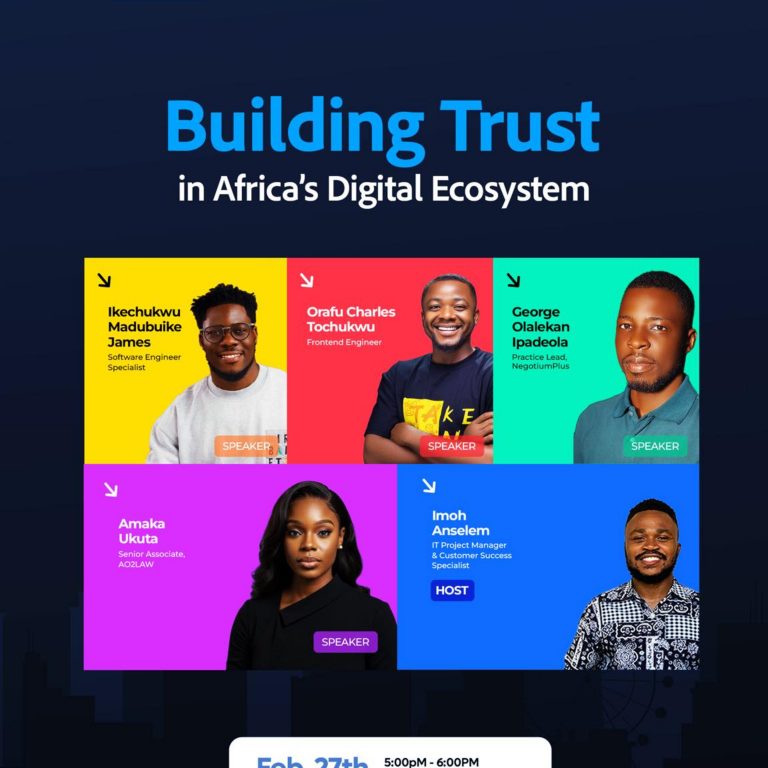
BUILDING TRUST IN AFRICA ECOSYSTEM
byTecheconomy

Africa’s digital economy is growing fast, but growth without trust cannot last.Join us for the February Edition of the Techeconomy Business Series as industry experts explore how trust, security, innovation, and user experience are shaping Africa’s evolving digital ecosystem.

BUILDING TRUST IN AFRICA ECOSYSTEM
February 27, 2026
Techeconomy
Navigating a Career in Tech Sales
January 29, 2026
Techeconomy
How Technology is Transforming Education, Health, and Business
November 27, 2025
Techeconomy
INNOVATION IN MOBILE BANKING
October 30, 2025
Techeconomy
The Rise of AI: Impact on Jobs & Businesses
September 25, 2025
Techeconomy
Search Results placeholder
  • About Us
  • Careers
  • Contact Us

© 2026 TECHECONOMY.

No Result
View All Result
  • Technology
  • Business
  • Economy
  • Features
  • Editorial
  • Brand Content
  • TECHECONOMY TV

© 2026 TECHECONOMY.

Welcome Back!

Login to your account below

Forgotten Password?

Retrieve your password

Please enter your username or email address to reset your password.

Log In
This website uses cookies. By continuing to use this website you are giving consent to cookies being used. Visit our Privacy and Cookie Policy.