Nigeria is pivoting toward a more robust national software infrastructure and e-governance framework, aimed at achieving strategic data sovereignty.
The mission is centered on building local capacity and reducing dependency on foreign proprietary stacks.
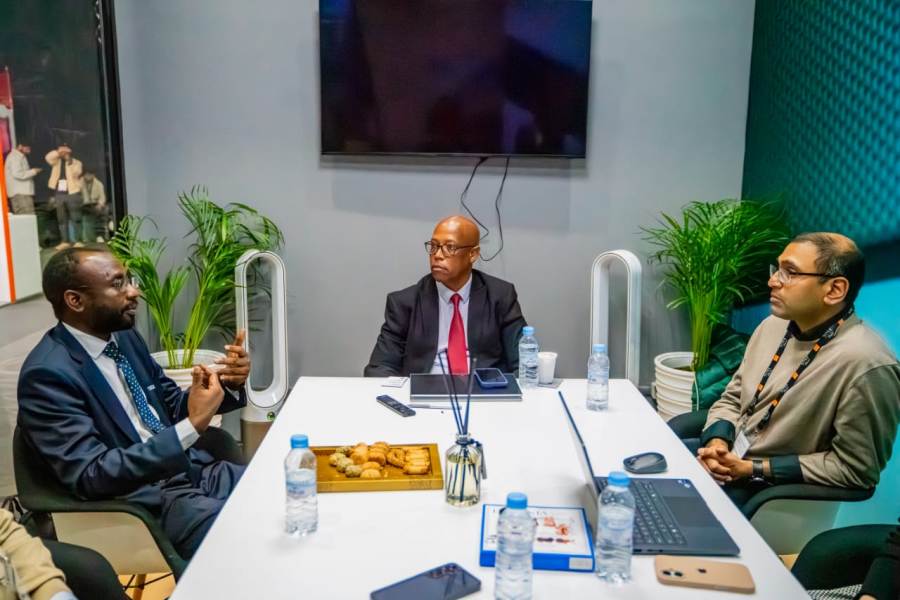
The government is prioritizing high-fidelity regulatory policies designed to streamline digital integration while maintaining domestic oversight of critical infrastructure. Speaking with Ericsson’s leadership at GITEX Africa, Kashifu Inuwa emphasized that the strategy is not about navigating geopolitical rivalries, but about securing long-term technological independence and localized system control.
“We are building our national software infrastructure. We are coming up with very high-standard regulatory policies that will help us build capacity for digital software integration,” he said. “For me, it is not about politics. It is not about geo-tech politics. It is not about banning China. It is about how we, as a country, have control and are able to shape our digital future.”
He stressed that Nigeria is not pursuing an exclusionary approach toward global technology partners, but rather seeking balanced collaboration that ensures value creation within the country.
Subscribe to our Telegram channel for the latest updates.
Follow the latest developments with instant alerts on breaking news, top stories, and trending headlines.
“We are not saying we are banning hyperscalers from coming. We want them to come, work with local partners, create value in Africa, and let us capture that value here,” he noted.
The NITDA DG drew parallels with global regulatory trends, pointing to frameworks such as the European Union’s Digital Markets Act, Digital Services Act, and Data Governance Act as examples of regions asserting digital sovereignty through structured policy environments.
He added that Nigeria’s approach aligns with the global shift toward treating digital infrastructure as critical national infrastructure, a move already supported by existing executive orders in the country.
“We already have an executive order that makes all digital infrastructure a national critical infrastructure,” he explained. “But building a fully sovereign digital system takes time. Even the EU did not achieve it overnight.”
A key priority of the policy direction, he said, is ensuring that data generated within Nigeria remains protected and that intellectual capacity and digital intelligence are developed locally rather than exported.
“We want to keep the intelligence in our country. We want to be part of creating value, not just receiving technology,” he said.
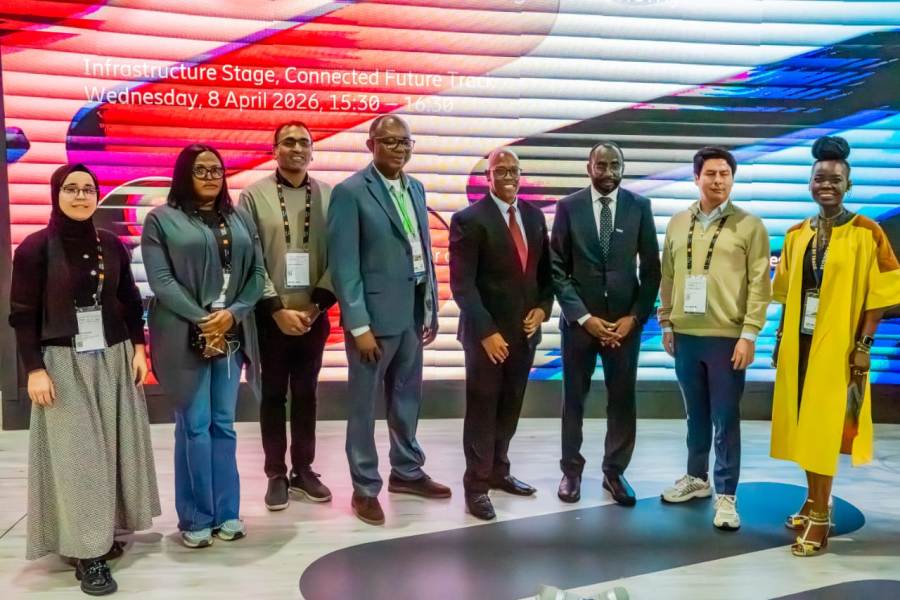
Group photograph of the Director General of the National Information Technology Development Agency (NITDA), Kashifu Inuwa, with South Africa’s Director for Government and Policy Advocacy, Amos Haddebe, a representative of Viking Analytics, Marcelo Paolo, and other members of the management team during the GITEX Africa 2026 held in Morocco.
He also highlighted concerns about historical imbalances in global industrial development, noting that Africa has often contributed raw materials, labour, and data without fully benefiting from value-added industries.
“We don’t want a repeat of previous industrial revolutions where Africa was left behind. This time, it is about value creation and building our own digital offerings,” he added.
Discussions are also ongoing around data ownership frameworks, particularly in emerging technologies and industrial systems, where questions of who controls machine-generated data remain central to future regulation.
The government is expected to unveil clearer policy direction in the coming months as part of its broader national digital transformation agenda.
On the industry side, Ericsson reaffirmed its long standing involvement in Nigeria’s telecom sector. Amos Haddebe, the company’s director for Government and Policy Advocacy in Africa, said Ericsson has operated in Nigeria for over five decades, supporting the country’s telecommunications evolution from 2G to 5G.
He noted that Ericsson continues to collaborate closely with operators such as MTN Group, as part of its commitment to advancing Nigeria’s digital transformation agenda.
Haddebe outlined four key pillars of a Memorandum of Understanding signed with the Nigerian government in October 2024, including the establishment of a joint innovation hub, a national hackathon, digital skills development programmes, and exchange of best practices.
He further revealed that the ongoing national hackathon, launched under the supervision of the Vice President, is already underway and will be integrated with broader innovation initiatives.
On broader industry concerns, Haddebe warned of rising competition in Africa’s telecoms space and urged governments to treat ICT infrastructure as a matter of national security. He advocated for a diversified vendor ecosystem to ensure resilience and safeguard critical systems.
The discussions highlight Nigeria’s increasing focus on digital sovereignty, strategic partnerships, and the development of a secure and competitive digital economy.
Peter Oluka (@peterolukai), editor of Techeconomy, is a multi-award winner practicing Journalist. Peter’s media practice cuts across Media Relations | Marketing| Advertising, other Communications interests.
Contact: peter.oluka@techeconomy.ng
The Techeconomy Podcast is a thought-leadership show exploring the powerful intersection of technology, business, and the economy, with a strong focus on Africa’s fast-evolving digital landscape.
BUILDING TRUST IN AFRICA ECOSYSTEM
byTecheconomy
Africa’s digital economy is growing fast, but growth without trust cannot last.Join us for the February Edition of the Techeconomy Business Series as industry experts explore how trust, security, innovation, and user experience are shaping Africa’s evolving digital ecosystem.