ADVERTISEMENT
Wednesday, June 3, 2026
Tech | Business | Economy
No Result
View All Result
  • Technology
    • Trends
    • Telecoms
      • Broadband
    • ConsumerTech
      • Gadgets and Appliances
      • Apps
      • Accessories
      • Reviews
      • Unboxing
    • EnterpriseTECH
    • Security & Data Protection
    • How To
  • Business
    • Company News
    • StartUPs
      • Founder’s Story
      • Funding
    • Deals
    • People & Moves
    • SME & Entrepreneur Focus
    • BUSINESS SENSE FOR SMEs
    • Competition & Market Positioning
    • Commerce & Mobility
    • Travel
    • WomenPreneurs
  • Economy
    • Macroeconomic Trends
      • Macro Monday
      • TE Insights
    • Finance
      • Banks
      • Fintech
      • Insurance
      • Digital Assets
      • Personal Finance
    • Policies
      • Tech & Society
    • Market Analysis
    • Jobs & Workforce Economy
  • Features
    • Guest Writer
      • Chidiverse
      • Digital Assets
      • GameTech
    • EventDIARY
    • IndustryINFLUENCERS
    • MarkTECH
    • TBS
    • NewsEXTRA
  • Editorial
  • Brand Content
  • TECHECONOMY TV
Wednesday, June 3, 2026
Tech | Business | Economy
No Result
View All Result
Tech | Business | Economy
No Result
View All Result

Home » Africa Requires $2.8 trillion Climate Finance Investments by 2030

Africa Requires $2.8 trillion Climate Finance Investments by 2030

Yinka Okeowo by Yinka Okeowo
June 29, 2022
in Company News
Reading Time: 4 mins read
0

Research released  from Climate Policy Initiative, The Children’s Investment Fund Foundation, and FSD Africa finds that Africa needs approximately USD 2.8 trillion, or USD 250 billion each year, between 2020 and 2030 to implement its Nationally Determined Contributions (NDCs).

Climate finance needs of African countries l Social media banner
Climate finance needs of African countries l

The study shows that total annual climate finance flows in Africa for 2020, domestic and international, were only USD 30 billion, just 12% of the amount needed.

The financing gap is significant: All African countries together have a GDP of USD 2.4 trillion (World Bank 2021), implying that 10% of Africa’s current annual GDP needs to be mobilized above and beyond current flows every year for the next 10 years.

Key takeaways from the analysis include:

Africa needs approximately USD 2.8 trillion between 2020 and 2030 to implement its NDCs.

Subscribe to our Telegram channel for the latest updates.

Follow the latest developments with instant alerts on breaking news, top stories, and trending headlines.

Join Channel

Out of this USD 2.5 trillion must come from international public sources and the domestic and international private sectors.

These needs represent 10% of Africa’s total annual GDP.

South Africa, Ethiopia, Nigeria, and Egypt have the highest needs per year, together representing almost USD 151 billion per year

These needs as percentage of GDP vary across countries. For instance, South Africa and Ethiopia have needs of 32% and 23% of their GDP, respectively. While Nigeria needs (USD 12 billion) are only 3% of the national GDP.

Similarly, Egypt estimates needs of around USD 7.3 billion, less than 2% of its GDP.

Adaptation accounted for only 24% of total climate finance needs identified, despite Africa being highly vulnerable to climate change and calls for a better balance of finance between mitigation and adaptation. Adaptation needs are likely to be underestimated due to a lack of data and technical expertise to estimate the true cost of adaptation measures.

Mitigation accounts for the largest share of reported needs in 2020-2030, at 66% of total climate finance needs

Mitigation needs are predominantly split across four sectors: transport (58%), energy (24%), industry (7%), and agriculture, forestry, and other land use (AFOLU) (9%). However, results are heavily weighted to a few countries, in particular South Africa, which accounts for most transport needs.

Excluding South Africa, the composition of mitigation needs per sector is energy (39%), AFOLU (27%), industry (20%), and transport (10%).

The private sector has significant potential to meet Africa’s climate finance needs

Public funding alone will not be sufficient, given the magnitude of investments needed, and current and future constraints on public domestic resources in Africa.

However, most current climate financing in Africa is from public actors (87%, USD 20 billion) with limited finance from private actors.

To mobilize private finance, public actors need to improve policy frameworks and investment environments and deploy concessional financing to target investment barriers

Investment barriers are typically context specific but can include technology-specific barriers such as uncertainty with respect to performance; policy barriers such as uncertain permitting processes; investment environment barriers such as lack of liquid financial markets; and bankability barriers such as off-taker creditworthiness and high debt costs.


0Shares
upperlink
Advertisements
Previous Post

HP Wolf Security Survey Reveals IT Leader Concern over Firmware Attacks

Next Post

Apply: Let Your Fintech Solution Addressing the Underserved Scale Globally via Inclusive Fintech 50

Yinka Okeowo

Yinka Okeowo

My call is report on technology, innovation and the business of the digital economy.

Related Posts

Egbin Power employees

Egbin Power Honours Outstanding Employees, Talents

June 3, 2026
Taiwo Afolabi Cup Football

Amokachi, Dosu Joseph, Fatai Amoo Grace Taiwo Afolabi Cup Final

June 2, 2026

Fidelity Bank Sees Technology as a Strategic Enabler of Efficiency, Growth

June 2, 2026
Load More
Next Post

Apply: Let Your Fintech Solution Addressing the Underserved Scale Globally via Inclusive Fintech 50

Leave a Reply Cancel reply

Your email address will not be published. Required fields are marked *

I agree to the Terms & Conditions and Privacy Policy.

This site uses Akismet to reduce spam. Learn how your comment data is processed.

Techeconomy Podcast
Techeconomy Podcast

The Techeconomy Podcast is a thought-leadership show exploring the powerful intersection of technology, business, and the economy, with a strong focus on Africa’s fast-evolving digital landscape.

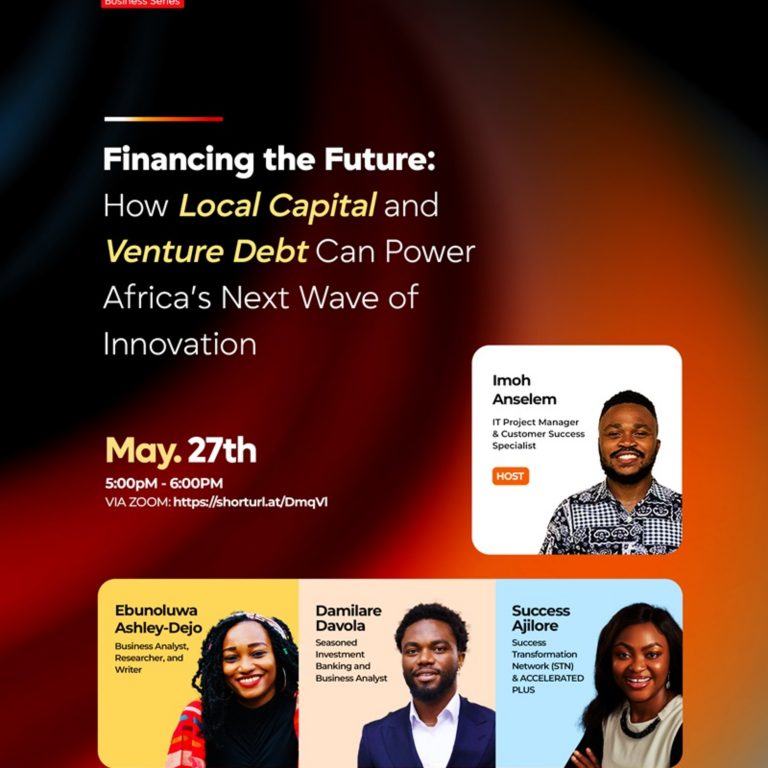
Financing the Future: Venture Debt, Local Capital & African Innovation | TBS May 2026 Webinar
byTecheconomy

Africa’s innovation ecosystem is evolving, but where will the funding for the next generation of startups come from?

In this edition of the Techeconomy Business Series (TBS) May 2026, industry experts explore how local capital, venture debt, and smarter investment structures are redefining startup growth and innovation across Africa.

🎙️ Featured Speakers:

* Ebunoluwa Ashley-Dejo

* Damilare Davola

* Success Ajilore (STN & Accelerated Plus)

Key conversations in this webinar include:

✔️ The future of startup financing in Africa

✔️ Venture debt and alternative funding models

✔️ The role of local investors in scaling innovation

✔️ Sustainable investment strategies for African startups

✔️ Opportunities and challenges in the African tech ecosystem

Subscribe for more conversations shaping Africa’s digital economy and innovation landscape.

#TBS2026 #AfricanInnovation #VentureDebt #StartupFinance #TechInAfrica #Techeconomy #AfricanStartups #InnovationEconomy

Financing the Future: Venture Debt, Local Capital & African Innovation | TBS May 2026 Webinar
May 27, 2026
Techeconomy
PROTECTING INNOVATION IN AFRICA’S STARTUP ECOSYSTEM
April 29, 2026
Techeconomy
BUILDING TRUST IN AFRICA ECOSYSTEM
February 27, 2026
Techeconomy
Navigating a Career in Tech Sales
January 29, 2026
Techeconomy
How Technology is Transforming Education, Health, and Business
November 27, 2025
Techeconomy
Search Results placeholder
upperlink
Advertisements
ADVERTISEMENT
  • About Us
  • Careers
  • Contact Us
  • Privacy Policy

© 2026 TECHECONOMY.

No Result
View All Result
  • Technology
  • Business
  • Economy
  • Features
  • Editorial
  • Brand Content
  • TECHECONOMY TV

© 2026 TECHECONOMY.

This website uses cookies. By continuing to use this website you are giving consent to cookies being used. Visit our Privacy and Cookie Policy.