

ADVERTISEMENT
Monday, March 30, 2026
  • Login
Tech | Business | Economy
No Result
View All Result
NEWSLETTER
  • News
  • Tech
    • DisruptiveTECH
    • ConsumerTech
    • How To
    • TechTAINMENT
  • Business
    • BUSINESS SENSE FOR SMEs
    • Telecoms
    • Commerce & Mobility
    • Environment
    • Travel
    • StartUPs
      • Chidiverse
    • TE Insights
    • Security
  • Partners
  • Economy
    • Finance
    • Fintech
    • Digital Assets
    • Personal Finance
    • Insurance
  • Features
    • IndustryINFLUENCERS
    • Guest Writer
    • EventDIARY
    • Editorial
    • Appointment
    • Chidiverse
  • TECHECONOMY TV
  • Apply
  • TBS
  • Advertise
  • News
  • Tech
    • DisruptiveTECH
    • ConsumerTech
    • How To
    • TechTAINMENT
  • Business
    • BUSINESS SENSE FOR SMEs
    • Telecoms
    • Commerce & Mobility
    • Environment
    • Travel
    • StartUPs
      • Chidiverse
    • TE Insights
    • Security
  • Partners
  • Economy
    • Finance
    • Fintech
    • Digital Assets
    • Personal Finance
    • Insurance
  • Features
    • IndustryINFLUENCERS
    • Guest Writer
    • EventDIARY
    • Editorial
    • Appointment
    • Chidiverse
  • TECHECONOMY TV
  • Apply
  • TBS
  • Advertise
No Result
View All Result
Tech | Business | Economy
No Result
View All Result
  • News
  • Tech
  • Business
  • Partners
  • Economy
  • Features
  • TECHECONOMY TV
  • Apply
  • TBS
  • Advertise

Home » 84% of Users Store Sensitive Data Digitally – Kaspersky

84% of Users Store Sensitive Data Digitally – Kaspersky

Global research shows that zoomers and millennials keep nearly everything electronically

Joan Aimuengheuwa by Joan Aimuengheuwa
March 30, 2026
in Security
Reading Time: 3 mins read
0
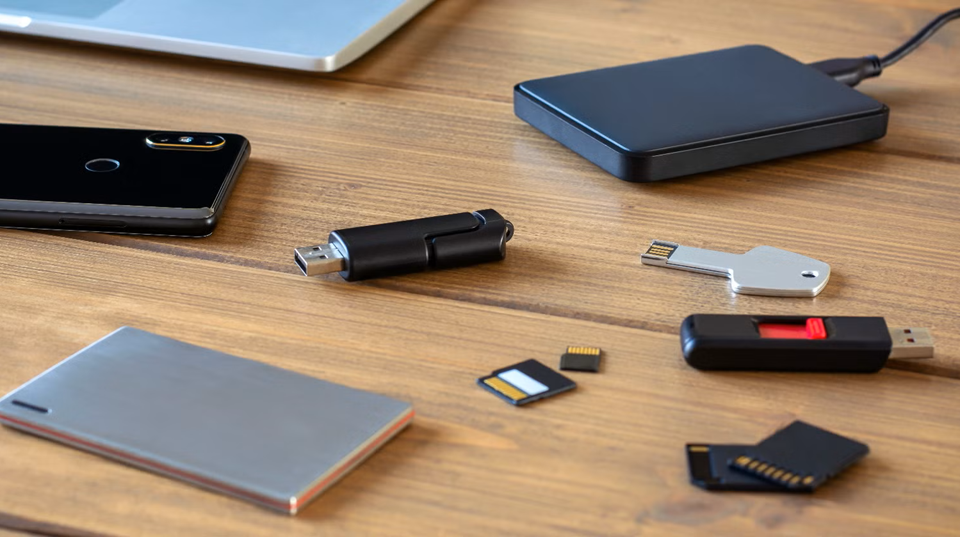
digital data storage

digital data storage

Ahead of World Backup Day, Kaspersky reveals the most popular ways to store important data and gives practical advice on how to keep it safe.

Global research shows that zoomers and millennials keep nearly everything electronically, while almost one‑in‑three respondents over 55 y. o. still prefer good old‑fashioned paper.

Where do we store what matters? 

Research conducted by Kaspersky’s Market Research center shows that most people prefer to keep important info stored digitally.

The majority of all respondents (84%) claim they store sensitive personal data like ID, financial details, healthcare related info or photo archive in electronic format.

When it comes to digital data storage, more than half (56%) say they keep their important records on a computer or a hard drive, 45% use cloud solutions and 20% entrust their data to government digital services.

Subscribe to our Telegram channel for the latest updates.

Follow the latest developments with instant alerts on breaking news, top stories, and trending headlines.

Join Channel

Does digital mean safer?

Each storage method has its own advantages and limitations. Physical media can be lost or suffer damage, external hard drives are not always convenient to use on the go and cloud services, while being accessible, are vulnerable to unauthorised access.

To maximise digital data security, Kaspersky experts advise adhering to the following best‑practice recommendations:

1. Develop a backup strategy

There is no universal approach to data storage, nor is it necessary to back up every single file. Nonetheless, cultivating a regular backup routine is strongly recommended, particularly for sensitive data or files that cannot be regenerated or recovered through other means.

Stanbic
Advertisements

According to the popular 3-2-1 backup strategy you should have at least three copies of important data, store it on two different storage types, and make at least one copy off-side (cloud or external physical location).

The most sensitive data like passwords, ID or financial details requires special attention. Use a dedicated security solution like Kaspersky password manager, which apart from securely keeping users’ credentials and bank cards, has a special secret vault functionality aimed at storing important documents, for example, scanned Passports/IDs and PDF files, addresses and notes.

2. Protect your vaults

According to Kaspersky’s data, 98% of all respondents take at least some measures to protect their personal data storages, which is a good sign.

However, 36% of respondents use quick-to-remember passwords to safeguard their personal data. Relying solely on simple passwords leaves your digital vaults vulnerable to brute‑force attacks. That’s why experts recommend enabling two‑factor authentication (2FA) wherever it is available or adopting passkey technology.

Passkeys can be stored securely in a password manager and accessed seamlessly from any authorised device.

3. Set up automatic backups where possible

Continuously remembering to perform backups can be cumbersome. To streamline the process, enable the built‑in backup service on every device you use (e.g., iCloud for iPhone/iPad/Mac, Google Drive/OneDrive for Android/Windows). Test it once a month or two by restoring a single file, just to be sure the backup works. Kaspersky Premium allows users to make regular backups and restore information on Windows devices.

Backup copies of data can be easily saved on removable drives or in cloud storage in an encrypted format.

“We all know backups are important, but most of us never do them because we try to back up everything at once and it gets overwhelming. The smarter approach? Treat backup like any other workflow. Tag your files – critical, important, low‑priority. Automate real‑time backups for the critical stuff, schedule weekly or monthly backups for the rest. And for sensitive data like passwords and IDs, use our dedicated solution with a secret vault to keep it secure. When you automate and prioritise, you protect what really matters without getting overloaded,” comments Marina Titova, vice president for Consumer Business in Kaspersky.

The study was conducted by Kaspersky’s market research center in November 2025. 3000 respondents from 15 countries; Argentina, Chile, China, Germany, India, Indonesia, Italy, Malaysia, Mexico, Saudi Arabia, South Africa, Spain, Turkey, UK, United Arab Emirates, took part in the survey.


0Shares

Stanbic
Advertisements
Previous Post

FUNAAB Student Adeboye Oluwagbemiga Takes Solar-Biomass Innovation to Germany

Next Post

Africa at the Crossroads of Power: Why AI Governance Demands Institutional Strength, Strategic Negotiation, and Ethical Leadership

Joan Aimuengheuwa

Joan Aimuengheuwa

Joan thrives at helping individuals and businesses scale via storytelling...

Next Post
Professor OJO EMMANUEL ADEMOLA - Sustainable Development and AI in Developing economies and Border Security, ChatGPT, synergy technologies | AI Governance

Africa at the Crossroads of Power: Why AI Governance Demands Institutional Strength, Strategic Negotiation, and Ethical Leadership

Leave a Reply Cancel reply

Your email address will not be published. Required fields are marked *

I agree to the Terms & Conditions and Privacy Policy.

This site uses Akismet to reduce spam. Learn how your comment data is processed.

MTN New
Techeconomy Podcast
Techeconomy Podcast

The Techeconomy Podcast is a thought-leadership show exploring the powerful intersection of technology, business, and the economy, with a strong focus on Africa’s fast-evolving digital landscape.

BUILDING TRUST IN AFRICA ECOSYSTEM
byTecheconomy

Africa’s digital economy is growing fast, but growth without trust cannot last.Join us for the February Edition of the Techeconomy Business Series as industry experts explore how trust, security, innovation, and user experience are shaping Africa’s evolving digital ecosystem.

BUILDING TRUST IN AFRICA ECOSYSTEM
February 27, 2026
Techeconomy
Navigating a Career in Tech Sales
January 29, 2026
Techeconomy
How Technology is Transforming Education, Health, and Business
November 27, 2025
Techeconomy
INNOVATION IN MOBILE BANKING
October 30, 2025
Techeconomy
The Rise of AI: Impact on Jobs & Businesses
September 25, 2025
Techeconomy
Search Results placeholder
UBA
Advertisements
Stanbic
Advertisements
  • About Us
  • Careers
  • Contact Us

© 2026 TECHECONOMY.

No Result
View All Result
  • Techeconomy
  • News
  • Technology
  • Business
  • Economy
  • Jobseeker
  • Advertise

© 2026 TECHECONOMY.

Welcome Back!

Login to your account below

Forgotten Password?

Retrieve your password

Please enter your username or email address to reset your password.

Log In
This website uses cookies. By continuing to use this website you are giving consent to cookies being used. Visit our Privacy and Cookie Policy.