

Nigeria’s logistics sector sits at a painful crossroads, rising demand driven by e-commerce and manufacturing, but broken systems that choke movement and punish both producers and consumers.
For many businesses, the cost of transporting goods is now equal to or greater than the cost of the goods themselves.
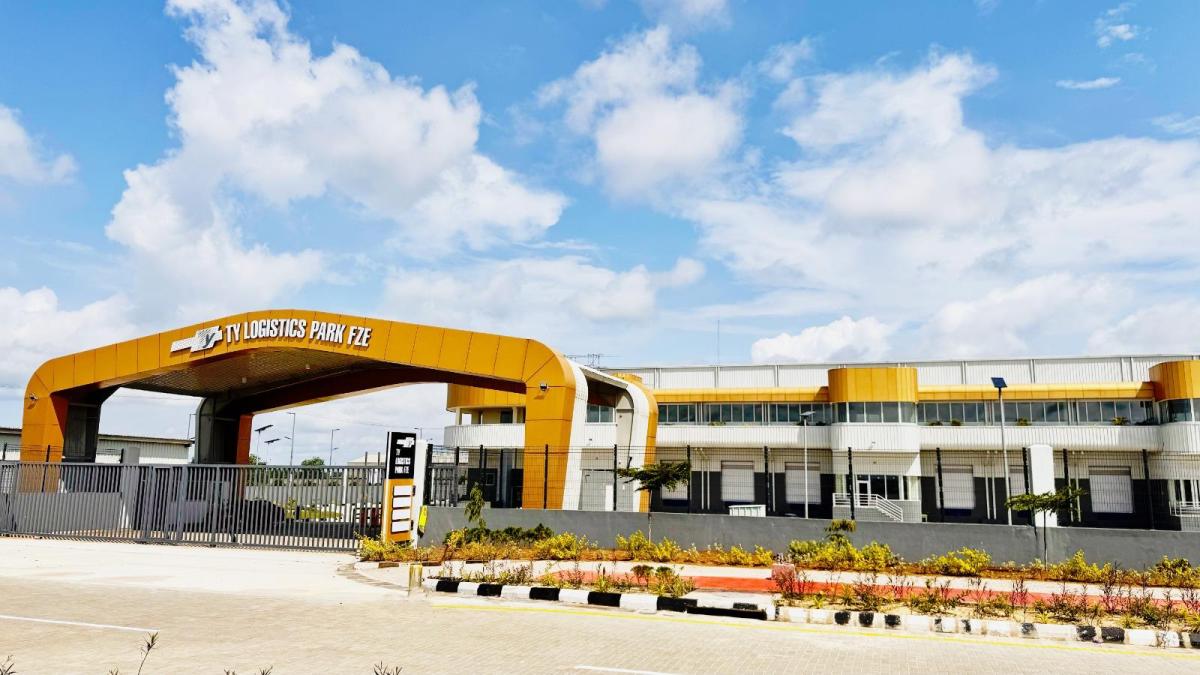
TY Logistics Park, a new Grade-A logistics hub inside the Lekki Free Trade Zone, believes it has a model that can reverse the losses bleeding the industry.
The Problem: Complexity That Costs Businesses Money
Based on insights shared by CEO Arno van der Merwe, Nigeria’s logistics challenges are not episodic, they are structural:
- Underinvestment in quality logistics infrastructure
- Poor intermodal links between roads, ports, and airports
- Port congestion leading to clearance delays of 18–21 days
- Customs fragmentation
- Unreliable warehousing standards
- Lack of technology-driven operations
This has created one of the most expensive logistics corridors in the world, contributing to Nigeria’s over $1.7 billion annual loss.
The TY Solution: Build Predictability Into the System
The company’s core thesis is straightforward: reduce friction, and cost will fall.
The park merges five traditionally separate segments into one controlled ecosystem; Clearing & Forwarding, Contract Logistics, Route-to-Market Planning, Free Zone Operations, and Digital Supply Chain Visibility.
Businesses can keep inventory within the free zone without paying duties upfront, paying only on consignment release. This alone, Van der Merwe noted, is a major relief for companies who currently lock up capital in upfront duties.
Infrastructure Built to Global Standard
TY Logistics Park’s facilities include:
- 100,000 sqm in Phase 1
- High-grade racked environments
- Jointless floors for heavy machinery
- System-driven inventory management
- Energy-efficient, green-certified warehouses
- 30% lower water and energy consumption
- Full repatriation rights & zero corporate taxes (free zone benefits)
These are features largely absent in Nigeria’s traditional logistics architecture.
Designed for Large Enterprises and Small Businesses
A key differentiator is the “every client matters” principle.
“A client with two pallets gets the same attention as a client with 10,000 pallets,” Van der Merwe said.
This positions the park as an equalizer for Nigeria’s growing SME export community, especially food, beauty, crafts, and light manufacturing businesses seeking US, EU, and Asian markets.
Regional Positioning: Becoming the Hub Nigeria Should Be
Ty Logistics Park is located at the “orbital cusp” of the Lekki Free Trade Zone, with:
- 12 minutes to the international airport
- 40 minutes to Lagos
- 50 minutes to Apapa
- Direct access to Lekki Port
The company expects the park to move 500,000 to 1 million metric tons annually in its early phase, with potential to hit 2 million as the full build-out continues.
Sectors targeted include; Pharma, Automotive, Tech, Oil & gas, Chemicals, Consumer goods.
The park has already begun serving parts of the Dangote Refinery and Fertilizer operations, highlighting early market confidence.
Building a Nigerian Story
Despite having led logistics operations in Kenya, South Africa, and East Africa, Van der Merwe emphasises that the ambition is anchored in Nigeria:
“We want to make this a Nigerian story. We’ve invested in the assets. We’re here for the long run.”
The Bigger Picture
If successful, the model could:
- Reduce logistics costs
- Attract manufacturers back to Nigeria
- Improve export competitiveness
- Reclaim cargo currently diverted to neighbouring countries
- Expand logistics employment within Lagos and the region
- Strengthen intra-African trade under AfCFTA
In a sector often described as Nigeria’s ‘hidden tax on business’, TY Logistics Park is positioning itself as the first major attempt to modernize the backbone of the economy. How TY Logistics Park Plans to Fix Nigeria’s $1.7bn Logistics Drain.
Nigeria’s logistics sector sits at a painful crossroads, rising demand driven by e-commerce and manufacturing, but broken systems that choke movement and punish both producers and consumers. For many businesses, the cost of transporting goods is now equal to or greater than the cost of the goods themselves.
TY Logistics Park, a new Grade-A logistics hub inside the Lekki Free Trade Zone, believes it has a model that can reverse the losses bleeding the industry.
The Problem: Complexity That Costs Businesses Money
Based on insights shared by CEO Arno van der Merwe, Nigeria’s logistics challenges are not episodic, they are structural:
- Underinvestment in quality logistics infrastructure
- Poor intermodal links between roads, ports, and airports
- Port congestion leading to clearance delays of 18–21 days
- Customs fragmentation
- Unreliable warehousing standards
- Lack of technology-driven operations
This has created one of the most expensive logistics corridors in the world, contributing to Nigeria’s over $1.7 billion annual loss.
The TY Solution: Build Predictability Into the System
The company’s core thesis is straightforward: reduce friction, and cost will fall.
The park merges five traditionally separate segments into one controlled ecosystem; Clearing & Forwarding, Contract Logistics, Route-to-Market Planning, Free Zone Operations, and Digital Supply Chain Visibility
Businesses can keep inventory within the free zone without paying duties upfront, paying only on consignment release. This alone, Van der Merwe noted, is a major relief for companies who currently lock up capital in upfront duties.
Infrastructure Built to Global Standard
TY Logistics Park’s facilities include:
- 100,000 sqm in Phase 1
- High-grade racked environments
- Jointless floors for heavy machinery
- System-driven inventory management
- Energy-efficient, green-certified warehouses
- 30% lower water and energy consumption
- Full repatriation rights & zero corporate taxes (free zone benefits)
These are features largely absent in Nigeria’s traditional logistics architecture.
Designed for Large Enterprises and Small Businesses
A key differentiator is the “every client matters” principle.
“A client with two pallets gets the same attention as a client with 10,000 pallets,” Van der Merwe said.
This positions the park as an equalizer for Nigeria’s growing SME export community, especially food, beauty, crafts, and light manufacturing businesses seeking US, EU, and Asian markets.
Regional Positioning: Becoming the Hub Nigeria Should Be
Ty Logistics Park is located at the “orbital cusp” of the Lekki Free Trade Zone, with:
- 12 minutes to the international airport
- 40 minutes to Lagos
- 50 minutes to Apapa
- Direct access to Lekki Port
The company expects the park to move 500,000 to 1 million metric tons annually in its early phase, with potential to hit 2 million as the full build-out continues.
Sectors targeted include; Pharma, Automotive, Tech, Oil & gas, Chemicals, Consumer goods.
The park has already begun serving parts of the Dangote Refinery and Fertilizer operations, highlighting early market confidence.
Building a Nigerian Story
Despite having led logistics operations in Kenya, South Africa, and East Africa, Van der Merwe emphasises that the ambition is anchored in Nigeria:
“We want to make this a Nigerian story. We’ve invested in the assets. We’re here for the long run.”
The Bigger Picture
If successful, the model could:
- Reduce logistics costs
- Attract manufacturers back to Nigeria
- Improve export competitiveness
- Reclaim cargo currently diverted to neighbouring countries
- Expand logistics employment within Lagos and the region
- Strengthen intra-African trade under AfCFTA
In a sector often described as Nigeria’s ‘hidden tax on business’, TY Logistics Park is positioning itself as the first major attempt to modernize the backbone of the economy. How TY Logistics Park Plans to Fix Nigeria’s $1.7bn Logistics Drain.
Nigeria’s logistics sector sits at a painful crossroads, rising demand driven by e-commerce and manufacturing, but broken systems that choke movement and punish both producers and consumers. For many businesses, the cost of transporting goods is now equal to or greater than the cost of the goods themselves.
TY Logistics Park, a new Grade-A logistics hub inside the Lekki Free Trade Zone, believes it has a model that can reverse the losses bleeding the industry.
The Problem: Complexity That Costs Businesses Money
Based on insights shared by CEO Arno van der Merwe, Nigeria’s logistics challenges are not episodic, they are structural:
- Underinvestment in quality logistics infrastructure
- Poor intermodal links between roads, ports, and airports
- Port congestion leading to clearance delays of 18–21 days
- Customs fragmentation
- Unreliable warehousing standards
- Lack of technology-driven operations
This has created one of the most expensive logistics corridors in the world, contributing to Nigeria’s over $1.7 billion annual loss.
The TY Solution: Build Predictability Into the System
The company’s core thesis is straightforward: reduce friction, and cost will fall.
The park merges five traditionally separate segments into one controlled ecosystem; Clearing & Forwarding, Contract Logistics, Route-to-Market Planning, Free Zone Operations, and Digital Supply Chain Visibility.
Businesses can keep inventory within the free zone without paying duties upfront, paying only on consignment release. This alone, Van der Merwe noted, is a major relief for companies who currently lock up capital in upfront duties.
Infrastructure Built to Global Standard
TY Logistics Park’s facilities include:
- 100,000 sqm in Phase 1
- High-grade racked environments
- Jointless floors for heavy machinery
- System-driven inventory management
- Energy-efficient, green-certified warehouses
- 30% lower water and energy consumption
- Full repatriation rights & zero corporate taxes (free zone benefits)
These are features largely absent in Nigeria’s traditional logistics architecture.
Designed for Large Enterprises and Small Businesses
A key differentiator is the “every client matters” principle.
“A client with two pallets gets the same attention as a client with 10,000 pallets,” Van der Merwe said.
This positions the park as an equalizer for Nigeria’s growing SME export community, especially food, beauty, crafts, and light manufacturing businesses seeking US, EU, and Asian markets.
Regional Positioning: Becoming the Hub Nigeria Should Be
Ty Logistics Park is located at the “orbital cusp” of the Lekki Free Trade Zone, with:
- 12 minutes to the international airport
- 40 minutes to Lagos
- 50 minutes to Apapa
- Direct access to Lekki Port
The company expects the park to move 500,000 to 1 million metric tons annually in its early phase, with potential to hit 2 million as the full build-out continues.
Sectors targeted include; Pharma, Automotive, Tech, Oil & gas, Chemicals, Consumer goods.
The park has already begun serving parts of the Dangote Refinery and Fertilizer operations, highlighting early market confidence.
Building a Nigerian Story
Despite having led logistics operations in Kenya, South Africa, and East Africa, Van der Merwe emphasises that the ambition is anchored in Nigeria:
“We want to make this a Nigerian story. We’ve invested in the assets. We’re here for the long run.”
The Bigger Picture
If successful, the model could:
- Reduce logistics costs
- Attract manufacturers back to Nigeria
- Improve export competitiveness
- Reclaim cargo currently diverted to neighbouring countries
- Expand logistics employment within Lagos and the region
- Strengthen intra-African trade under AfCFTA
In a sector often described as Nigeria’s ‘hidden tax on business’, TY Logistics Park is positioning itself as the first major attempt to modernize the backbone of the economy.