The United Kingdom-Nigeria Infrastructure Advisory Facility (UKNIAF), launched in 2019, is the third programme in a longer 16-year legacy of infrastructure support from the UK Government to the Government of Nigeria.
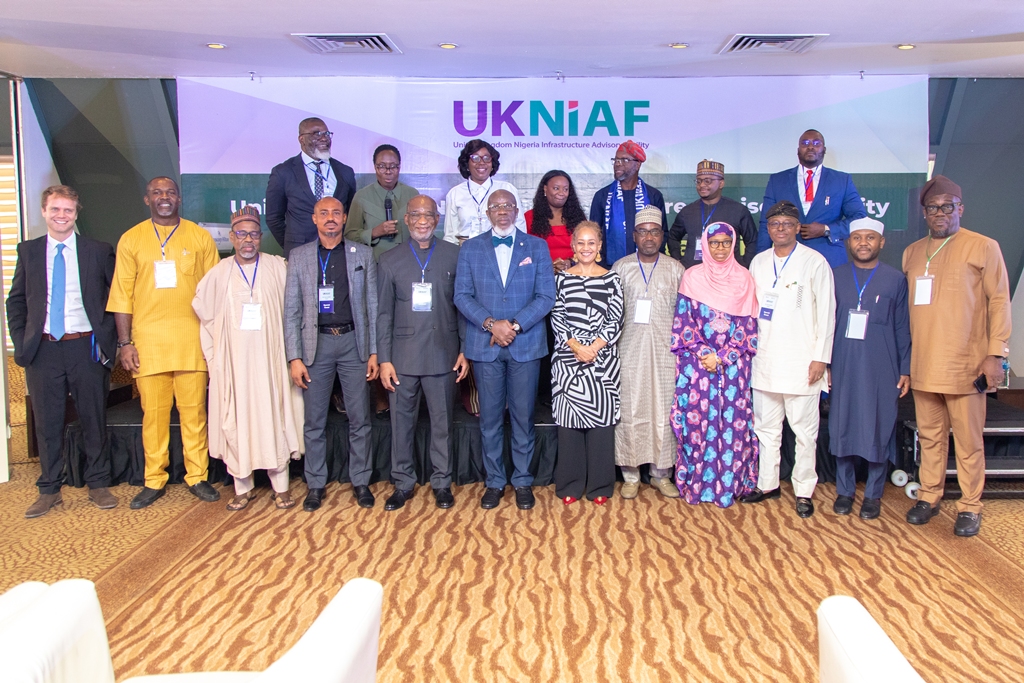
On Tuesday the 2nd of December, the programme brought together over 100 senior stakeholders from government, development partners, development finance institutions and the private sector, to reflect on the last six successful years of UKNIAF work and celebrate the close-out for this phase of UK government support.
Since its inception, UKNIAF has provided targeted technical assistance and advisory support to Federal and State institutions across the Power, Infrastructure Finance and Roads sectors, helping to embed evidence-based reforms and data-driven decision-making.
Through its work, the programme enabled significant finance to be mobilised and supported sector transformation in sub-national markets. It strengthened key institutions, creating a more investor-ready environment for infrastructure.
Plenary and panel sessions during the event featured senior representatives of participating ministries, departments and agencies, development partners and private actors.
These discussions highlighted how institutional capacity had evolved, where reforms had taken root, and what was required to sustain momentum.
Participants emphasised the significant contributions of the programme towards supporting economic growth and improving livelihoods. In the Power sector, UKNIAF’s success was underscored in the adoption of landmark policies, enhancing regulatory capabilities and creating new markets.
Examples included the development of the country’s first Integrated Resource Plan which charts a least cost, low carbon pathway for power sector expansion; designing advanced data capabilities at the Nigerian Electricity Regulatory Commission (NERC) to monitor and manage tariffs, grid flows and outages in real time.
And, enabling states to create their own electricity markets to meet their own needs and capitalise on their resources.
In the Infrastructure sector, participants welcomed UKNIAFs efforts to improve the planning, financing and delivery of bankable projects. Key examples included the mobilisation of $75m of financing from the African Development Bank to the Special Agro-Industrial Processing Zone (SAPZ) programme, through the provision of project preparation services to two states; accelerating sustainable mini-grids and solar plants by supporting the Rural Electrification Agency (REA) adopt new project models and technical standards. And, helping to build Nigeria’s bankable project pipeline through the design of a new project preparation facility, with ₦21billion allocated in both of the 2024 and 2025 budgets respectively for its operationalisation.
Frank Edozie, UKNIAF team lead, said:
“UKNIAF’s close-out was not an end point, but a handover for sustained delivery. For over six years, we helped strengthen institutions with tools that make Nigeria’s infrastructure landscape more transparent, climate-smart and attractive to investors, and this legacy now sits with our partners to sustain and grow.”
According to Adebayo Adelabu, the minister of Power,
“The technical assistance, capacity development, and advisory services provided under UKNIAF have laid a firmer foundation for the sustainable and inclusive electricity supply industry we are building in our nation today.”
Cynthia Rowe, head of Development Corporation for UK Foreign, Commonwealth and Development Office (FCDO) in Nigeria, added:
‘’I take great pride in the achievements of the United Kingdom Nigeria Infrastructure Advisory Facility (UKNIAF) and the strong partnership between the UK and Nigeria. Together, we have achieved milestones that once seemed far out of reach. From supporting pioneering states to take control of their electricity markets, to unlocking $75m in financing with project preparation assistance and designing Nigeria’s Climate Change Fund to attract global climate investment. Our shared success has shown what is possible’’.
Prof. Chidiebere Onyia, secretary to the State Government, Enugu State, said:
“The impact of UKNIAF is also reflected in the quality of ambassadors that have transferred the knowledge and experience from the programme into the subnational and national infrastructure delivery process leading to impact and irreversibility. UKNIAF is maybe ending as a programme, but UKNIAF’s legacy in supporting senior decision makers lives on.”
The event delivered renewed commitments from partners to sustain tools and reforms, and the dissemination and handover of knowledge products and programme outputs.
It also reinforced relationships among public, private, and development actors and deepened understanding of the roles that public and private sector players can continue to play in Nigeria’s infrastructure landscape.
Participants included beneficiary clients and donor partners such as the Nigeria Governors’ Forum, the Federal Ministry of Power, the Ministry of Finance, the Nigerian Electricity Regulatory Commission, the Rural Electrification Agency, the Transmission Company of Nigeria, key state governments and other agencies.
They were joined by donor partners and Development Finance Institutions (DFI), including the African Development Bank, World Bank, International Finance Corporation (IFC), and others, alongside private sector and civil society organisations active in Nigeria’s infrastructure and energy ecosystems.