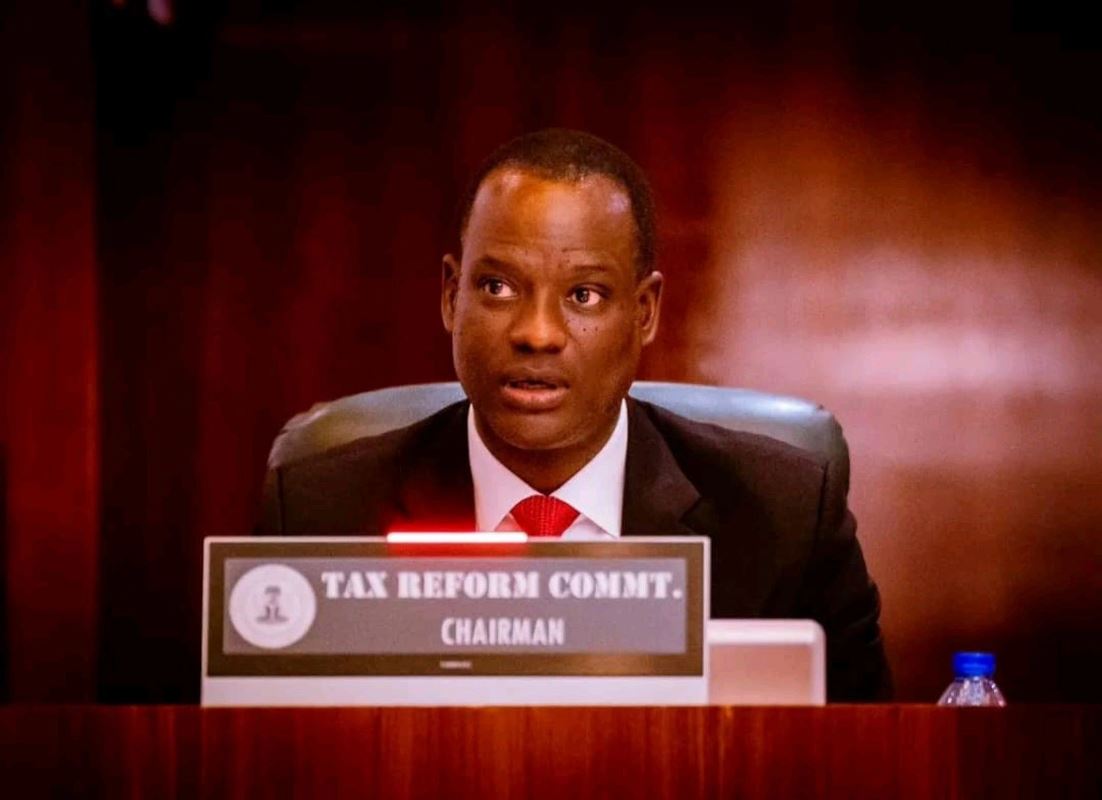
Taiwo Oyedele, chairman of the Presidential Committee on Fiscal Policy and Tax Reforms, has reaffirmed that 97% of Small and Medium-Sized Enterprises (SMEs) in Nigeria will be exempt from Corporate Income Tax (CIT), Value Added Tax (VAT), and withholding tax, effective January 1, 2026.
He also disclosed that large businesses will benefit from reduced tax obligations under the new reforms. Oyedele made this known on Friday, December 26, 2025, in Lagos, after briefing President Bola Tinubu on the committee’s progress.
According to him, the overarching goal of the tax reforms is to drive economic growth, promote inclusivity, and ensure shared prosperity for Nigerians.
“Small businesses, 97% of them, will be exempt from corporate income tax, VAT, and withholding tax, while large businesses will see a reduction in the taxes they pay.
“The whole idea is to promote economic growth, inclusivity, and shared prosperity for our people. We are excited about the progress made so far and are looking forward to January 1, 2026,” Oyedele said.
Responding to calls for the suspension of the reforms following claims that the gazetted laws differ from the bills passed by the National Assembly, Oyedele clarified that the tax reform bills spent nine months at the National Assembly before being signed into law.
He noted that since President Bola Tinubu assented to the bills, the committee has been actively engaging in public sensitisation, capacity building, system upgrades, and stakeholder consultations ahead of implementation.
“As you know, the tax reform bills were at the National Assembly for nine months, from October 2024 to June 2025. Preparation started from day one. Since the laws were signed, we’ve had about six months of preparation, system upgrades, capacity building, and sensitisation.
“This type of reform is a work in progress. You don’t get perfection immediately; you improve as you go. We believe we are ready to commence,” he said.
Oyedele explained that the reason two of the tax laws took effect about six months earlier was to allow key institutions to prepare adequately.
“For instance, you cannot set up the office of the tax board and expect it to function fully from day one. These things take time,” he added.
He further emphasised that continuous engagement with professionals and organised private sector groups remains a priority as implementation approaches.
On revenue expectations, Oyedele stressed that the reforms are not designed for immediate revenue generation but to promote fairness and expand the tax base.
“The intention is not instant revenue. Over time, revenue comes from growth. When the economy grows, people pay taxes not because rates have increased, but because the tax base has expanded. These reforms also eliminate wasteful and distortionary incentives, encourage a stronger tax culture, and improve compliance.
“When people who were previously not paying taxes begin to do so, and they are not low-income earners, society becomes fairer, and government revenue improves naturally,” he concluded.