


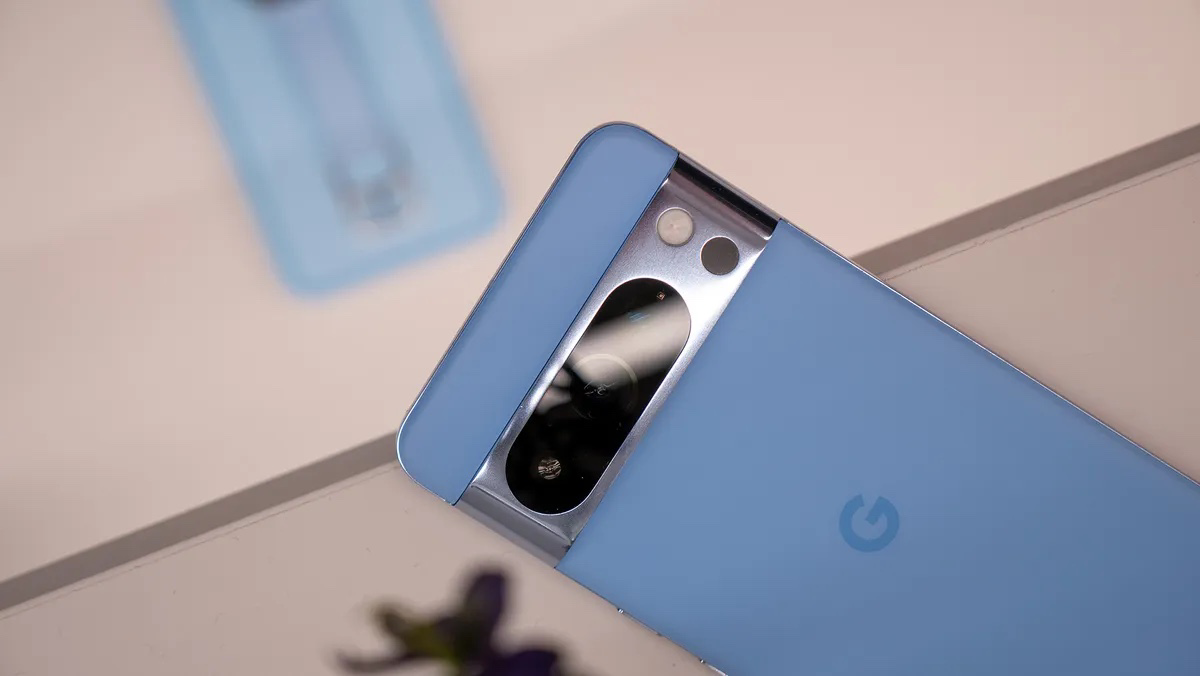
Google has updated the Pixel 8 camera with a new Panorama mode that was first introduced on the Pixel 9.
The new Panorama mode is built on Google’s full HDR+ image pipeline, which means it captures multiple still frames and blends them into a single wide image with better detail and smoother edges.
This is not video-style stitching. Each frame is processed individually, then refined into one high-resolution shot.
Users are guided by floating dots that act like visual anchors, helping them line up each frame accurately. A live preview appears above the viewfinder, showing how the panorama is coming together in real time.
You can shoot left, right, up or down, and the interface adjusts instantly. It works in both portrait and landscape, without forcing awkward hand movements.
What truly makes this update interesting is low-light support. Panorama on the Pixel 8 now works with Night Sight. When the camera detects a dark scene, Night Sight switches on automatically, reducing noise and lifting detail across the entire wide shot.
This can also be controlled manually. For night streets, indoor scenes or evening skylines, the difference is clear. Wide photos no longer collapse into blur and grain.
This change also closes a gap left behind two years ago. Google discontinued Photo Sphere in 2023, a feature many users relied on for immersive wide images.
Panorama effectively revives that idea, but with a cleaner interface, better processing and stronger low-light performance. It keeps the spirit of Photo Sphere while removing its rough edges.
Pixel 8 owners can access the feature by updating the Pixel Camera app to version 10.2 through the Play Store. There is no separate download or announcement. Once updated, Panorama simply appears as part of the camera options.
Stepping back, this update fits a familiar pattern. Google usually launches new tools on its latest phones, then slowly brings some of them to older models. The process, however, is not consistent.
Features such as Auto Frame and Reimagine made their way from newer Pixels to the Pixel 8. Others, including Pixel Screenshots and Add Me, did not.
The same uneven rollout is visible beyond the camera. “Take a Message,” which transcribes live voicemail, was once believed to be exclusive to newer devices but later arrived on Pixel 4 and above.
“Call Notes,” which handles call transcription and summaries, moved from a newer Pixel tier to the Pixel 9 after launch. These changes suggest a strategy that evolves after release, not before.
Some tools are exclusive because older processors struggle with heavier workloads. At the same time, spreading features unevenly across models creates confusion.
Two Pixel phones released just a year apart can end up with very different abilities, even when the hardware gap is small.
Still, this approach gives Google an edge. While competitors usually lock advanced features to new devices, Google is blurring those lines.




