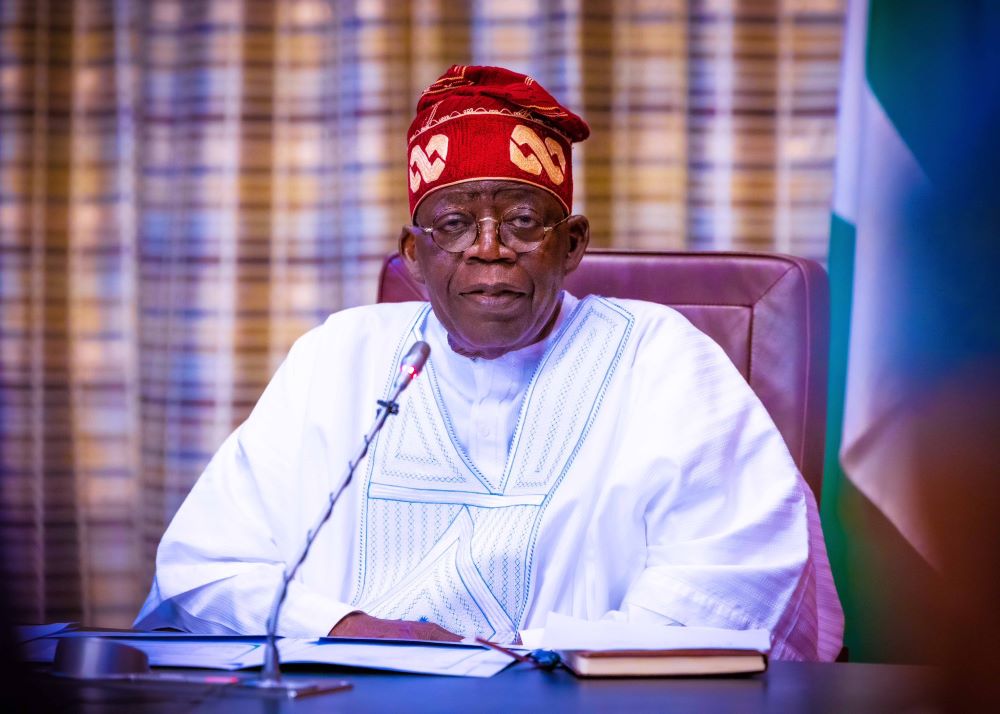
As the curtains rise on 2026, Nigeria appears to be transitioning from a period of “necessary pain” to a more robust phase of economic expansion.
In a New Year address, President Bola Tinubu declared that the foundations for long-term prosperity have been laid, citing a confluence of moderating inflation, a stable currency, and surging investor confidence as the primary engines for the year ahead.
The Macroeconomic Reset: By the Numbers
The year 2025 served as a fiscal “reset” for the nation. Despite global economic headwinds, Nigeria recorded tangible gains that the administration believes will accelerate in 2026:
- GDP Growth: The country closed 2025 with an annualized growth rate expected to exceed 4%.
- Inflation Control: After a period of record highs, inflation has steadily declined, reaching below 15%—a key target for the administration as it enters the new year.
- Foreign Reserves: Supported by sound monetary management, Nigeria’s foreign reserves stood at $45.4 billion as of late December 2025, providing a significant buffer for the Naira against external shocks.
- Investment Surge: Foreign Direct Investment (FDI) saw a dramatic rise, jumping from $90 million in Q2 2025 to $720 million in Q3 2025.
Policy Pillars: Tax Harmonization and Digital Infrastructure
A central theme for 2026 is the implementation of the Tax Reform Acts. The President emphasized that the administration is moving aggressively to confront the challenge of multiple taxation.
By harmonizing tax laws across federal and state tiers, the government aims to reduce the “excessive burden” on citizens and basic consumption, while creating a fairer environment for businesses.
This fiscal discipline is expected to create “fiscal space” for productive investments in infrastructure.
For the tech and telecom sectors, this aligns with the ongoing 2026 roadmap to treat digital assets as Critical National Infrastructure (CNI), a move designed to end the epidemic of fiber cuts and vandalism that hampered service quality in 2025.
Grassroots Economics: The Renewed Hope Ward Program
While the macro indicators look positive, the administration is shifting focus toward Inclusive Growth. In 2026, the government plans to accelerate the Renewed Hope Ward Development Programme.
- The Target: Empowering at least 1,000 people in each of Nigeria’s 8,809 wards.
- The Goal: Bringing at least 10 million Nigerians into productive economic activity through agriculture, mining, and food processing.
Security as an Economic Enabler
President Tinubu reaffirmed that economic progress cannot exist without security. Following decisive military actions against terrorist networks in the Northwest in late December 2025, the President signaled a push for a decentralized policing system.
This, along with regulated forest guards, is viewed as critical to protecting the agricultural and trade routes essential for 2026’s growth targets.
A Year of Accountability
As the President noted, the path of reform is never easy, but the results are becoming measurable.
For the Nigerian business community and the “ordinary Nigerian,” 2026 is positioned not just as another year of survival, but as the beginning of a sustained rebound.
With the Nigerian Stock Exchange posting a 48.12% gain in 2025, the markets are already signaling what the administration hopes will be a prosperous reality for all.
Takeaways:
- For stakeholders in the digital economy, the 2026 outlook suggests a shift toward local manufacturing and infrastructure protection.
- The harmonized tax laws and increased FDI signal a prime window for investment in Nigeria’s expanding tech ecosystem.