

In today’s digital economy, trust is no longer an abstract ideal. It is infrastructure.
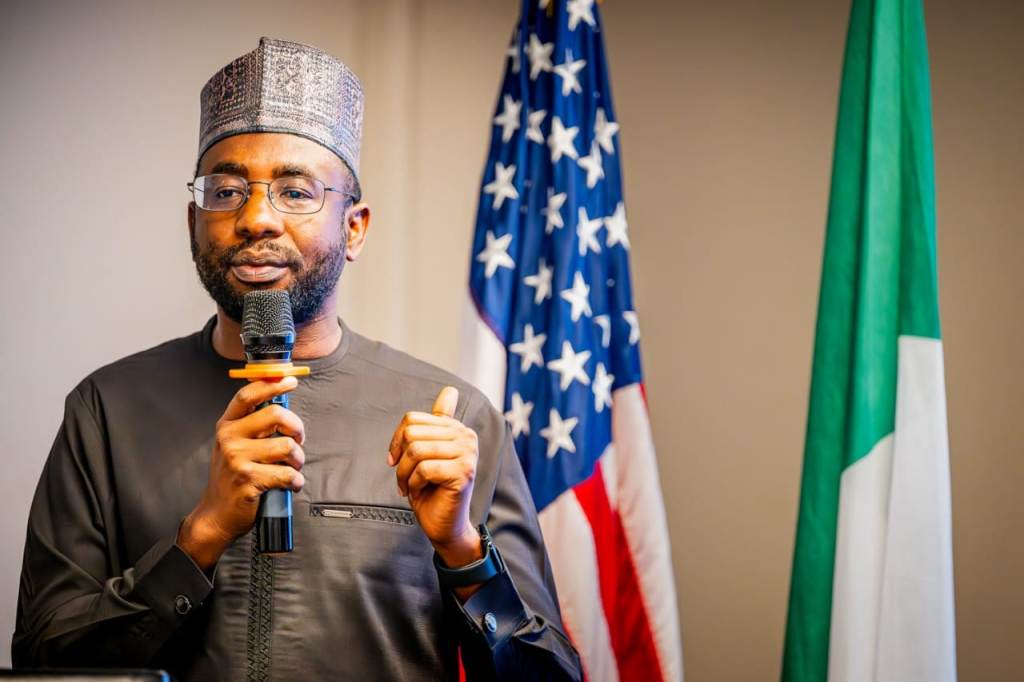
That was the message Kashifu Inuwa Abdullahi, director general of the National Information Technology Development Agency (NITDA), returned to repeatedly as he addressed stakeholders at the Nigeria Data Privacy Capacity Building Workshop, an event convened by the United States Department of State, in collaboration with the Nigerian Mission and key ecosystem players.
Standing before regulators, technologists and policy actors, Inuwa framed Nigeria’s evolving digital relationship with the United States not as a ceremonial partnership, but as a strategic alliance shaped by necessity, one anchored on data privacy, artificial intelligence, cybersecurity and human capacity.
“This collaboration is not new,” he said. “It is deliberate, growing, and focused on solving real digital challenges.”
A Partnership Years in the Making
The workshop, Inuwa noted, was another chapter in a relationship that has steadily deepened over time.
In April 2024, Nigeria and the United States formally agreed, through the U.S.–Nigeria Binational Commission, to work together on critical digital priorities, including AI governance, cybersecurity frameworks, data protection and skills development.
That commitment soon moved from policy to practice.
Later that year, both governments co-hosted an Artificial Intelligence Conference, bringing together policymakers, innovators and global experts to examine how emerging technologies could be responsibly deployed in Nigeria’s fast-growing digital economy.
Nigeria also engaged U.S. cybersecurity companies to explore partnerships aimed at strengthening national technical capacity.
For Inuwa, these were not isolated engagements, but building blocks.
Why Data, AI and Cybersecurity Cannot Be Treated Separately
At the heart of NITDA’s strategy, the DG explained, is a simple but often overlooked truth: digital systems rise or fall on trust.
Artificial intelligence depends on data. Data demands privacy. Privacy can only exist where security is strong.
“None of these can be solved in isolation,” Inuwa said.
Without trust, he argued, innovation slows, adoption stalls and costs rise. With trust, digital transformation accelerates, barriers fall and economic value expands.
This interdependence explains why NITDA has placed data protection, AI governance and cybersecurity at the centre of Nigeria’s digital policy architecture, particularly as the country seeks to position itself as a credible player in the global digital economy.
From Local Conferences to Global Platforms
Inuwa revealed that the workshop also signals what comes next.
Following the participation of the U.S. Mission in Nigeria’s National Cybersecurity Conference last year, plans are underway to scale the event into an international cybersecurity platform in 2026.
The expanded conference is expected to:
- Create a platform for U.S. cybersecurity firms to showcase advanced solutions
- Enable partnerships with Nigerian companies building local cyber tools
- Strengthen Nigeria’s broader cybersecurity ecosystem through shared expertise
For NITDA, the goal is not dependency, but collaboration that builds domestic strength.
Local Talent, Global Partnerships
While acknowledging Nigeria’s reliance on U.S. technologies across public and private digital systems, Inuwa was clear that the country is not short on talent.
Nigeria, he said, has a growing pool of developers, engineers and innovators capable of building homegrown solutions for national and regional challenges, if given the right policies, skills and support.
This, he stressed, is where international partnerships matter most: not just in deploying technology, but in building local capacity and advancing Nigeria’s digital self-determination.
With Africa’s young, digital-native population and expanding market, Inuwa described the continent as the next frontier of the global digital economy, one that must be shaped intentionally, not reactively.
The Stakes Are Clear
Inuwa closed with a sober reminder: digital technology is no longer optional.
“It is the future of economic growth and development,” he said. “No country can afford to be left behind.”
Harnessing the promise of artificial intelligence, he added, requires more than ambition. It demands privacy safeguards, sound policy, and resilient digital foundations capable of supporting rapid technological change.
As Nigeria deepens its digital ties with the United States, the message from NITDA is clear: the future belongs to ecosystems that are secure, trusted, and built to last.
And in that future, trust is not a by-product, it is the starting point