


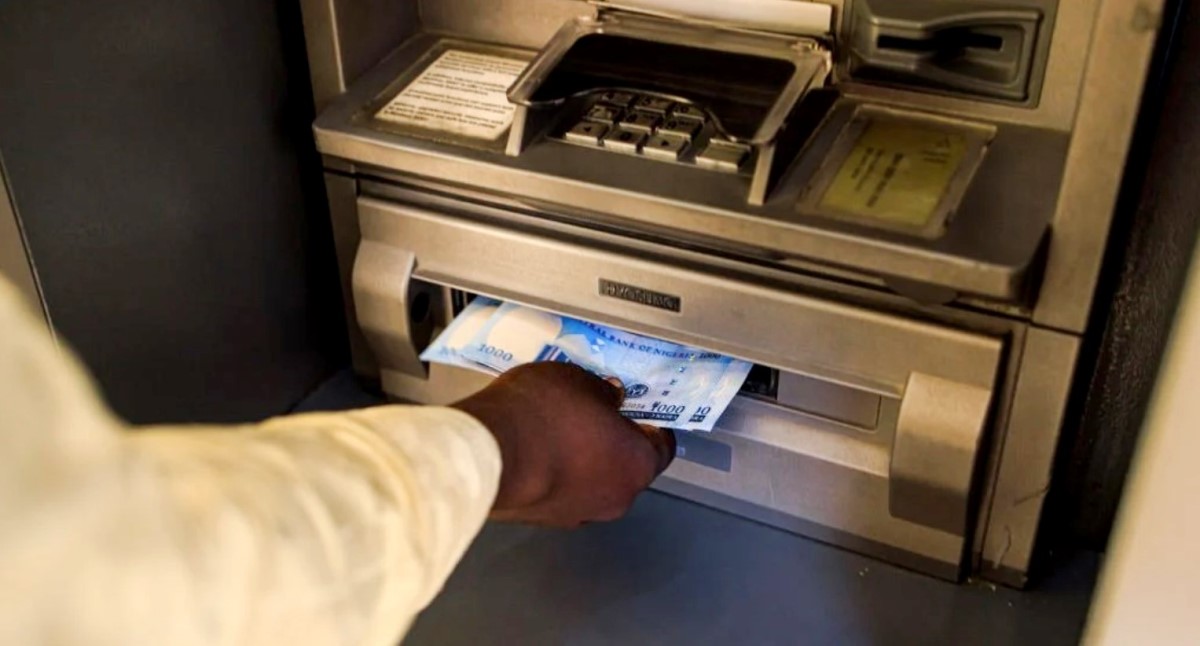
In the first half of 2025, Nigerians withdrew a staggering ₦36.34 trillion from automated teller machines (ATMs), nearly three times the amount recorded in the corresponding period of 2024.
The sharp rise, a 198% increase, underscores a deeper truth about the country’s economy: cash remains king, even in a rapidly digitising financial landscape.
The data, drawn from the Central Bank of Nigeria’s (CBN) Quarterly Statistical Bulletin, reveal that despite efforts to nudge consumers toward digital channels, cash continues to play an outsized role in daily transactions.
Between January and June 2025, Nigerians made 858.8 million ATM withdrawals, a significant jump from 496.5 million in the same period of the previous year, a near 73% increase in volume.
Policy Push Meets Practical Realities
Earlier in 2025, the CBN revised its ATM fee structure, removing the previous allowance of free cross-bank withdrawals and introducing charges on not-on-us transactions, those made at ATMs owned by other banks.
Under the new rules, customers now pay ₦100 per ₦20,000 withdrawn, with additional surcharges on machines located off-site, such as in malls or fuel stations.
The policy was intended to encourage greater efficiency in ATM operations and reduce excessive cash reliance by making physical withdrawals more expensive.
Yet the surge in usage suggests that cost-sensitive consumers have little choice but to keep cash close at hand, even as fees bite deeper into their wallets.
Why Nigerians Still Reach for Cash
Analysts and industry watchers point to several factors driving this trend:
- Persistent Cash Demand: Many Nigerians still depend on cash for everyday transactions, especially in informal markets where digital acceptance is limited.
- Economic Access: For low-income earners and small traders, withdrawing smaller sums more frequently is often a necessity, even if it incurs higher costs.
- Trust and Convenience: Cash provides certainty and immediate liquidity in a context where network issues, agent reliability and digital fraud concerns can discourage electronic transactions.
- Infrastructure Gaps: While point-of-sale (POS) and mobile money channels are expanding, they have not yet displaced cash as the default means for many consumers and businesses.
These trends are reflected across monthly data, with ATM withdrawals climbing steadily from January through June 2025, even as payment channels such as POS see robust growth.
Broader Implications for Policy and the Economy
The persistence of cash usage raises questions about the effectiveness of policies aimed at accelerating Nigeria’s transition toward a cashless economy.
While electronic payments continue to expand in absolute terms, the accelerated growth in ATM withdrawals indicates that underlying behaviour has not shifted as quickly as policymakers hoped.
Economists warn that an overreliance on cash can undermine monetary control, limit financial inclusion, and slow the adoption of more efficient digital channels.
At the same time, fees designed to discourage cash use can disproportionately hurt vulnerable populations who lack access to alternatives.
What Comes Next?
As the CBN and financial institutions work to expand digital infrastructure and payment options, the data on cash withdrawals serves as a reminder of the challenges ahead.
For many Nigerians, cash is not just a medium of exchange, it is a lifeline in an economy where electronic alternatives are still not fully accessible or trusted.
Whether through policy refinements, financial education or broader acceptance of digital channels, the push to balance cash and digital transactions will remain a central theme of Nigeria’s financial evolution.



