


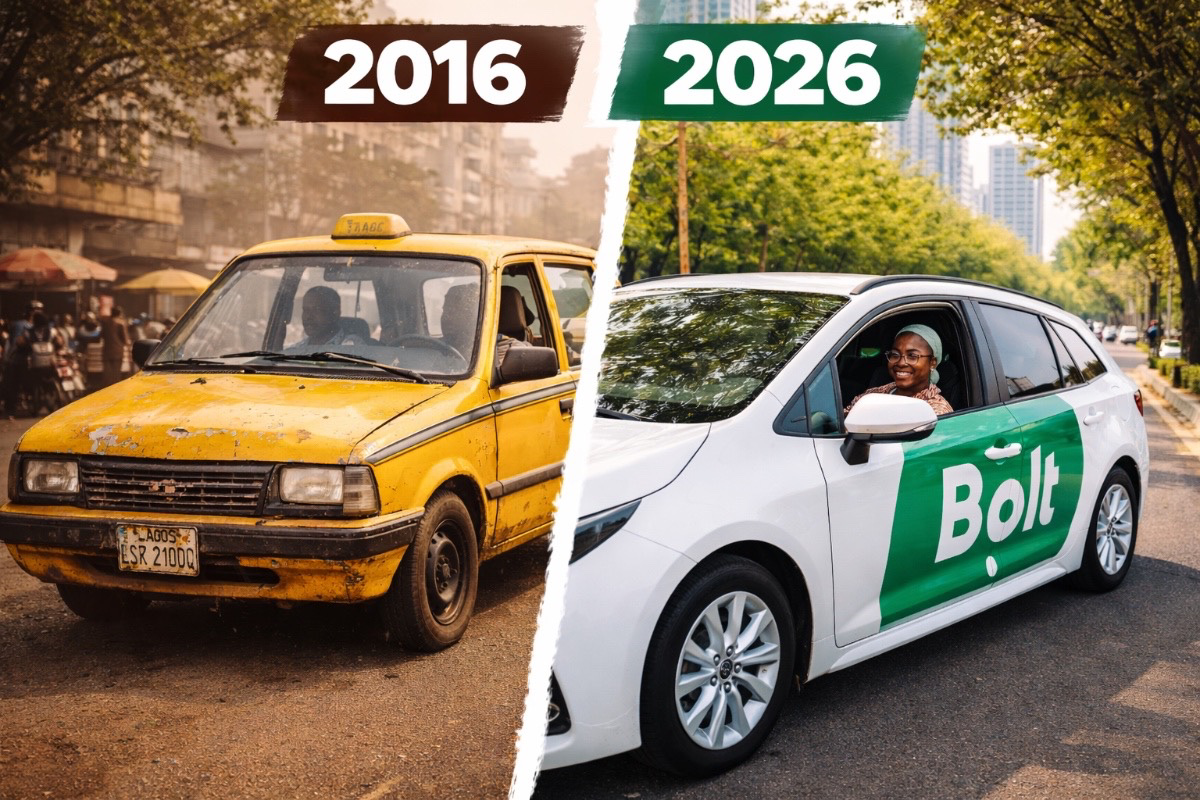
The 2016 vs 2026 trend has been an interesting conversation on the internet, comparing how much has changed over the past decade, so, streamlining that comparison to ride-hailing, let’s dissect how the sector has evolved during this time.
In 2016, when Bolt first launched in Nigeria as Taxify, ride-hailing was still a new idea. Even the name sounded different. Back then, the promise was convenience.
You could book a car from your phone, avoid roadside negotiations, and see who was coming to pick you up. Safety, at the time, largely meant knowing the driver’s name and phone number, and that alone felt revolutionary.
In those early days, ride-hailing platforms were built primarily to move people. If you got from point A to point B without issues, the system had done its job.
There was little conversation around layered safety tools, real-time monitoring, or incident prevention. Riders relied on intuition, drivers relied on experience, and platforms responded only when something went wrong.
Fast forward to 2026, and the conversation has completely shifted.
Today, Bolt operates in a reality where safety is no longer a single feature, it’s an ecosystem. What started with basic trip visibility has evolved into multiple in-app safety tools designed to prevent incidents, detect risk, and respond in real time.
Riders and drivers now have access to a range of safety features that work quietly in the background, from trip sharing and emergency assistance to ride monitoring, identity verification, and recording tools that increase accountability on both sides.
This evolution didn’t happen by accident. As ride-hailing became part of everyday life, late-night trips, airport runs, long-distance movement, the risks became clearer, and expectations grew. Moving people was no longer enough. Platforms had to ensure those movements were as safe as possible.
By 2026, safety on ride-hailing platforms looks very different from what it did a decade earlier. Instead of reacting after incidents, systems are designed to detect unusual activity, encourage safer behaviour, and provide faster access to help when it’s needed.
Drivers are better protected. Riders are more informed. Trust is no longer assumed, it’s built into the experience.
The journey from Taxify in 2016 vs Bolt in 2026 mirrors the growth of ride-hailing itself. What began as a tool for convenience has matured into a service built around responsibility, accountability, and care. The biggest shift isn’t just the number of features, it’s the philosophy behind them.
In 2016, the goal was to get you there. In 2026, the goal is to get you there safely.
And that difference says everything about how far ride-hailing has come.



