
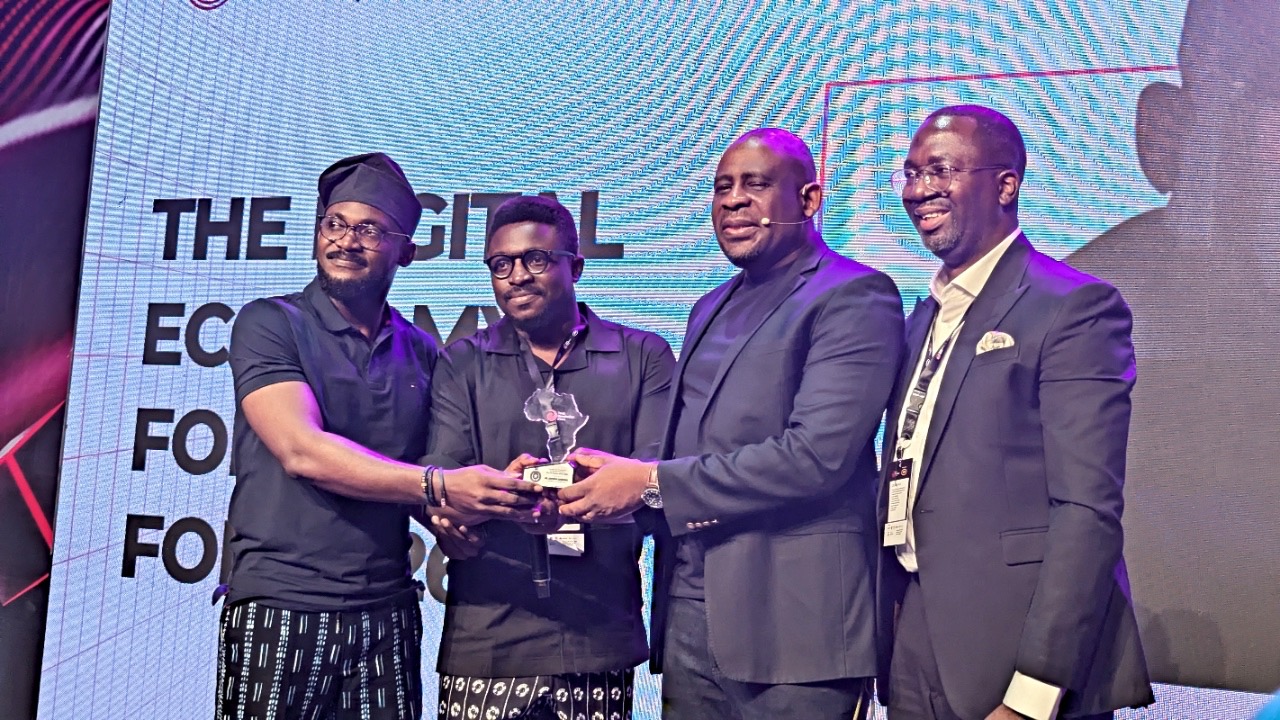
Africa’s next phase in the global digital economy will depend on how quickly it leverages data, cloud infrastructure and human capital, speakers said as Tech Revolution Africa Conference 2.0 opened in Lagos on Friday.
The two-day conference, themed “The Big Bold Step,” brought together telecoms operators, global technology firms, startups, investors, students and public-sector leaders at Landmark Event Centre to discuss what it will take for Africa to stop lagging and start building platforms of its own.
From keynote sessions to fireside chats and product showcases, the conference stressed that the limitations initially preventing African companies from competing at scale are fading away, but hesitation remains highly expensive.
Glory Olamigoke, co-founder and co-convener of Tech Revolution Africa, said the conference was designed to close a persistent gap in the ecosystem.
“We are trying to solve a number of problems and close a number of gaps, but perhaps the most critical one is bridging the gap between the early stage innovators, builders, founders in the ecosystem and the leaders in the space,” he said.
Unlike typical industry gatherings, Olamigoke said the event was intentionally structured to bring founders and decision-makers into the same room, while also extending its reach beyond established stakeholders.
“We are going all the way down to the secondary schools, the primary schools, because we believe that if we can start to culture these young ones, then we will be able to influence the next generation,” he said, pointing to the student tech debates introduced at this year’s edition.
That emphasis on long-term capacity building was reiterated through the day’s conversations, including a fireside chat with the Federal Government, represented by Lagos State Commissioner for Innovation, Science and Technology, Olatunbosun Alake.
Drawing from Nigeria’s reputation challenges abroad, Alake said that while technology is important, Africa’s potential cannot be realised without addressing surrounding challenges, including Nigeria’s image abroad.
“It’s not a technology conversation,” he said. “It’s a conversation that is at the very bottom of the motivation behind everything.”
He urged young professionals to engage the public sector rather than avoid it, describing the work as difficult but impactful. “By all means, do that, because you will have an impact, but make sure that your principles and your values remain strong,” he said.
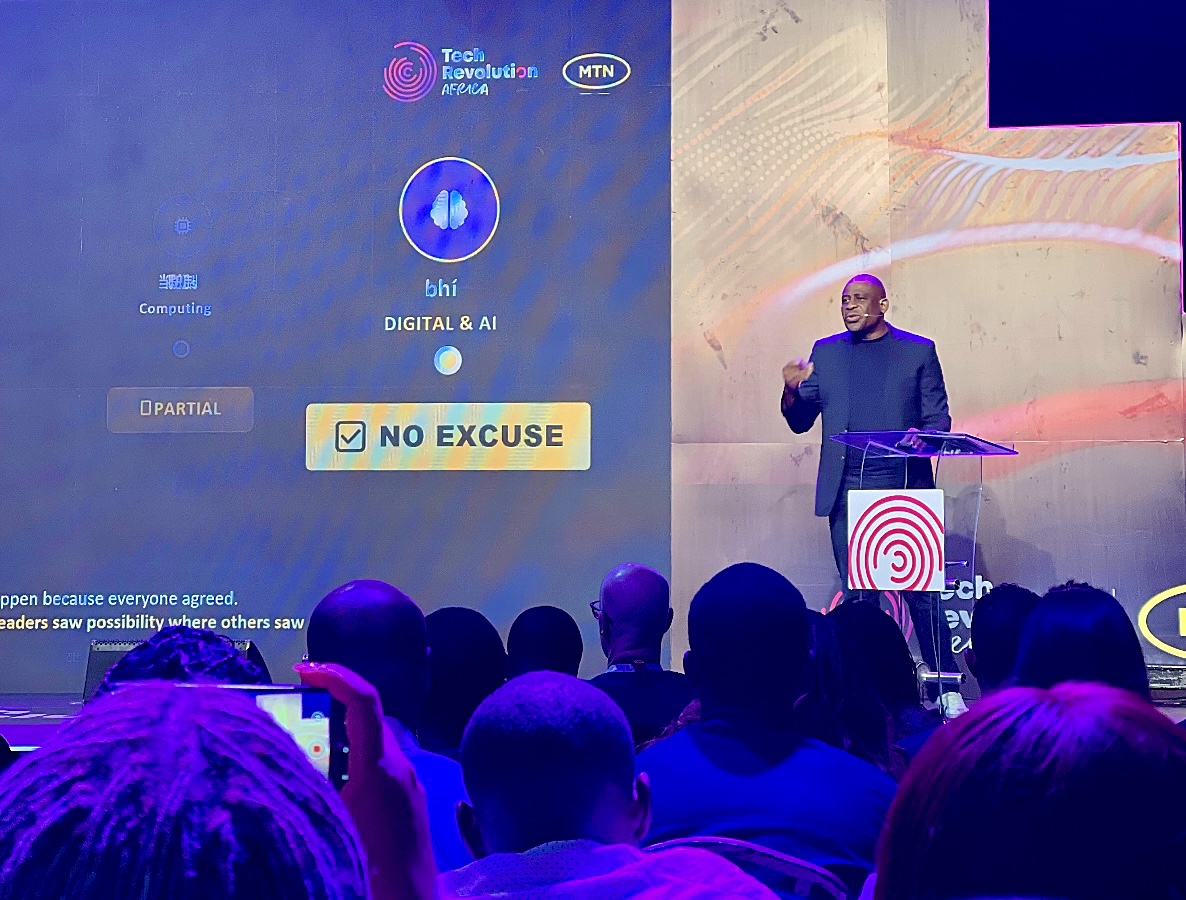
MTN Nigeria’s keynote on the digital economy forecast for 2026, delivered by its Chief Information Officer, Shoyinka Shodunke, went beyond a focus on growth projections.
Shodunke traced Africa’s marginal role across previous industrial revolutions and warned that the fourth leaves little room for delay.
“The inputs today are data, and where’s the factory? The factory sits in the cloud,” he said, adding that talent is no longer bound by geography and computing power no longer requires heavy capital outlay.
He pointed to cloud subscriptions available “at $50” compared to six-figure infrastructure costs in the past, arguing that scale is now accessible to startups and enterprises alike. But he warned that comfort with legacy revenue streams could still hold organisations back.
“You cannot live with a legacy mindset, a fear of disruption, or the comfort of mediocrity,” Shodunke said.
Using MTN as a case study, he explained how the telecoms giant has had to intentionally disrupt itself, moving beyond voice and data into cloud services, fintech and intelligent platforms layered on top of its network infrastructure.
The focus on infrastructure continued during MTN’s product showcase, where Onome Ologe and Tobechukwu Ajoku outlined the company’s local cloud services, emphasising data residency, naira-based pricing and predictable operating costs for Nigerian businesses.
“If you’re a CFO or a founder and you need to know cost accountability, you can go to sleep,” Ajoku said, noting that pricing remains stable regardless of foreign exchange volatility.
From infrastructure, the conversation at Tech Revolution Africa 2.0 moved into data and artificial intelligence during a presentation by Ligadata’s Mike Penner, who revealed the scale of its partnership with MTN Nigeria’s data operations.
“We now are running at 1.2 trillion pet records, 1.4 million records per second,” Penner said, describing a system designed to turn fragmented enterprise data into real-time, actionable intelligence.
“What we’ve done over the past few years at MTN together is something extraordinary,” he said, adding that the goal was not experimentation but measurable value creation.
Penner noted that African enterprises must treat data and knowledge as sovereign assets, warning against outsourcing intelligence without understanding what drives it.
That theme of sovereignty and control resurfaced during a panel on open innovation and hybrid platforms featuring executives from Red Hat and Redington.
Speakers explained that open-source software and hybrid cloud models offer African companies flexibility without locking them into single platforms or geographies.
“Open source is driving innovation.” It is a condition of innovation, particularly for startups seeking speed without prohibitive expenses.
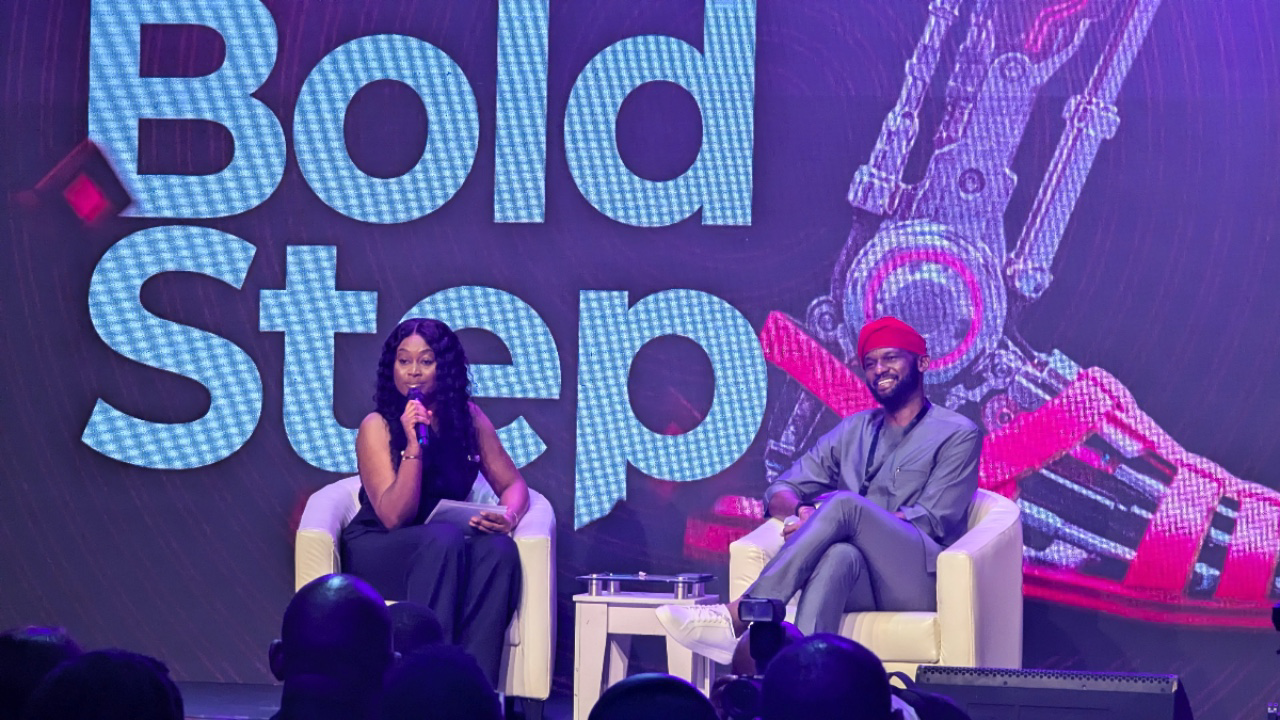
During a fireside chat on Global Tech & the African Market, Soji Maurice-Diya, CEO of ntel (NatCom), emphasized the need for Africa to focus on solving its own problems rather than simply chasing global trends.
He said, “Nobody’s going to solve our problems for us. Yes, we need global access, we need all the technology that’s available, taper all of the solutions and build our own solutions.”
Maurice-Diya added that African companies should prioritise innovation that addresses local challenges, ensuring technology creates measurable impact rather than just replicating global models.
Equinix’s Ayomide Jones, EMEA Business Development, West Africa, also spoke on the role of interconnection in Africa’s digital growth. She highlighted how networks, content and cloud providers work together to enhance modern businesses.
“Everything we use nowadays to solve our problems is content. This is only possible because of interconnection,” Jones said.
She explained that Equinix’s data centres in Lagos and across Africa enable startups and enterprises to connect to cloud services, financial systems, and global platforms without heavy upfront investment, creating the infrastructure that allows African businesses to scale quickly.
For all the talk of opportunity, speakers repeatedly returned to execution as the differentiator. “We always talk, so now, let’s go back and execute,” Olamigoke said.
Day Two of Tech Revolution Africa Conference 2.0 continues on Saturday, with further sessions on policy, investment, emerging technologies and the role of African enterprises in strengthening the continent’s digital economy.