
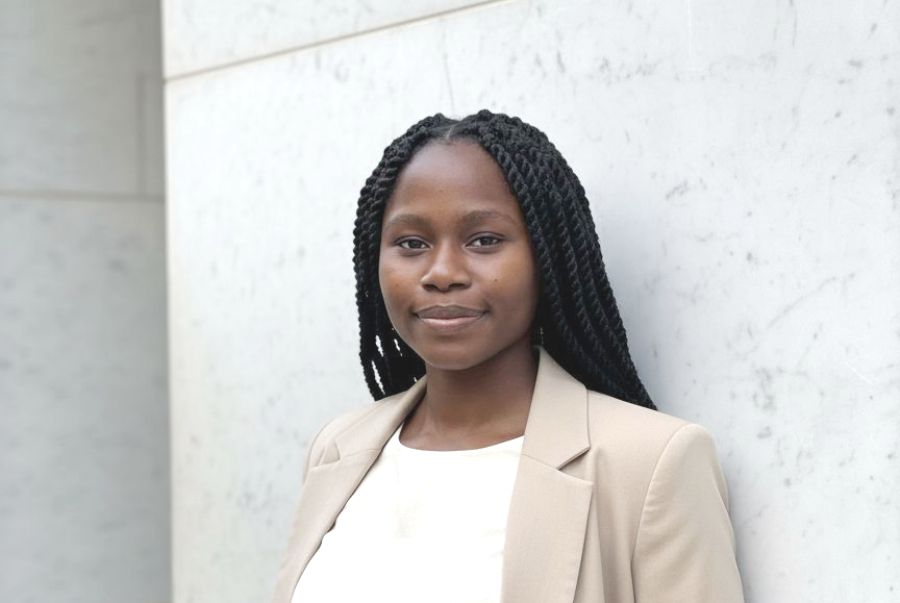
In a Lagos café buzzing with the city’s energy, Eniola Taiwo, founder of the fintech platform Smartsave, explains her mission with quiet determination.
Her company has found remarkable traction with its “Physical-Digital” model, using local agents to onboard thousands of cash-reliant users into the digital economy.
But for Taiwo, the technology is secondary to a deeper insight: true financial inclusion starts with understanding human behaviour, not just deploying software.
In this interview, she discussed about trust, technology and financial inclusion in Nigeria. Excerpt:
The term “financial inclusion” is widely used. What does it mean to you in the context of Smartsave’s model?
Eniola Taiwo: For us, inclusion is a process, not a destination. It’s about meeting people exactly where they are, which for millions is a cash-based, community-trust economy, and walking with them to where they want to be. Our agents aren’t just transaction points; they are trusted guides. This human layer is the core of our innovation. We’ve learned that you can’t digitise trust; you have to build upon it. This philosophy has led to over 30% of our users who start with cash deposits becoming active digital users, managing bills and savings independently. That migration is our most important metric.
How do you foster that kind of change, both in users and within your own team?
Taiwo: It starts with a mindset we call “guided empowerment.” For users, it means the agent is there for the first bill payment, then the second, until confidence replaces apprehension. Internally, I apply the same principle. My role is to provide the “why”, the vision that we are enabling economic dignity, and then empower my team with the “how.”
For example, when we integrated the bill payment feature, I didn’t just task the team with building it. I had them spend a week observing numbers, agents and users. This firsthand insight was transformative; it turned a technical feature into a mission to solve “bill stress.”
I see my key job as creating those connective tissues, between the problem and the solution, between my team’s skills and their purpose. Mentoring for me is about unlocking that sense of ownership.
Looking at Africa’s tech landscape, what’s one piece of advice you often find yourself giving to other entrepreneurs tackling similar complex, human-centric problems?
Taiwo: I always say, “Fall in love with the problem, not your first solution.” The Physical-Digital model wasn’t our first idea; it was the answer that emerged from hundreds of conversations.
My advice is to get out of the building and listen, not to validate your idea, but to understand the daily rituals, fears, and aspirations of the people you want to serve. That depth of understanding becomes your true competitive advantage and the foundation of any sustainable venture.
You often mention your background in data analysis. Can you give a specific example of how that analytical mindset directly shaped a major product decision?
Taiwo: Absolutely. It’s the reason we built our bill payment feature. In the beginning, Smartsave was purely a savings tool. But when I looked at the data from our early users, a clear pattern emerged.
I saw that people would save a lump sum and then, within a short period, withdraw almost the entire amount. My analyst’s instinct was to ask: if the goal is saving, why the immediate outflow?
So, I moved closer to the data, which meant moving closer to our users. I spoke to them and our agents.
The story the numbers hinted at was confirmed: they weren’t withdrawing to hold cash again. They were taking that saved money to physically go and pay bills, electricity, airtime, and school fees.
Some even asked our agents, “Can you just help me pay this bill with the money I have here?” They had achieved the first goal (secure digital savings) but then hit a new wall (inconvenient, cash-based bill payments).
That was the critical gap. The data showed the behaviour, and the conversations revealed the pain point. I realised that true financial inclusion wasn’t just a safe digital wallet; it was a complete loop. We had to close that loop. So, we integrated bill payments directly into the platform.
It was a decision born from looking at the numbers and then understanding the human story behind them. As I’ve said before, “the numbers explain what is happening, but conversations with users explain why.” In this case, the ‘why’ led us to build one of our most vital and used features.
You’ve mentioned scaling trust. What does scaling the business look like for Smartsave, and what are the key challenges you’re preparing for?
Taiwo: It’s about making sure the engine doesn’t fall apart when we hit the highway. The biggest challenge is keeping that feeling of reliability for user number 100,000 when you built the system for user number 1,000. We’re focused on two things.
First, the tech backbone, making sure our servers don’t buckle on a Friday evening when everyone is trying to buy electricity at the same time.
Second, and this is harder, is scaling our culture. How do you make sure a new agent in Kano understands our users as well as our first agent in Lagos did?
We’re building better digital training tools and sharing user stories constantly, so that “guided empowerment” isn’t just a phrase; it’s how every single person in our network operates.
Looking beyond today’s model, what’s the next frontier for innovation in inclusive fintech that excites you?
Taiwo: I get really excited about moving from just giving people a safe digital wallet to actually being a proactive helper.
Now that we’re earning their trust and seeing regular transactions, what’s next? With their permission, could we notice a pattern? Like, “Hi, you always save ₦500 every day. Want us to do that for you automatically?”
Or, could we use that history of good savings behaviour to help a user unlock a small, fair loan when they really need it? For me, the future is about the tech fading into the background and becoming a quiet, intelligent partner that helps people not just store money, but build real financial resilience and opportunity. That’s the goal.