
Of all the impacts that Donald Trump has had on America’s relationship with the rest of the world, arguably the most material has been the withdrawal of $63billion of overseas aid, much of it to the continent of Africa.
Public outrage and legal challenges, including from Oxfam, met the Trump administration’s immediate closure of the United States Agency for International Development (USAID) last year, which had been critical to global humanitarian and development assistance since 1961.
While these cuts represented less than one percent of the federal budget, they have potentially denied education to 23million children, depriving 95million people of basic healthcare, and causing over 3million preventable deaths annually, by dismantling programmes that provided lifesaving aid, food, clean water, and economic support worldwide.
There is also the loss to US companies of the less acknowledged ‘aid dividend’ – the commercial goodwill that often results from government altruism.
The withdrawal of traditional aid, such as from the US, is often framed as a risk. In practice, it may simply create a vacuum for others to fill. The hard currency from aid is helpful, but the underlying demand for better health does not vanish.
This is where Europe, with its historical ties, and China, with its aggressive, long-term strategy, are actively positioning themselves.
Chinese universities are educating Africa’s next generation of professionals, creating deep, lasting ties. For Western companies to cede this ground is not just a commercial mistake; it is a forfeiture of strategic influence in the continents of tomorrow.
The investment landscape for African MedTech, biotech, and pharma is maturing rapidly. The sector is now seen as a high-growth opportunity, defined by demographic inevitability, digital innovation, and a new generation of entrepreneurs who are creating profitable solutions to profound challenges.
Of all the territories of the world, Africa has arguably suffered most from the damaging power of cliché. Lack of knowledge and curiosity about the continent and its people, has contributed to the persistence of stereotypes that have encouraged racist profiling, facilitated exploitation of its people and resources and hampered economic growth.
For decades, the narrative surrounding Africa in the MedTech, biotech, and pharmaceutical sectors was dominated by a charitable, aid-based paradigm – a one-way flow of donated goods and paternalistic programmes.
For companies in the west, the only reason to invest in Africa was through mass vaccination programmes funded by governments and NCOs. But times they are a changing.
A new and more compelling story is emerging around the booming economies of Egypt, Algeria and Nigeria, and the continued emergence of an affluent ‘middle-class’ in these countries.
From my recent immersion in recruiting for the diagnostics space across sub-Saharan Africa, a clear perspective has crystallised: engaging with Africa is no longer an act of charity; it is a critical business and moral imperative for any company with ambitions for the future.
The catalyst for this shift is the confluence of three powerful forces, leapfrog technology adoption, the rise of a capable and dynamic local workforce, and the undeniable demographic and economic trajectory of the continent.
My conversations with professionals from Nairobi to Lagos have fundamentally altered my understanding of the opportunity.
The leapfrog effect
The core of the new opportunity lies in Africa’s ability to bypass legacy systems, particularly with AI in medical imaging.
In the West, the integration of AI into radiology is often seen as a disruptive threat to established professions and workflows.
The resistance is understandable; it’s about managing displacement within a complex, existing structure.
In Africa, the calculus is different because, until now, it has had no radiography function to speak of outside of major urban centres, at scale or relative to populations. This is the leapfrog effect in action as there is no entrenched, human-intensive system to disrupt.
Instead, AI-powered point-of-care diagnostics and imaging can be deployed from scratch, creating capability where little or none existed before. The result isn’t job losses, but rather a dramatic amplification of public health capacity.
A nurse with a robust, AI-enabled device can provide screening services that were previously the sole preserve of a specialist in a central hospital hundreds of miles away.
This mirrors the mobile banking revolution. Africa didn’t need to lay billions of miles of copper telephone lines; it went straight to cellular networks, unlocking financial inclusion at a staggering pace.
The same pattern is repeating in health tech. Companies that offer durable, affordable, and smart diagnostic solutions are not just selling a product; they are providing the foundational infrastructure for 21st-century healthcare.
The benefit is twofold: companies access a vast, growing market, while African nations achieve quantum leaps in health outcomes, turning the tide on maternal mortality, infectious diseases, and the rising burden of cancers.
Enthusiasm, expertise, and equity
Perhaps the most profound misconception we in the west held was about the African workforce, assuming that roles would be locally based, with salary structures significantly lower than in Europe. This is not necessarily the case.
As we have discovered, wages for people doing what we would regards as Western jobs for Western companies, are frequently the same as you’d find in Europe.
This isn’t exploitation, but rather a recognition of value. The individuals managing these complex markets, navigating health ministries, NGO partnerships, and local distributors, possess a rare and critical skillset, and they are imbued with a ‘can-do attitude’ more reminiscent of American commercial culture than European caution. They are highly educated, often globally, and incredibly responsive.
While researching candidates, our standard rule of thumb was upended. We researched 28 people for a position and came up with 12 shortlisted candidates in a short space of time.
As a guide, we would normally expect to engage with one in every ten people contact. The talent pool is not just deep, it is also engaged and entrepreneurial.
For many mature life sciences businesses in Europe, North America, South-east Asia and the Pacific, this has the potential to change their entire strategic equation.
Building a business in Africa is not about finding cheap labour, it’s about partnering with high-value, locally knowledgeable experts who are essential for market entry. The long-term implication is even more significant.
Beyond the anecdotes and rhetoric
As these professionals gain experience with global companies, a pipeline of future regional and global leaders is being created.
The question for multinational boardrooms should be ‘do we have African senior management on our global team?’ Failing to cultivate this talent is a strategic oversight, especially as these individuals understand growth markets in a way few others can.
The political rhetoric emanating from Donald Trump may dismiss Africa, but the commercial reality tells a starkly different story. One anecdote stood out – a diagnostic product generating $600,000 a year in gross sales in Eritrea, a country often depicted as isolated and impoverished. This is not anomalous, rather it signals a fundamental truth that need creates market demand, and where there is demand, funding follows, through governments, NGOs, and a burgeoning private healthcare sector.
The market is complex and fragmented, comprising more than 50 distinct healthcare systems, from NHS-style models to purely commercial ones. Success requires nuance and local partnership, not a one-size-fits-all approach.
Corruption remains a concern, as it is in many emerging markets, but reputable global companies have strict compliance frameworks.
The real business is done by building relationships and demonstrating value, not by backhanders. As we surmised, for most people in Africa as elsewhere, ‘business is business’.
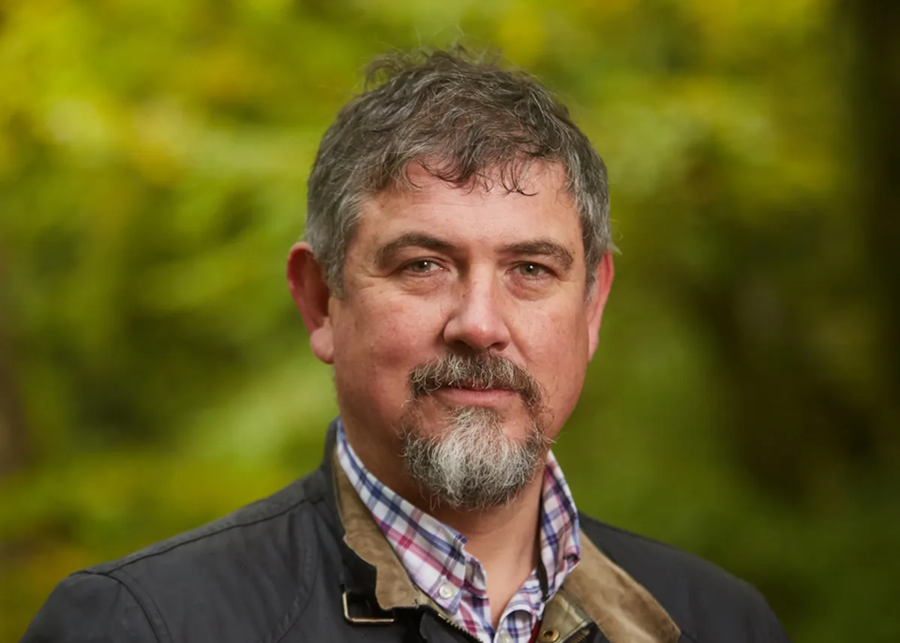
Ivor Campbell is chief executive of Snedden Campbell, a specialist recruitment consultant for the global medical technology industry.