

MTN Nigeria is preparing a significant capital expenditure (CAPEX) push for the 2026 fiscal year as it aligns with the Federal Government’s ambition to grow Nigeria into a $1 trillion economy.
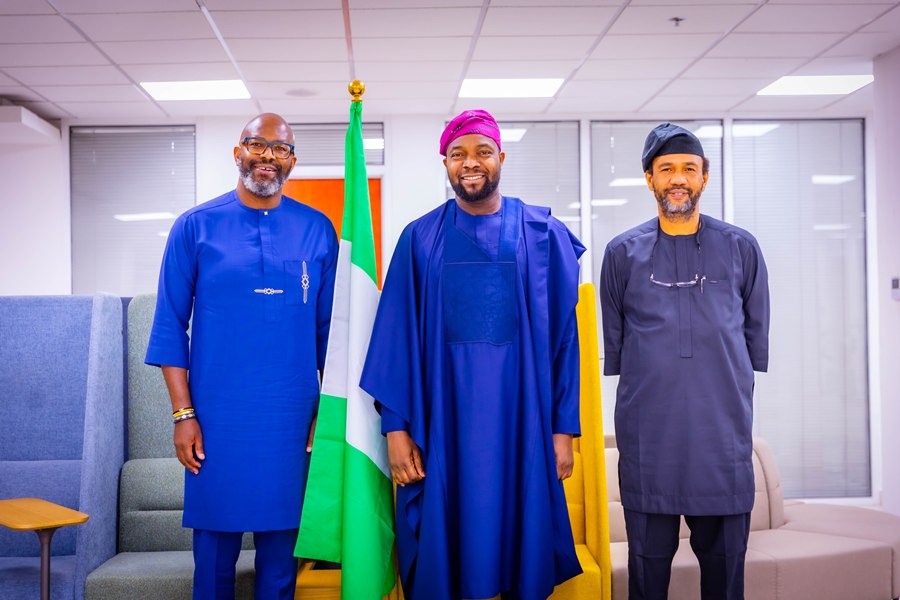
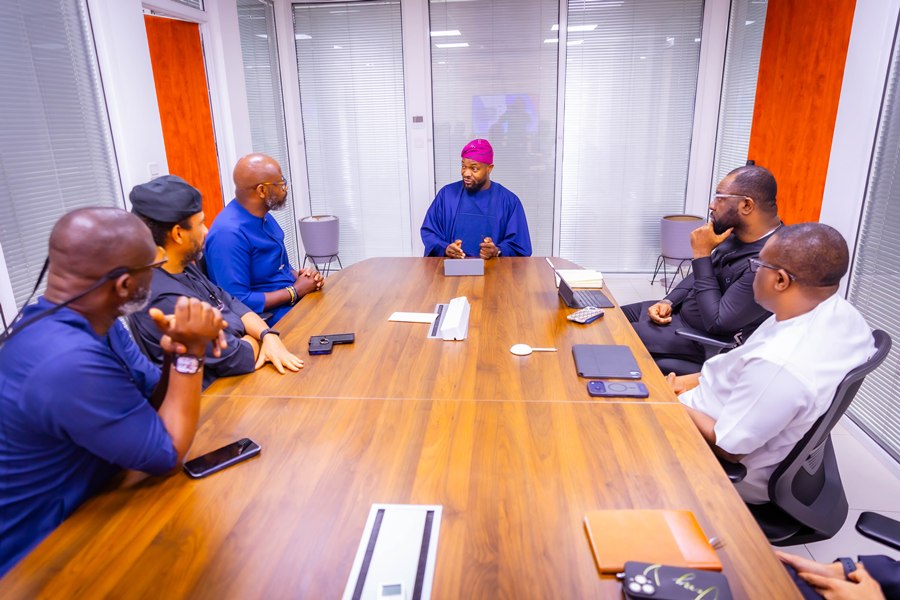
The commitment was disclosed during a high-level meeting in Abuja between executives of MTN Group and Nigeria’s Minister of Communications, Innovation and Digital Economy, Dr. Bosun Tijani.
The MTN delegation was led by Group President and CEO Ralph Mupita, alongside MTN Nigeria CEO Karl Toriola and Chief Corporate Services & Sustainability Officer Tobe Okigbo.
While the telco did not disclose the size of the planned investment, executives signalled that the new funding cycle will prioritise network expansion, improved service quality, and digital infrastructure upgrades, critical enablers for economic productivity in sectors such as fintech, e-commerce, manufacturing, and logistics.
Why infrastructure matters for a $1 trillion economy
Nigeria’s digital economy currently contributes roughly 18–20% to GDP, according to government estimates.
But scaling that contribution significantly will require more reliable broadband penetration, lower latency networks, and improved rural connectivity.
Speaking at the engagement, Mupita noted that Nigeria’s macroeconomic ambition cannot be achieved without a communications backbone capable of supporting enterprise digitisation and industrial growth.
“For Nigeria to achieve its economic targets, the digital infrastructure must be robust enough to power innovation at scale,” he said, framing telecom infrastructure as foundational rather than complementary.
The timing is strategic. Over the past year, regulators approved spectrum trades and implemented tariff adjustments that operators had long argued were necessary to sustain heavy capital investments amid inflation and currency volatility.
Mupita described these reforms as instrumental in stabilising the industry and enabling long-term planning.
Nigeria remains MTN Group’s largest and most strategic market, contributing a significant share of group revenue. A stable regulatory climate makes it easier for the operator to justify deeper capital commitments.
Government support, but with conditions
Minister Tijani welcomed the pledge but struck a note of accountability. Government backing, he said, will remain tied to measurable service improvements and consumer protection standards.
The ministry has walked a delicate line in recent months, balancing operator sustainability with affordability concerns and maintaining competition in a sector where consolidation risks could reduce consumer choice.
Tijani reiterated that Nigeria’s telecom future must remain competitive, cautioning against market dynamics that tilt toward monopolistic dominance.
“A diversified industry is essential for innovation and fair pricing,” he said.
AI, LLMs, and the next telecom frontier
Beyond infrastructure, discussions extended to artificial intelligence and Nigeria’s ambition to play a stronger role in Africa’s AI ecosystem.
Tijani, recently recognised internationally for his work in digital policy, challenged MTN to evolve beyond traditional connectivity and actively participate in shaping Africa’s AI future.
Central to this conversation is Nigeria’s National Large Language Model (LLM) initiative, which aims to build AI systems reflective of local languages and contexts.
Mupita signalled MTN’s interest in deeper collaboration around AI integration within telecom services, noting that artificial intelligence is rapidly becoming central to network optimisation, fraud detection, customer service automation, and enterprise solutions.
For telecom operators globally, AI is no longer experimental, it is operational infrastructure.
From cables to capabilities
The meeting concluded with both parties emphasising digital skills development as a parallel priority. As MTN advances its “Ambition 2030” strategy, the company pledged stronger collaboration with the ministry on workforce readiness.
The subtext is clear: expanding fibre networks and 5G coverage is insufficient without engineers, data scientists, cybersecurity specialists, and AI researchers to manage and monetise that infrastructure.
For Nigeria’s $1 trillion economy goal, telecom infrastructure is only one pillar.
The others, policy coherence, human capital development, competitive markets, and sustained foreign investment, will determine whether ambitious projections translate into measurable growth.
MTN’s renewed capital commitment signals confidence. The question now is whether execution, regulation, and macroeconomic stability can keep pace.