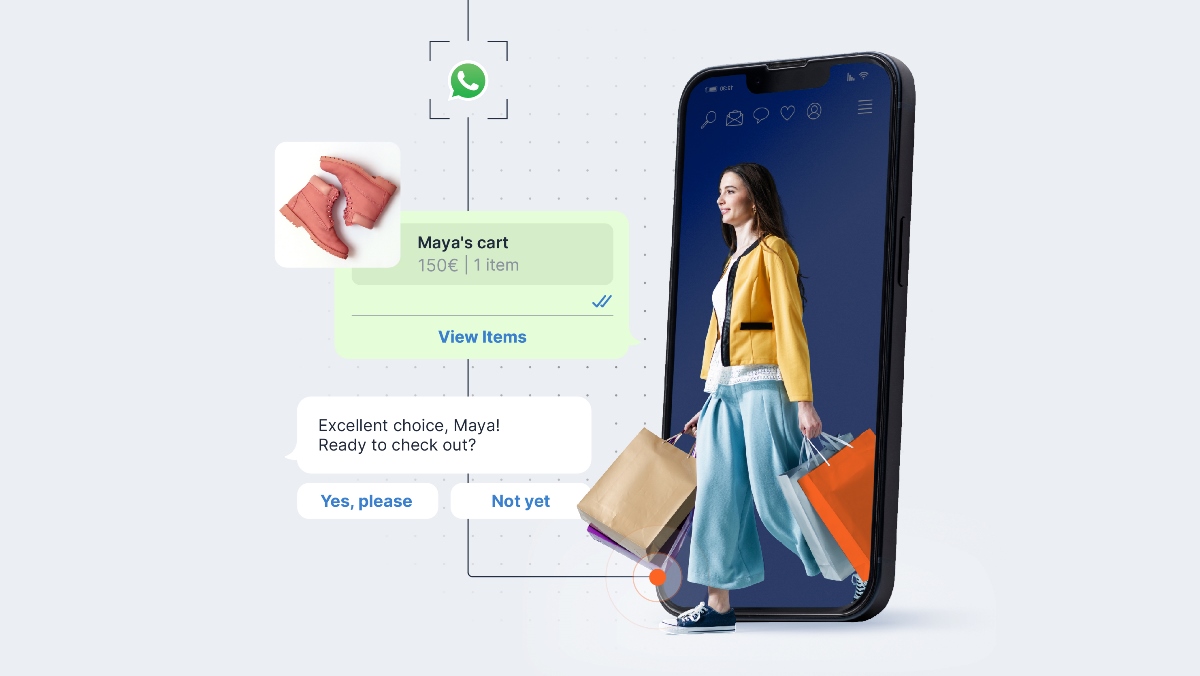
Shopping habits have changed dramatically in recent years. Customers now expect convenience, speed and the freedom to connect with brands in the digital spaces they already trust. In South Africa, that space is WhatsApp.
As the country’s most commonly used chat app, WhatsApp is fast becoming a digital marketplace and hub for product discovery, customer support, personalised recommendations and even seamless checkout.
What was once a simple chat tool is now becoming a natural extension of the retail experience, allowing brands to meet customers where they already spend their time.
A combination of reach, personalisation, trust and convenience has seen WhatsApp become a powerful channel for shopping and customer engagement in recent years.
In South Africa, where 93-96% of internet users regularly access WhatsApp, consumers are comfortable asking questions, sharing preferences and interacting with brands directly.
However, WhatsApp’s real advantage is its ability to support an always-on, two-way conversation. Features such as catalogues, rich media, interactive buttons and integrated payment capabilities now allow customers to move effortlessly from enquiry to purchase, without ever leaving the app.
Shift in consumer behaviour
With modern consumers increasingly prioritising speed, convenience and personalisation, their shopping behaviour continues to shift towards chat-based purchasing.
Channels like WhatsApp can provide instant responses and real-time help, offering the kind of support customers would traditionally expect from a sales assistant, but accessible anytime on a mobile device.
This means that consumers no longer have to browse static websites or fill in long forms. They can simply ask questions, compare options and make decisions, all within a single interaction.
This keeps the entire customer journey, from enquiry to checkout, within one trusted channel and reduces friction.
Across a wide range of industries, businesses that rely on conversational guidance, repeat engagement and customer loyalty are increasingly finding that WhatsApp is delivering significant value.
It not only helps to lessen the pressure on traditional contact centres through automated support and self-service, but also assists SMEs in running promotions and simplifying their e-commerce journeys.
Ubiquitous appeal of WhatsApp
Until now, retail has largely led the way with WhatsApp adoption due to its reliance on rich media and interactive capabilities.
However, other sectors such as travel, telecoms and financial services are now steadily making use of the channel as an effective extension of their customer communication strategy – especially around how easy it is to ask a question and pay in the same chat.
Across these use cases, the appeal remains the same for consumers: a trusted, personalised and smooth communication experience that facilitates engagement and buying decisions while strengthening long-term customer relationships.
The deployment of automation and Artificial Intelligence (AI) further enhances the experience, as it allows for largescale, rapid and personalised support. This ensures smoother and more efficient interactions for both customers and brands.
AI’s ability to provide personalised suggestions based on past customer behaviour, preferences and purchases will only become better as the technology becomes smarter.
This will effectively replicate the role of an experienced and knowledgeable shop assistant, reducing friction, building confidence and helping customers smoothly navigate from interest to engagement, through to purchase in a single conversation.
For example, a chatbot can help a customer compare two products, check availability in a nearby store, and send a payment link – all within a single thread. The challenge is to make these experiences feel human and helpful, not intrusive.
The importance of personalisation
WhatsApp’s inherent nature as a one-to-one channel plays into the modern customer’s expectations for relevant, tailored and informed interactions, as the demand for personalisation is becoming critical.
Customers are increasingly seeking experiences that feel helpful with messages that reflect their preferences, past behaviour and previous conversations, rather than generic messaging that comes across as promotional.
Ultimately, customers are more likely to buy when they feel understood, which underscores the importance of personalised recommendations, context-aware responses and offers linked to browsing or purchase history.
Personalisation is key to elevating WhatsApp from just another messaging channel to a digital sales assistant that strengthens relationships and builds trust and long-term loyalty.
What lies ahead
WhatsApp’s evolution from a simple chat channel into a primary commerce and service interface is set to continue over the next two to three years, with the platform effectively becoming a storefront, sales assistant and support agent all in one.
More of the customer journey will take place inside the channel as consumers move away from downloading apps or navigating websites and toward a more fluid conversational commerce experience.
With AI adoption gaining momentum, chatbots will have a greater ability to understand intent and context, detect sentiment and offer personalised, real-time recommendations that will translate into more natural interactions.
Voice is also expected to play a bigger role in engagement. Online and in-store journeys will be unified across touchpoints by smoother payments and better integration with e-commerce, customer relationship management (CRM) and loyalty systems.
Ultimately, significant opportunities lie ahead for large retailers, financial services providers, and SMEs that adopt WhatsApp for e- commerce.
The channel is rapidly becoming smarter, more intuitive and capable of delivering high-quality experiences without requiring large budgets or complex technology.