The Federal Government has reiterated its resolve to develop a responsible, inclusive, and sovereign artificial intelligence (AI) ecosystem that will reposition Nigeria from a passive consumer of global AI technologies to a designer and producer of homegrown AI systems.
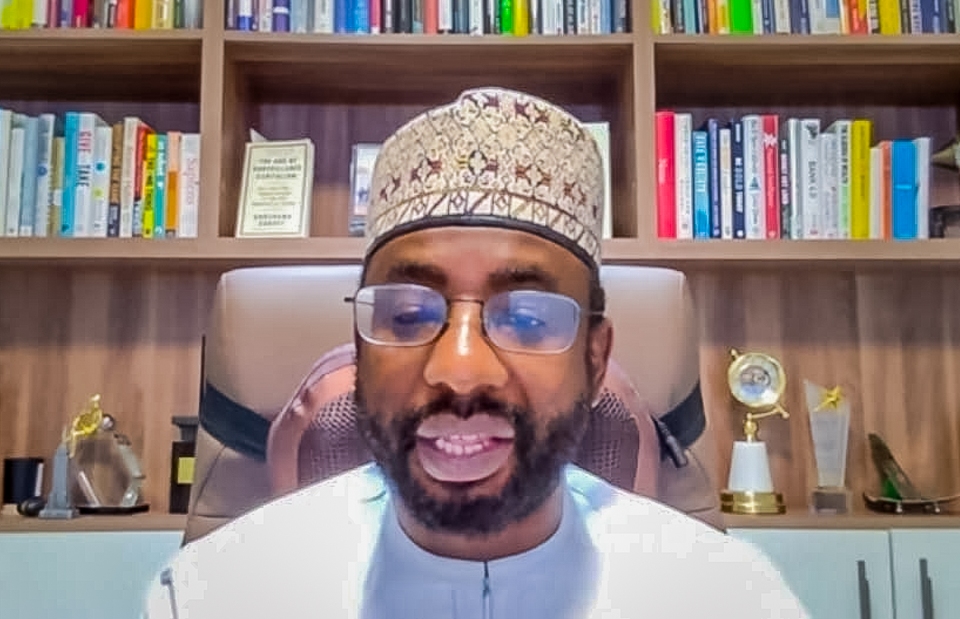
This position was articulated by Kashifu Inuwa Abdullahi, director-general of the National Information Technology Development Agency, during his virtual address at the InnovateAI Conference in Lagos.
The conference convened policymakers, tech industry leaders, innovators, and other key stakeholders to examine the future of artificial intelligence and its potential to accelerate Nigeria’s digital economy and broader national development objectives.
Inuwa emphasized that Nigeria’s goal, under the National AI Strategy, is to move beyond adopting foreign-built AI solutions to building and owning systems that align with the country’s values, development priorities, and socio-economic realities.
“Our goal is not just to use AI, but to architect and build our own AI systems in Nigeria,” he said, stressing that the country must take ownership of its AI future.
He noted that Nigeria’s approach to artificial intelligence extends beyond innovation to include governance, infrastructure, data sovereignty, and policy evolution.
According to him,
“Responsible AI is never a finished job; it is an iterative journey. Our policies must evolve as the technology evolves, and we must avoid frozen laws by adopting living policies that adapt over time.”
He cited the implementation of the Digital Economy and E-Governance Bill as a key mechanism for generating insights that will help refine AI regulations and governance frameworks.
Inuwa also highlighted the challenge of data representation in global AI systems, noting that most models are trained on non-African datasets, which often results in bias against local dialects, cultures, and demographics.
“If a model shows bias against a local dialect or demographic, we cannot just patch it. We must reinvest in infrastructure to retrain it with inclusive and representative local datasets,” he stated.
He added that building national AI infrastructure is critical to achieving data sovereignty and ensuring that Nigeria is not merely an end user of foreign AI systems.
He further called for strategic partnerships with global technology companies and hyperscalers to build AI infrastructure in Nigeria while aligning with local values and national priorities.
“The world today is a global village. We need to work with global players, but they must understand our local nuances and help us build the infrastructure to retrain and develop AI models that reflect our context,” he said.
The NITDA Director General explained that adopting a comprehensive AI lifecycle approach, from responsible data collection and governance to deployment and continuous feedback, will enable Nigeria to move from reacting to AI developments to proactively designing indigenous AI systems.
“Without understanding how AI models are trained, how decisions are made, and how models are retrained, it will be difficult to build a responsible and trustworthy AI system,” he warned.
He reaffirmed that the Federal Government is intentional about promoting responsible AI and is working closely with the technology ecosystem to co-design national AI guardrails.
He described platforms such as the InnovateAI Conference and other national AI dialogues as critical to shaping Nigeria’s AI future.