
While the Lagos tech scene is often synonymous with the glitzy hubs of Yaba and Victoria Island, the plumbing of Nigeria’s future digital economy is being laid in secondary school classrooms.
The Ajoke Ayisat Afolabi Foundation (AAAF), the CSR arm of logistics giant SIFAX Group, just wrapped up its latest Community Connections project in partnership with the World Bank.
The target? Over 90 students from State Senior Secondary School, Oyewole, in Agege.
Beyond Basic Typing: Moving into ML
This wasn’t your typical this is a mouse, this is a monitor computer class. The curriculum was designed to bridge the actual skills gap currently plaguing the Nigerian labor market. The students were immersed in:
- Machine Learning (ML): Understanding how data builds systems.
- Artificial Intelligence (AI): Learning how to leverage GenAI tools for education and future work.
- Advanced Computer Literacy: Moving beyond the basics into practical workplace tech.
The strategy here is a train-the-trainer model. Representatives were picked from various classes with the expectation that they’ll act as peer-to-peer nodes, transferring their new skills to their classmates.
[Image: Students at State Senior Secondary School, Agege, interacting with laptops during the AAAF/SIFAX AI training session]
The Hardware Drop
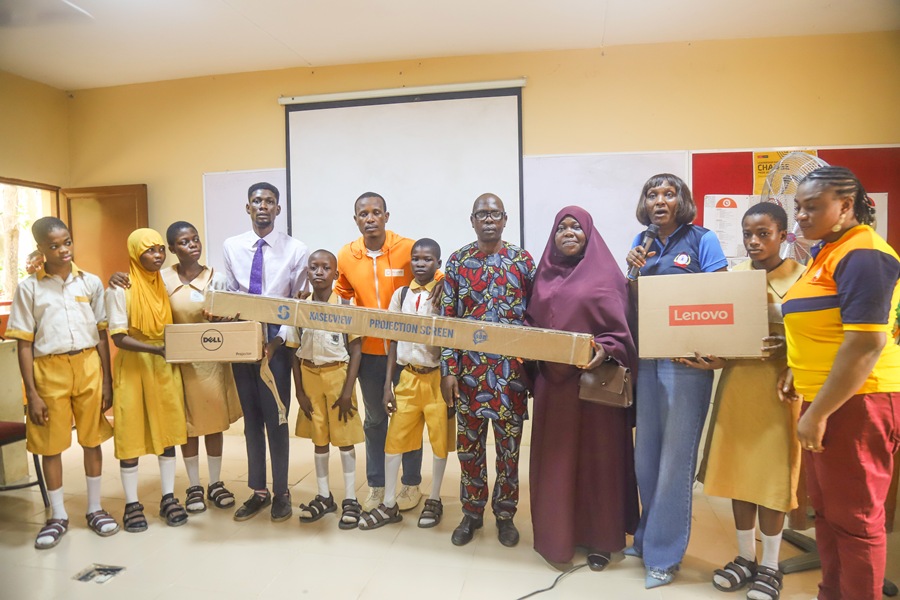
In many Nigerian public schools, ICT is often taught on a chalkboard due to a lack of hardware. To prevent this training from becoming a theoretical exercise, AAAF and SIFAX Group donated:
- Laptops
- Projectors
- Projector Screens
This brings the total number of students empowered by the foundation across Lagos, Ondo, and Badagry to nearly 600.
Why it Matters: The Skills Gap
Foluke Ademokun, executive coordinator of the foundation, hit the nail on the head: this is a direct attack on youth unemployment.
By the time these students graduate, the job market will expect “AI-fluency” as a baseline, not a bonus.
This initiative is part of a series of efforts to address the issue of youth unemployment and skills gap in the country and it’s expected to benefit not only the students but also the community at large, as the students would be able to apply the skills acquired to improve their lives and contribute to the economic development of their communities,” Ademokun said.
The school’s Vice Principal, Sherifat Ajala, noted that the interaction with the best minds in tech provided the students with more than just skills, it gave them a perspective shift on what they could actually achieve in the digital economy.
“On behalf of the school management and all these students, I want to say a big thank you to Ajoke Ayisat Afolabi Foundation and their sponsor, the SIFAX Group for the good works that they have done in the lives of our students and for the wonderful gift. May the Lord Almighty continue to bless you”, she said.
It’s easy to talk about Silicon Lagoon, but without foundational digital literacy in local government areas like Agege and Alimosho, the tech boom remains an elitist bubble. SIFAX and the World Bank are doing the unglamorous but essential work of talent seeding.
By giving these students early exposure to Machine Learning and AI, they are shortening the distance between the trenches and the tech hubs.
The real test, however, will be whether the school can maintain the donated hardware and keep the internet running long enough for the students to keep practicing once the facilitators leave.