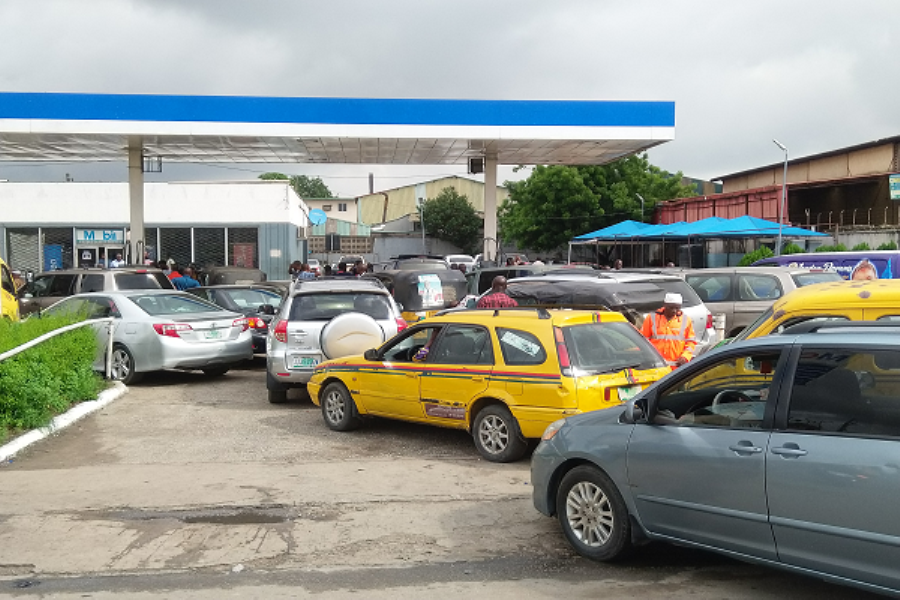
The Petroleum Products Retail Outlets Owners Association of Nigeria (PETROAN) has warned that the pump price of Premium Motor Spirit (PMS), commonly known as petrol, could rise to about N2,000 per litre if the escalating conflict involving the United States and Iran continues to disrupt global oil markets.
The association issued the warning on Monday following an abrupt rise in international crude oil prices, which climbed past $100 per barrel due to challenges in the Middle East.
PETROAN said the situation has already begun to affect petroleum product prices globally, with ripple effects likely to reach Nigeria’s domestic energy market if the conflict persists.
Pressure on Diesel Prices and Inflation
The association also cautioned that the price of Automotive Gas Oil (AGO), or diesel, could surge significantly under the same conditions.
Billy Gillis-Harry, national president of PETROAN, projected that diesel could approach N3,000 per litre if volatility in the international oil market continues.
According to the association, higher cost of fuel could worsen inflationary stress in Nigeria, as transportation and logistics expenses are expected to rise.
“PMS could rise close to N2,000 per litre while AGO may approach N3,000 per litre if the situation persists,” Gillis-Harry said.
He added that the ongoing conflict involving Israel, the United States and Iran is pushing global petroleum prices upward and creating uncertainty in supply chains.
PETROAN noted that sustained drone and missile attacks in the region are threatening key oil routes and infrastructure, raising concerns about global supply stability.
The association stressed that petrol is essential for everyday transportation, while diesel powers manufacturing activities and industrial operations across the country.
It warned that prolonged increases in fuel prices could lead to higher transport fares, rising food prices, job losses and broader economic hardship.
Call to Revive Local Refineries
With the growing uncertainty, PETROAN has urged Bayo Ojulari, group chief executive officer of the Nigerian National Petroleum Company (NNPC) Limited, to speed up efforts to boost domestic refining capacity.
The association specifically called for the immediate activation of government-owned refineries, including the Area 5 plant at the Port Harcourt refinery and the Warri refinery.
Gillis-Harry argued that expanding local refining operations would help shield Nigeria from the shocks of international oil market volatility.
According to him, refining crude oil locally under the management of NNPC would reduce the country’s exposure to supply disruptions that often determine fuel prices at the pump.
Outlook for Nigeria’s Energy Sector
Despite the current tension driven by the US-Iran tensions, the PETROAN president said ongoing reforms in the petroleum sector could eventually stabilize the market.
He was positive that once domestic refining capacity improves, Nigeria will be better positioned to manage fuel supply and pricing pressures.
For now, however, fuel marketers across the country are already adjusting pump prices following the spike in global crude prices.
But without stronger local refining capacity, as the expert warned, petrol prices could move closer to the N2,000 per litre mark sooner than expected if global tensions persist.