


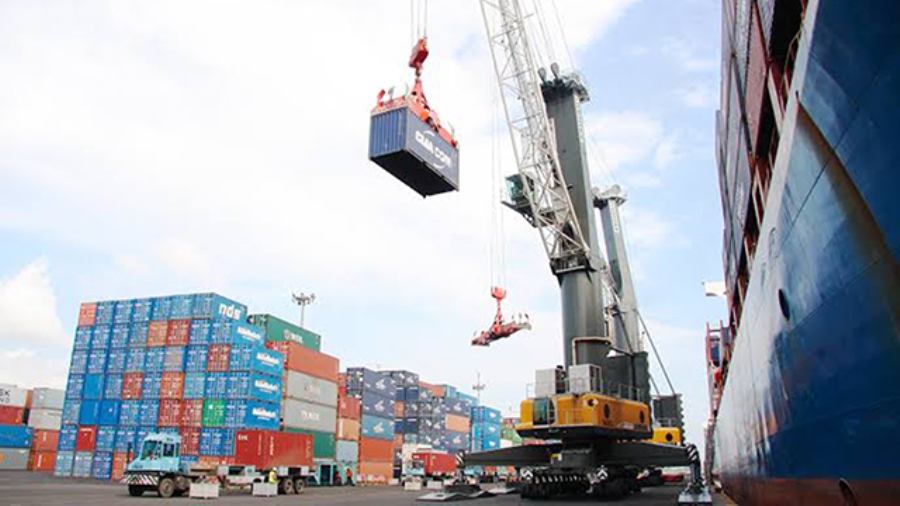
Nigeria’s maritime sector is set for a modern transformation following a landmark £746 million (over N1.3 trillion) financing deal with the United Kingdom.
Dr Adegboyega Oyetola, minister of Marine and Blue Economy, announced the agreement on Tuesday, describing it as a transformative milestone that will finally modernise the country’s two busiest ports.
The deal, backed by UK Export Finance, targets the Lagos Port Complex in Apapa and the Tincan Island Port Complex.
Together, these ports handle more than 70% of Nigeria’s imports and exports.
The London Connection: Why Now?
The formal signing of this historic deal is timed to coincide with President Bola Tinubu’s high-profile state visit to London on March 18 and 19, 2026.
This move signals a deep economic partnership between Nigeria and the UK, aimed at making Nigeria the maritime hub for West and Central Africa.
For decades, these ports have struggled with old equipment and manual processes. This project marks the first time since Tincan was built in 1977 that both facilities will undergo a comprehensive overhaul of this scale.
What the £746m Will Buy
Minister Oyetola explained that the money will fund a total transformation of how our ports work:
Advanced Cranes and Tools: Introduction of modern cargo-handling infrastructure to move containers faster.
Digital Systems: Moving away from slow, paper-based procedures to automated, electronic systems.
Expanded Capacity: Making the ports bigger and better to handle more ships at the same time.
The Benefits: Faster Clearance and Lower Costs
Currently, operational bottlenecks at the ports cause long delays, which lead to high demurrage charges (fines paid for staying too long at the port).
Once completed, the project aims to reduce vessel turnaround time; cut cargo dwell time, and Lower Logistics Costs as faster clearance means businesses spend less on transport and storage, which could eventually lower the prices of goods for consumers.
A New Era for the Blue Economy
The Lagos Port Complex Apapa has been operating since 1913, and Tincan since 1977. Neither has seen an upgrade of this magnitude in nearly 50 years.
By modernising these central arteries of trade, the Federal Government hopes to boost national revenue and rebuild investor confidence in Nigeria’s shipping industry.
“Efficiency at the ports is central to the health of the national economy,” Oyetola said. He believes that with digitalised and automated processes, Nigeria will finally have a port system that reflects the aspirations of a modern, globally competitive nation.
“By modernising our infrastructure and embracing digital technologies, we will enable faster clearance of imports and exports, reduce demurrage and logistics costs for businesses, and ensure a more predictable and transparent cargo movement system.
“These improvements will not only ease trade but will also stimulate economic growth and generate increased revenue for national development,” Oyetola assured.
Bottom Line
This £746 million deal is a bold step toward fixing the Nigerian ports. While the construction and digital upgrades will take time, the commitment from the UK suggests that Nigeria is ready to compete on the world stage.
“Our vision is to build a port system that reflects the aspirations of a modern and globally competitive Nigeria. The modernisation of Apapa and Tincan Island ports is a bold and necessary step in that direction.
“It will enhance the efficiency of our logistics chain, deepen investor confidence, and ensure that Nigeria’s maritime infrastructure is capable of supporting the nation’s long-term economic ambitions,” Oyetola concluded.




