

ADVERTISEMENT
Monday, March 23, 2026
  • Login
Tech | Business | Economy
No Result
View All Result
NEWSLETTER
  • News
  • Tech
    • DisruptiveTECH
    • ConsumerTech
    • How To
    • TechTAINMENT
  • Business
    • BUSINESS SENSE FOR SMEs
    • Telecoms
    • Commerce & Mobility
    • Environment
    • Travel
    • StartUPs
      • Chidiverse
    • TE Insights
    • Security
  • Partners
  • Economy
    • Finance
    • Fintech
    • Digital Assets
    • Personal Finance
    • Insurance
  • Features
    • IndustryINFLUENCERS
    • Guest Writer
    • EventDIARY
    • Editorial
    • Appointment
    • Chidiverse
  • TECHECONOMY TV
  • Apply
  • TBS
  • Advertise
  • News
  • Tech
    • DisruptiveTECH
    • ConsumerTech
    • How To
    • TechTAINMENT
  • Business
    • BUSINESS SENSE FOR SMEs
    • Telecoms
    • Commerce & Mobility
    • Environment
    • Travel
    • StartUPs
      • Chidiverse
    • TE Insights
    • Security
  • Partners
  • Economy
    • Finance
    • Fintech
    • Digital Assets
    • Personal Finance
    • Insurance
  • Features
    • IndustryINFLUENCERS
    • Guest Writer
    • EventDIARY
    • Editorial
    • Appointment
    • Chidiverse
  • TECHECONOMY TV
  • Apply
  • TBS
  • Advertise
No Result
View All Result
Tech | Business | Economy
No Result
View All Result
  • News
  • Tech
  • Business
  • Partners
  • Economy
  • Features
  • TECHECONOMY TV
  • Apply
  • TBS
  • Advertise

Home » Study: Clean Cooking in Nigeria Cuts Costs, Boosts Health

Study: Clean Cooking in Nigeria Cuts Costs, Boosts Health

Research shows that clean cooking should not be seen simply as a household expense, but as a long-term investment.

Destiny Eseaga by Destiny Eseaga
March 23, 2026
in Environment
Reading Time: 2 mins read
0
clean cooking energy in Nigeria

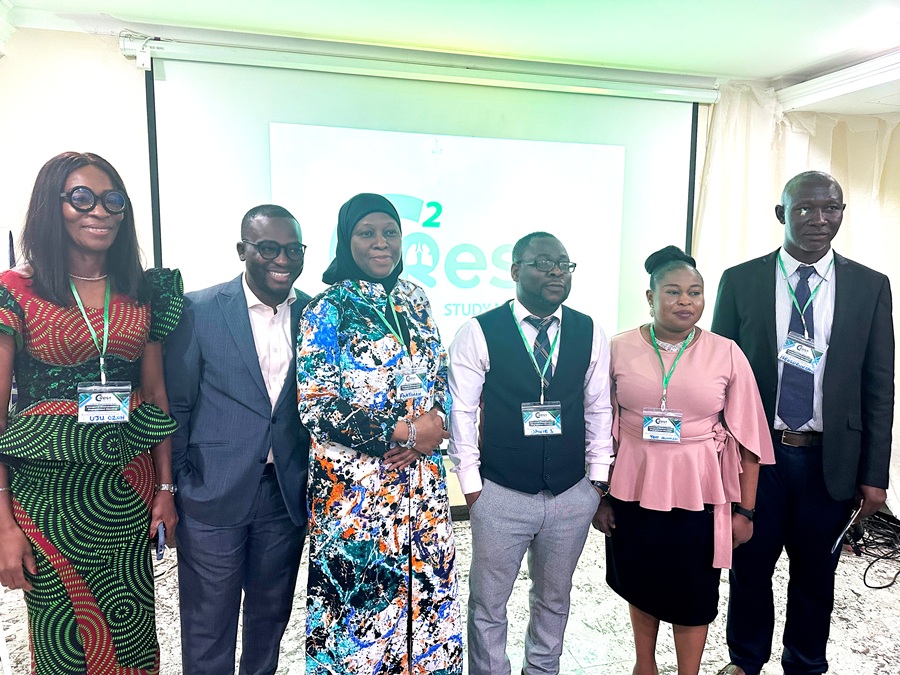
The launching of C2REST Nigeria Study

A new international study has found that switching to clean cooking energy in Nigeria can reduce long-term household costs, improve respiratory health, and ease pressure on the healthcare system.

The study, co-led by Davies Adeloye of Teesside University, UK, was conducted under the C2REST Nigeria Study, a three-year programme funded by the Medical Research Foundation.

The research brings together experts from the United Kingdom, Nigeria, Benin, and Kenya to examine the links between climate, environment, and health in rapidly growing urban communities.

The findings come at a critical time. As Nigeria experiences rapid urbanisation and rising energy demand, millions of households still rely on firewood, charcoal, and kerosene for cooking.

These fuels contribute to harmful indoor air pollution and increase the risk of respiratory and other health conditions.

Subscribe to our Telegram channel for the latest updates.

Follow the latest developments with instant alerts on breaking news, top stories, and trending headlines.

Join Channel

The study was carried out in Alimosho (Lagos State) and Ado-Odo/Ota (Ogun State), two areas that reflect the realities of modern Nigeria, with fast population growth, industrial activity, and mixed-income households.

This makes the findings highly relevant for many urban and peri-urban communities across the country.

Importantly, the research shows that clean cooking should not be seen simply as a household expense, but as a long-term investment.

MTN New
Stanbic
Advertisements

Although cleaner energy sources such as gas and electricity may have higher upfront costs, households can save money over time through fewer illnesses, lower healthcare spending, and improved productivity.

Speaking on the findings, Professor Adeloye emphasised that clean cooking is one of the most practical and immediate ways to improve public health while supporting economic development. He noted that the issue goes beyond environmental concerns, directly affecting household finances, disease burden, and national productivity.

The study also highlights important inequalities. Lower-income households, larger families, and communities with limited infrastructure are less likely to adopt clean cooking solutions.

This points to the need for targeted and inclusive policies to ensure that no group is left behind.

To address these challenges, the study calls for stronger government action. This includes subsidising clean energy costs, improving supply chains, expanding access to clean fuels, and integrating clean cooking into national health and climate strategies.

Collaboration between government, the private sector, and development partners will be essential to accelerate progress.

With the right policy support, clean cooking could become one of the most cost-effective ways to tackle Nigeria’s interconnected climate, health, and economic challenges.

The findings align with Nigeria’s climate commitments and energy transition plans, offering a practical and scalable solution to reduce emissions, improve air quality, and enhance household welfare.


0Shares

Stanbic
Advertisements
Previous Post

Tony Elumelu Foundation Unveils 3,200 Entrepreneurs for 2026 Cohort

Next Post

Moniepoint Acquires Orda Africa Valued over $20 million

Destiny Eseaga

Destiny Eseaga

My name is Destiny Eseaga, a communication strategist, journalist, and researcher, deeply intrigued by the political economy of Nigeria and the broader world context. My passion lies in the world of finance, particularly, capital markets, investment banking, market intelligence, etc

Next Post
Moniepoint product | acquires orda Africa

Moniepoint Acquires Orda Africa Valued over $20 million

Leave a Reply Cancel reply

Your email address will not be published. Required fields are marked *

I agree to the Terms & Conditions and Privacy Policy.

This site uses Akismet to reduce spam. Learn how your comment data is processed.

MTN New
Techeconomy Podcast
Techeconomy Podcast

The Techeconomy Podcast is a thought-leadership show exploring the powerful intersection of technology, business, and the economy, with a strong focus on Africa’s fast-evolving digital landscape.

BUILDING TRUST IN AFRICA ECOSYSTEM
byTecheconomy

Africa’s digital economy is growing fast, but growth without trust cannot last.Join us for the February Edition of the Techeconomy Business Series as industry experts explore how trust, security, innovation, and user experience are shaping Africa’s evolving digital ecosystem.

BUILDING TRUST IN AFRICA ECOSYSTEM
February 27, 2026
Techeconomy
Navigating a Career in Tech Sales
January 29, 2026
Techeconomy
How Technology is Transforming Education, Health, and Business
November 27, 2025
Techeconomy
INNOVATION IN MOBILE BANKING
October 30, 2025
Techeconomy
The Rise of AI: Impact on Jobs & Businesses
September 25, 2025
Techeconomy
Search Results placeholder
UBA
Advertisements
Stanbic
Advertisements
  • About Us
  • Careers
  • Contact Us

© 2026 TECHECONOMY.

No Result
View All Result
  • Techeconomy
  • News
  • Technology
  • Business
  • Economy
  • Jobseeker
  • Advertise

© 2026 TECHECONOMY.

Welcome Back!

Login to your account below

Forgotten Password?

Retrieve your password

Please enter your username or email address to reset your password.

Log In
This website uses cookies. By continuing to use this website you are giving consent to cookies being used. Visit our Privacy and Cookie Policy.

