When you carefully analyse Nigeria’s job market, you’d notice youth unemployment is still high, with millions of skilled hands finding it difficult to get steady work.
At the same time, households and businesses are still searching for reliable technicians, and we’re seeing calls, referrals, and a lack of assurance.
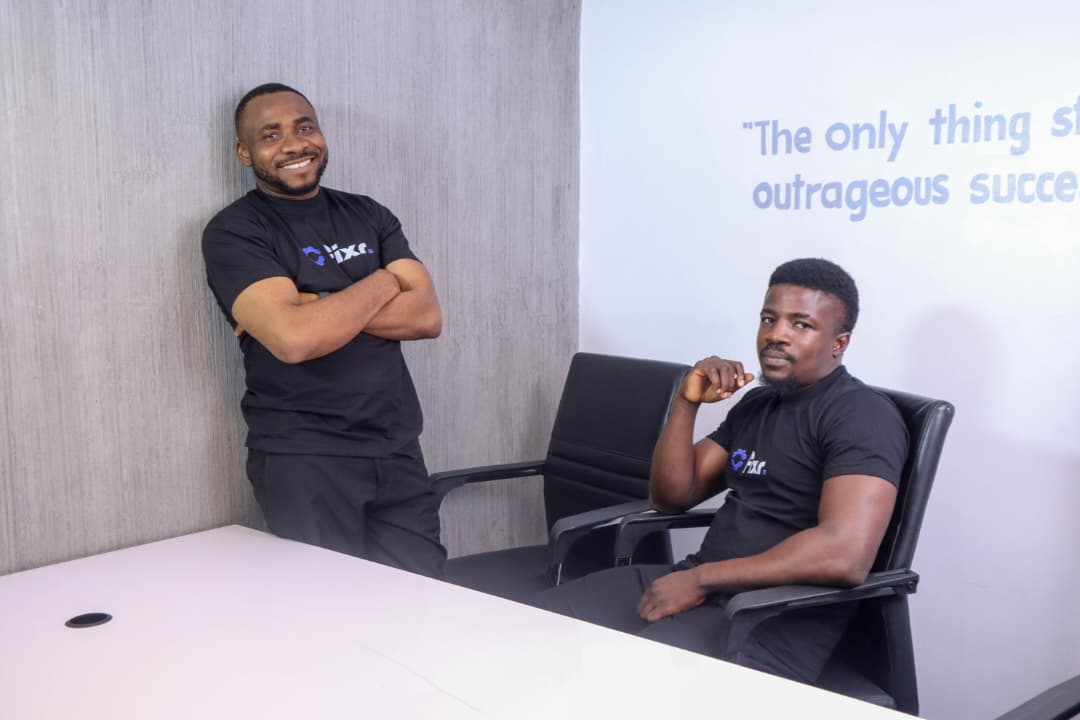
In this interview, Ikechi Adolphus, CEO of Fixr speaks about the gap he and his co-founder, Olamide Akingbe, set out to close, explaining how a largely informal system left both customers and technicians exposed, and why trust became the centre of their model.
Pointing to a shift already underway, unreliable power supply and high prices, more Nigerians are turning to solar, and that demand is feeding directly into their growth.
Fixr says it processed over ₦3 billion in transactions in the past year and helped customers secure more than ₦1 billion in financing for solar systems. This has changed how people find and pay for engineering services.
In this discussion, we focus on what is broken in the system, what it takes to build structure in a fragmented market, and why the company believes Nigerian technicians can compete far beyond the country’s borders.
TE: What gap in the engineering services market first made you think there was room for a platform like Fixr?
Ikechi Adolphus (IA): In many ways, we built Fixr for ourselves. Like many Nigerians, we have witnessed the difficulties that come with trying to hire a technician in Nigeria. But we also looked at where the market was going. Today, it’s a bit tougher to get skilled technicians for jobs in Nigeria.
Beyond Nigeria, the demand for blue-collar workers is also growing in most countries in the West. Here in Nigeria, there’s a large, young populace in need of work and we believe that not only can we help to fix the quality issue that comes with hiring technicians, but we can also help to provide jobs both in Nigeria and outside the continent.
TE: Before Fixr, how were most households and businesses in Nigeria finding and hiring engineers, and what problems did that system create?
IA: Finding and hiring engineers before Fixr has mostly been through referrals and personal networks. You move into a new location, and you ask people who already live there for recommendations, or you ask friends and family for recommendations. Considering that the industry is mostly informal, there is a lack of proper vetting of both the skills and work ethics of the engineer.
As a result, the person paying for the services is left to vet and filter the bad from the good technicians, which is not efficient. Sometimes, you find someone who is a great fit, and other times, you don’t. Technicians are also limited by geography and their marketing skills, which could cause them to use substandard and low-quality materials in some cases in order to maximise earnings from each gig.
There is also no structured personal development plan for these technicians, making growth difficult and near impossible.
TE: Fixr processed over ₦3 billion in GMV in the past year. What do you think is driving that level of demand?
IA: Market reorientation generally and trust. Solar and renewable energy were big drivers for the sales, and that is because customers are moving from complete dependence on the grid to a more sustainable and predictable source of electricity (solar). Even though it’s expensive, Fixr, through its partners, is making it affordable to access and acquire.
This market reorientation makes it easy to close customers and drive growth. Given our standard, we have many customers trusting us for their other appliances and engineering needs, particularly in the HVAC category, surveillance and CCTV, fibre optics and home automation.
TE: Trust is a major concern when people hire technicians. How does Fixr ensure customers feel confident about the people coming into their homes or workplaces?
IA: Effective communication. People don’t really trust technicians; they trust us, Fixr. That is because, from when we establish communication to getting the job done, we maintain effective communication. We do this to ensure they trust that we will get the best technicians. They trust that we’ve done due diligence on the technicians; they trust our technicians are well-behaved and well-mannered.
When there are delays or unexpected challenges, we communicate to the client. We also back that up with the Fixr trust and warranty to ensure customers are indemnified for any issues that come up. Customers know our technicians won’t fix their appliance with substandard materials or damage it further.
TE: You’ve helped customers access more than ₦1 billion in financing to switch to solar. What does that say about how quickly demand for alternative energy is growing?
IA: Over the past two years in Nigeria, the cost of grid electricity has risen sharply, alongside fuel and diesel prices. Despite these increases, power supply has not become more reliable, forcing individuals and businesses to seek alternatives.
For businesses in particular, where energy is a major cost centre, reducing that expense becomes critical.
Renewable energy is emerging as a credible option, not necessarily because it is cheaper upfront, but because it offers predictability. In an environment defined by uncertainty, that predictability is highly valuable.
TE: You’re expanding into other African markets. What differences have you noticed so far in how engineering services operate across the continent?
IA: Other African markets still suffer from the same inefficiency, and so the problems are identical. The difference is the purchasing power. In other markets, customers can pay 30% or 40% more than in the Nigerian market. Given that the skill set is the same and the opportunities are relatively similar, and given the cost of execution and potential opportunity, it makes sense to enter these other markets.
The Nigerian market gives us the opportunity to iterate and build scalable solutions with minimal overhead cost. Applying the solutions to other markets gives us the opportunity to reduce our operational risk by diversifying revenue sources.
TE: Building reliable service infrastructure across several sectors isn’t simple. What has been the hardest part of scaling Fixr?
IA: The reality is that you have to build almost everything you need yourself or find a way to adapt what exists to fit your goals. The supporting infrastructure simply isn’t there. Markets, for instance, are largely driven by individuals and small businesses, while the manufacturing of key components often happens outside those markets.
Technical skills development is mostly handled by government institutions that tend to be inefficient, and the responsibility for training frequently falls on individuals who may not have the capacity to do it effectively.
As a result, there’s no cohesive ecosystem, no network of builders, specialists, and institutions working toward shared goals in a way that compounds value and strengthens the market.
TE: You’ve said the long-term goal is to compete globally. What would a globally competitive engineering services platform built from Africa look like in practice?
IA: In a world where electrical technicians are as exceptional as LeBron James, Fixr becomes the NBA – the platform that unlocks their full potential. We want to enable technicians to work from anywhere in the world, with clear pathways for where and how they can operate, the skills they need, and the standards they must meet.
Equipped with the right tools, training, and mindset, they are no longer limited by geography, access, or gaps in knowledge but empowered to perform at the highest level wherever they are.