


Nigeria’s long-awaited National Artificial Intelligence (AI) Strategy is now ready for rollout, with final approval expected from the National Assembly in the coming weeks.
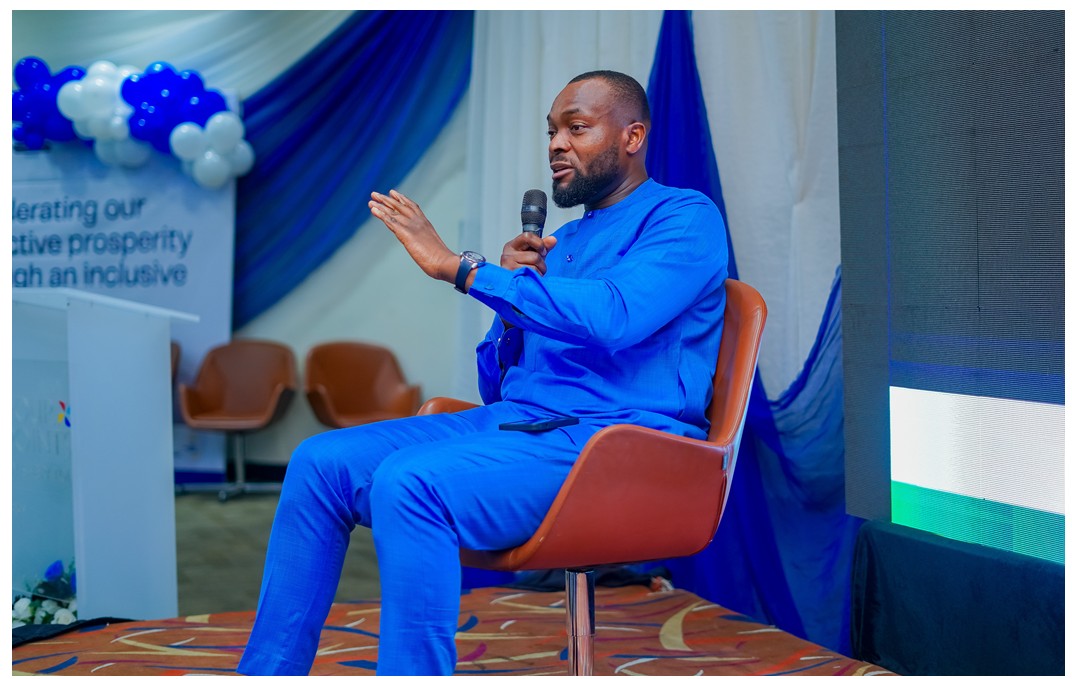
The Minister of Communications, Innovation and Digital Economy, Dr Bosun Tijani, disclosed this during the Crisis Management Advocacy Month 2026 conference in Lagos, confirming that the policy framework has moved beyond the draft stage.
According to him, the strategy will provide the legal and regulatory backing needed to enable Nigeria to become competitive in the global AI space, while ensuring innovation is balanced with accountability.
“I am pleased to share that Nigeria now has a National Artificial Intelligence Strategy. It is no longer a draft; it is a fully developed strategy,” the minister said.
Local Language AI Takes Centre Stage
A major highlight of the strategy is the development of a government-backed Large Language Model (LLM) tailored to Nigeria’s linguistic landscape.
Unlike many global AI systems, the proposed model is being designed to understand and communicate in indigenous languages such as Hausa, Igbo and Yoruba, alongside English.
The development is aimed at closing the digital gap for millions of Nigerians who are often excluded from emerging technologies due to language barriers.
In relying on local datasets, the government hopes to build AI tools that better reflect the country’s cultural and social realities.
AI to Drive Crisis Prediction and Response
Beyond communication, the government is positioning AI as a tool for national preparedness and crisis management.
Tijani noted that advanced AI systems will be deployed to analyse large volumes of data, identify patterns and predict potential risks before they escalate.
“Crises are inevitable. What separates those who succeed is preparedness,” he said.
To support these capabilities, the Federal Government is rolling out an ambitious 90,000-kilometre fibre optic network to improve connectivity nationwide and enable real-time data processing.
Issues Over AI-Driven Threats
Despite the positivity, industry stakeholders have warned about the growing risks associated with artificial intelligence.
Group Managing Director of CMC Connect LLP, Yomi Badejo-Okusanya, said organisations are increasingly vulnerable to AI-powered disruptions, including deepfakes, cloned voices and manipulated content.
“Today, crises are faster than facts and louder than truth. The real crisis is the widening gap between how fast threats evolve and how slowly organisations respond,” he said.
He added that more than 60% of organisations have already experienced AI-related crises, while nearly 70% of media institutions remain ill-equipped to respond effectively.
A Defining Moment for Nigeria’s Tech Ecosystem
For Nigeria’s growing digital economy, the National AI Strategy is expected to serve as a roadmap for investment, governance and ethical standards.
Approval by the National Assembly will not only formalise the framework but also signal Nigeria’s readiness to build and deploy indigenous AI systems at scale.
However, experts say the success of the initiative will depend largely on public trust, transparency and the country’s ability to manage emerging risks tied to artificial intelligence.



