
Only 0.05% of startups globally ever raise venture capital, a new report has shown, revealing how far most early-stage founders are from securing institutional funding.
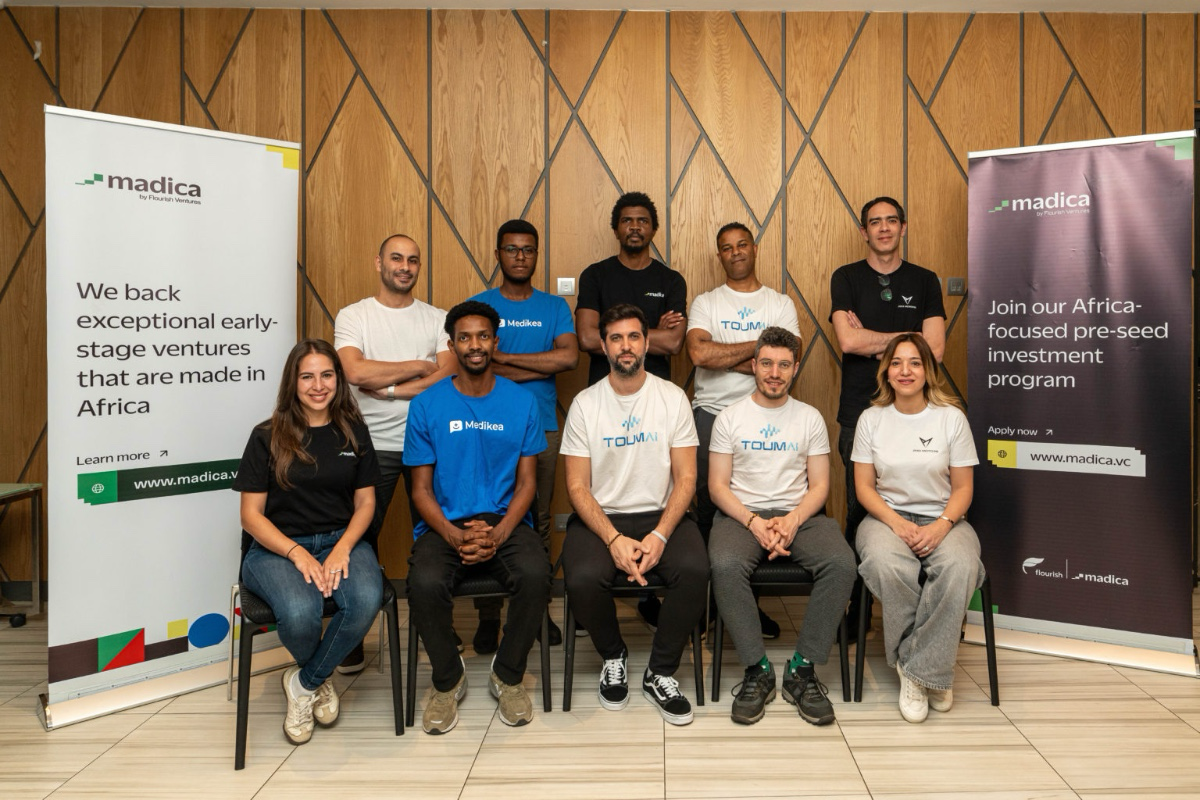
The report, titled Zero to Funded: A Founder’s Guide to Pre-Seed Fundraising in Africa, was released by Madica, drawing on insights from investors and ecosystem leaders across the continent.
The report takes a closer look at how fundraising actually works at the pre-seed stage and where many African founders get it wrong.
Venture capital is not free money, the report stressed, noting that founders who take it on are entering a long-term relationship that comes with pressure to grow fast, give up equity and eventually provide returns through an exit.
Despite this, many founders still approach fundraising with the wrong assumptions.
One of the most common mistakes, according to the report, is trying to raise money before proving anything in the market. Investors, it says, are not backing ideas alone, they want to see early signs of execution.
“The reality is that investors back passion plus some kind of momentum. Founders with grit can often build that momentum even before they get their first outside cheques.”
That momentum could come in different forms, a basic product, early users, partnerships or even tested assumptions. Without it, founders risk getting stuck in endless pitch cycles.
The report by Madica also challenges the belief, which most African startups have, that building a strong product is enough to attract funding. It says many founders spend too much time developing technology without confirming whether customers actually need it.
“Most founders are super focused on building really good technology, but often they end up solving a problem the customer doesn’t think is a problem.”
Instead, investors want to see clear evidence that founders understand customer pain points and are building solutions people are willing to use and pay for.
Valuation is another area where founders usually get it wrong. While a high valuation may look impressive, the report warns it can create problems later if the business cannot meet expectations.
Startups that raise at inflated valuations risk being forced into down rounds, which can damage investor confidence and weaken the business.
Beyond these misconceptions, the report outlines what signals readiness at the pre-seed stage. Investors are looking for clarity, credibility and early traction rather than polished financial models.
A working product, even if basic, carries more weight than a well-designed pitch deck.
“At pre-seed, the most important thing you really want to focus on is launching the product, testing your hypothesis and identifying your road map to product market fit.”
Growth, the report adds, does not have to be large at this stage. What counts is consistency and the ability to show a pattern.
“What I want to see is repeatability: $10 this month, $20 the next, $30 after that, growth that shows a pattern I can trust.”
Across Africa, the fundraising sector varies by region, but the expectations are largely the same.
West Africa recorded 475 pre-seed deals worth about $219.43 million between 2019 and 2025, making it the most active region. However, most of that capital is concentrated in Nigeria.
North Africa followed with 307 deals valued at $165.58 million, driven largely by Egypt, while East Africa saw 213 deals worth $84.51 million. Southern Africa recorded the lowest activity, with $45.78 million raised across 118 deals.
Even with these differences, investors apply similar standards across the board.
Madica also makes it clear that venture capital is not suitable for every African startups business. It is designed for companies that can scale quickly and deliver large returns within a set timeframe.
For founders building smaller or more localised businesses, other funding options may be more appropriate.
In the end, the report returns to the point that founders who focus on customers, test their ideas early and show progress are more likely to attract funding.
Those who focus only on raising money risk missing the basics that investors care about most.