


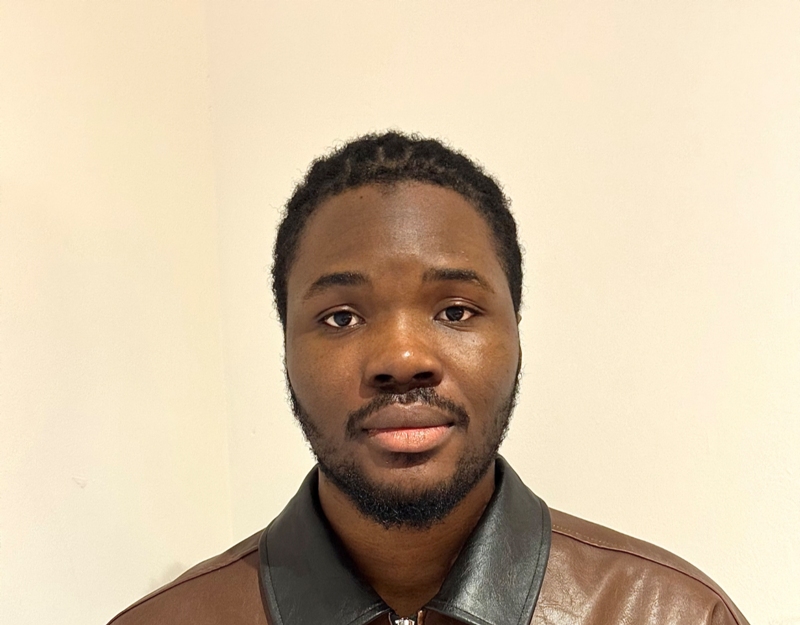
In a digital landscape crowded with complex tools, aggressive scaling strategies, and constant innovation for its own sake, Ibrahim Lasisi approaches building from a fundamentally different position, clarity of purpose.
His work challenges the assumption that better technology must be more complex, instead prioritizing usefulness, accessibility, and direct problem-solving.
This conversation explores how building from personal experience leads to stronger products, why simplicity requires more discipline than complexity, and how designing for real users reshapes the entire development process. It offers a grounded perspective on creating technology that does not just function, but genuinely works for the people it is meant to serve.
Read along as we dive into his building a useful technology in a noisy digital world.
TE: Many of the products you build come from things you personally wish existed. How has solving your own problems shaped the way you think about technology and usefulness?
Ibrahim Lasisi: Honestly, it’s changed everything about how I build. When you’re solving a problem you actually have, you don’t need to do a lot of research to understand if something matters. You already know it matters because you’re living it.
The first version of WorqNow came from me watching people struggle to get responses from job applications. I’d seen it firsthand, felt the frustration. So when I started building, I wasn’t guessing at what features mattered, I was building what I genuinely needed.
I think that’s why a lot of tech feels disconnected from real users. The builder has never experienced the problem themselves, so they end up solving something that looks like the problem but isn’t quite it. Building from your own pain keeps you honest.
TE: You’ve said you care deeply about making technology simple and accessible. In practice, what does ‘simplicity’ actually demand from a developer?
Ibrahim Lasisi: It demands a lot more work than making something complex, honestly. Anyone can build something complicated you just keep adding. Simplicity means you have to make decisions, cut things out, and constantly ask ‘does this actually need to be here?’
For me it also means thinking about the person on the other end. Not the ideal user in your head, but a real person who might not have the best internet connection, who’s juggling five things at once, who doesn’t want to learn a new tool just to do a simple thing.
When I built WorqNow on WhatsApp, simplicity meant the user didn’t need to download anything, create an account, or remember a new password. They already know how to use WhatsApp. That’s the simplicity I’m aiming for: removing friction, not just making the UI look clean.
TE: Our generation is obsessed with cutting-edge tools and buzzwords. Why do you believe access matters more than sophistication when building tech for real people?
Ibrahim Lasisi: Because sophistication without access just means you built something impressive that very few people can actually use.
I’ve seen something really beautiful, technically brilliant that required a fast laptop, a good internet connection, and a credit card to get started. That immediately cuts out a massive part of the world. And honestly, a lot of the most important problems to solve exist outside that small group of people who can meet all those requirements.
I’m not against sophistication. I use complex tools all the time. But at the end of the day, if the people who need your product can’t get to it, then what’s the point? Access has to come first. The tech can be as smart as it needs to be in the background what the user experiences should just work.
TE: You’ve built products around WhatsApp and Telegram, not traditional web-first platforms. What does that choice say about how people actually use the internet today?
Ibrahim Lasisi: It says that people already have a home on the internet and most of them aren’t looking for a new one.
When I think about the people I want to reach, especially across Africa, WhatsApp isn’t just an app. It’s how people communicate with their family, run small businesses, and get news. It’s always open. Building there means I meet people where they already are instead of asking them to come somewhere new.
There’s a certain arrogance in assuming everyone will come to your platform. The web-first default makes sense if your audience is tech-savvy early adopters, but that’s a tiny slice of real users. For most people, the question is: ‘Can I do this on my phone, in the app I already use?’ If the answer is yes, you’ve already removed the biggest barrier.
TE: You openly share code, projects, and experiments. What has building in public taught you that private learning never could?
Ibrahim Lasisi: That you learn ten times faster when other people can see your work.
When it’s just you, you can convince yourself something is good enough. The moment it’s public, you see it differently. You start noticing the rough edges, the parts that aren’t explained well, the assumptions you made without realising.
But beyond that, building in public has connected me with people I never would have met otherwise. Someone finds one of my open-source projects, it solves a problem they have, and suddenly there’s a real conversation happening. Those connections have led to collaborations, feedback that made my work better, and sometimes just encouragement that kept me going.
Private learning builds skills. Public building builds relationships and sharpens judgment in a way that’s harder to do alone.
TE: Through products like WorqNow, you’re directly intersecting technology with livelihoods. How does that responsibility influence the decisions you make as a builder?
Ibrahim Lasisi: It makes me slower to ship things I’m not confident in, and more careful about the promises I make implicitly through the product.
When someone uses WorqNow to help them get a job, that’s not just a feature being used, that’s somebody’s rent, their family, their future. I can’t be casual about that. If something in the product isn’t working right or is giving bad advice, the stakes are real.
I tend to think a lot about edge cases. What happens when the AI gets it wrong? What does the user experience look like when things break? I try to build with the assumption that something will go wrong eventually, and my job is to make sure that when it does, the person using it still feels respected and not misled.
That responsibility doesn’t slow me down; it just keeps me honest.
TE: Not every product needs millions of users to matter. How do you personally measure impact when building technology?
Ibrahim Lasisi: I measure it by whether someone’s situation actually got better. A product that genuinely changes things for a thousand people is doing more than a product with a million downloads that nobody uses seriously. Numbers are easy to chase and easy to fake. The harder question is: did this actually help?
For WorqNow, I pay attention to things like whether users come back, whether I hear stories of people getting interviews they wouldn’t have gotten otherwise. Those signals matter more to me than growth metrics.
I think the obsession with scale can actually distort what you build. You start optimising for numbers instead of outcomes. I’d rather build something that ten people rely on deeply than something a million people open once and forget.



