
ADVERTISEMENT
Thursday, April 30, 2026
Tech | Business | Economy
No Result
View All Result
  • Technology
    • Trends
    • Telecoms
      • Broadband
    • ConsumerTech
      • Gadgets and Appliances
      • Apps
      • Accessories
      • Reviews
      • Unboxing
    • EnterpriseTECH
    • Security & Data Protection
    • How To
    • GameTech
  • Business
    • Company News
    • StartUPs
      • Founder’s Story
      • Funding
    • Deals
    • People & Moves
    • SME & Entrepreneur Focus
    • BUSINESS SENSE FOR SMEs
    • Competition & Market Positioning
    • Commerce & Mobility
    • Travel
    • WomenPreneurs
  • Economy
    • Macroeconomic Trends
      • Macro Monday
      • TE Insights
    • Finance
      • Banks
      • Fintech
      • Insurance
      • Digital Assets
      • Personal Finance
    • Policies
      • Tech & Society
    • Market Analysis
    • Jobs & Workforce Economy
  • Features
    • Guest Writer
      • Chidiverse
      • Digital Assets
    • EventDIARY
    • IndustryINFLUENCERS
    • MarkTECH
    • TBS
    • NewsEXTRA
  • Editorial
  • Brand Content
  • TECHECONOMY TV
Thursday, April 30, 2026
Tech | Business | Economy
No Result
View All Result
Tech | Business | Economy
No Result
View All Result

Home » Edoyemi Ogoh Explains Why NCC Shifted QoS Sanctions to Direct Subscriber Compensation

Edoyemi Ogoh Explains Why NCC Shifted QoS Sanctions to Direct Subscriber Compensation

Historically, Nigeria’s telecom regulator enforced QoS compliance through monetary sanctions imposed on operators that failed to meet prescribed performance thresholds.

Peter Oluka by Peter Oluka
April 30, 2026
in Telecoms
Reading Time: 3 mins read
0
Engr. Edoyemi Ogoh NCC |

CREATOR: gd-jpeg v1.0 (using IJG JPEG v80), quality = 75

The Nigerian Communications Commission (NCC) has clarified the rationale behind its evolving Quality of Service (QoS) enforcement framework, which now prioritises direct compensation to subscribers over traditional financial penalties paid to government coffers.

Edoyemi Ogoh, director of Technical Standards and Network Integrity at the NCC, provided insight into the policy shift during a televised interview monitored by Techeconomy, explaining that the Commission’s actions remain firmly rooted in existing regulatory instruments but are increasingly guided by consumer-centric outcomes.
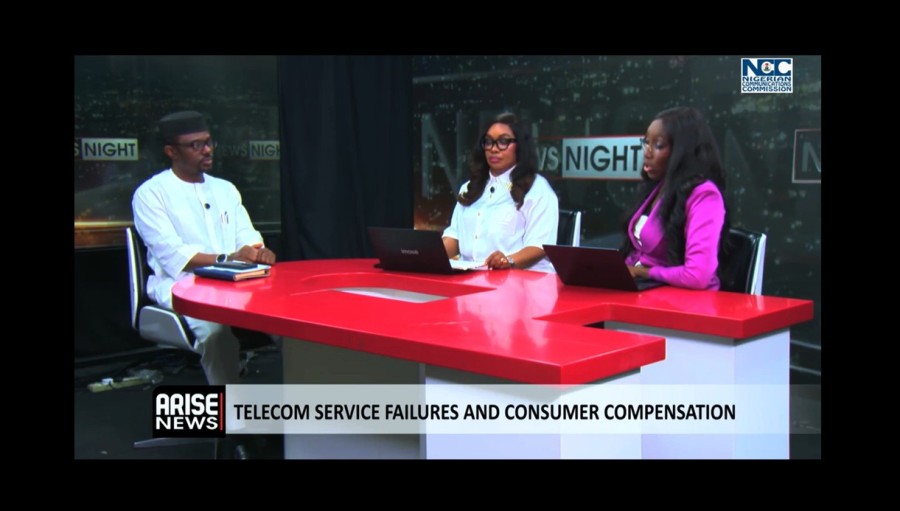
NCC direct compensation to subscribers
Edoyemi Ogoh on AriseTV

From Penalties to Consumer Redress

Historically, Nigeria’s telecom regulator enforced QoS compliance through monetary sanctions imposed on operators that failed to meet prescribed performance thresholds.

Under these rules, telecom service providers were required to pay fines of up to ₦5 million per Key Performance Indicator (KPI) per reporting area where service quality fell short.

These reporting areas, geographical zones used by the NCC to assess network performance, form the basis of nationwide QoS monitoring, covering metrics such as call drop rates, network accessibility, and data service quality.

Subscribe to our Telegram channel for the latest updates.

Follow the latest developments with instant alerts on breaking news, top stories, and trending headlines.

Join Channel

In the past, such penalties were paid directly to the government.

However, Ogoh noted that the Commission is now rethinking this approach in favour of a more consumer-focused model.

“We recognise that the subscribers are the ones who actually experience the poor quality of service. It is only fair that the impact of any sanctions imposed should be felt directly by them,” he said.

Why the Policy Shift Matters

The new direction reflects a broader regulatory philosophy: ensuring that enforcement actions not only punish non-compliance but also provide tangible relief to affected users.

Rather than treating QoS breaches solely as regulatory infractions, the NCC is positioning them as consumer rights issues, requiring remediation that directly benefits end users.

This shift aligns with global best practices, where telecom regulators are increasingly mandating service credits, refunds, or other forms of compensation when operators fail to deliver agreed service standards.

Strengthening Accountability in Nigeria’s Telecom Sector

Nigeria’s telecom industry, one of the largest in Africa with over 200 million active subscriptions, has faced persistent complaints around network congestion, dropped calls, and inconsistent data speeds, especially in high-density urban centres.

By redirecting penalties toward subscribers, the NCC aims to improve accountability among telecom operators; enhance customer trust in regulatory oversight; create financial incentives for operators to maintain service quality, and ensure that regulatory actions produce measurable consumer benefit.

Regulatory Backing and Implementation

Ogoh emphasised that the Commission’s actions remain grounded in its existing regulatory framework, which clearly defines QoS benchmarks, monitoring mechanisms, and enforcement procedures.

The shift, therefore, is not a departure from regulation but an evolution in how sanctions are applied.

“Whatever we do is guided by regulations in force. The difference now is ensuring that the outcome of those regulations directly addresses the experience of the subscriber,” he explained.

A Consumer-Centric Future

Industry analysts say the move could mark a turning point in Nigeria’s telecom regulation, especially as demand for high-quality voice and data services continues to rise with the expansion of digital services, fintech, streaming, and remote work.

If effectively implemented, the policy could set a precedent for other sectors where service delivery impacts millions of consumers daily.

For subscribers long frustrated by poor network performance, the NCC’s new approach signals a clear message: service failures will no longer just attract fines, they will trigger direct compensation.

0Shares

Previous Post

Visa vs Mastercard: The Hidden System Behind Every Card Payment

Next Post

Tinubu, Bodex Media Celebrate Adenuga at 73

Peter Oluka

Peter Oluka

Peter Oluka (@peterolukai), editor of Techeconomy, is a multi-award winner practicing Journalist. Peter’s media practice cuts across Media Relations | Marketing| Advertising, other Communications interests. Contact: peter.oluka@techeconomy.ng

Related Posts

Nairtime and Airtime access

Nairtime Hails Court Order Securing Airtime, Data Access for Millions of Nigerians

April 30, 2026
EVC of NCC, Dr. Aminu Maida | 14-Day SIM Deactivation Notice | Nigeria's Broadband Penetration | CNI and Edo

CNI: NCC Commends Edo Gov’t for Protecting Telecom Infrastructure during Construction

April 30, 2026

In 2026, Self-service is Redefining Telco Customer Experience

April 30, 2026
Load More
Next Post
Otunba Dr. Mike Adeniyi Agbolade Ishola Adenuga Jr. at 63

Tinubu, Bodex Media Celebrate Adenuga at 73

Leave a Reply Cancel reply

Your email address will not be published. Required fields are marked *

I agree to the Terms & Conditions and Privacy Policy.

This site uses Akismet to reduce spam. Learn how your comment data is processed.

Techeconomy Podcast
Techeconomy Podcast

The Techeconomy Podcast is a thought-leadership show exploring the powerful intersection of technology, business, and the economy, with a strong focus on Africa’s fast-evolving digital landscape.

PROTECTING INNOVATION IN AFRICA’S STARTUP ECOSYSTEM
byTecheconomy

Protecting Innovation in Africa’s Startup Ecosystem . A timely conversation for the future of African entrepreneurship.

PROTECTING INNOVATION IN AFRICA’S STARTUP ECOSYSTEM
April 29, 2026
Techeconomy
BUILDING TRUST IN AFRICA ECOSYSTEM
February 27, 2026
Techeconomy
Navigating a Career in Tech Sales
January 29, 2026
Techeconomy
How Technology is Transforming Education, Health, and Business
November 27, 2025
Techeconomy
INNOVATION IN MOBILE BANKING
October 30, 2025
Techeconomy
Search Results placeholder
  • About Us
  • Careers
  • Contact Us
  • Privacy Policy

© 2026 TECHECONOMY.

No Result
View All Result
  • Technology
  • Business
  • Economy
  • Features
  • Editorial
  • Brand Content
  • TECHECONOMY TV

© 2026 TECHECONOMY.

This website uses cookies. By continuing to use this website you are giving consent to cookies being used. Visit our Privacy and Cookie Policy.