There is a clear need to build a stronger bridge between the realities of governance and the information available to the public.
In many cases, governments struggle to align practical realities with the level of transparency expected by citizens and the media.
One practical way forward is to grant journalists greater operational freedom while ensuring responsibility and collaboration.
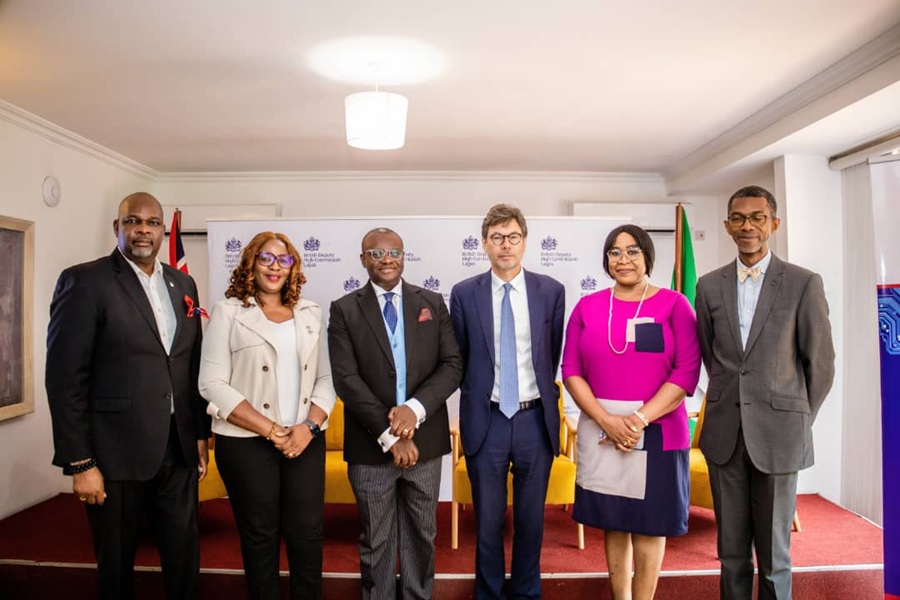
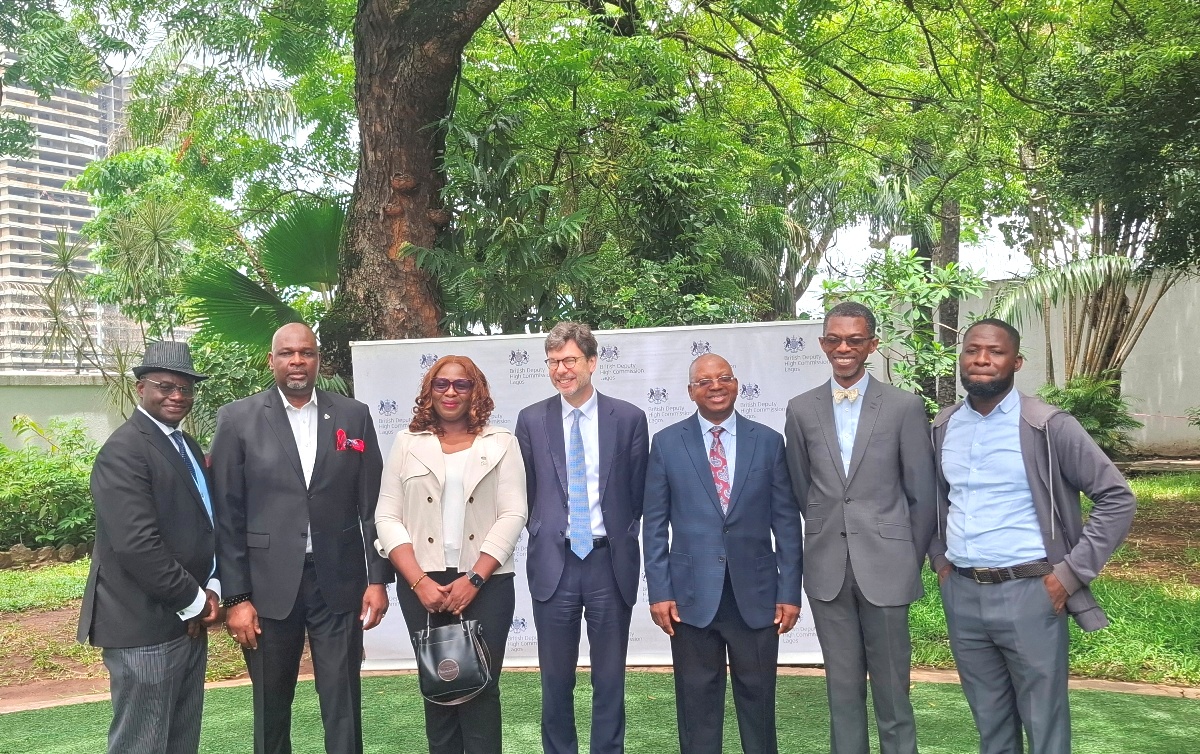
These were the unanimous views expressed by speakers at a three-day media training programme, themed, “Advancing Media Freedom through Science and Technology Journalism,” organised at the Pan-Atlantic University with support from the British High Commission Nigeria.
The event brought together 60 journalists from multiple media organisations, academics, and communication experts to examine the growing intersection between press freedom, science reporting, digital technology, misinformation, and ethical journalism in Nigeria.
Opening the programme, Jonny Baxter, British Deputy High Commissioner, said the United Kingdom remained committed to supporting press freedom and independent journalism in Nigeria, especially at a time when technological disruption is rapidly reshaping information ecosystems globally.
“In an era defined by rapid technological advancement and the speed at which information spreads, accurate, ethical, and evidence-based reporting has never been more important,” Baxter told participants.
He warned that misinformation and unverified narratives now travel rapidly through digital platforms, increasing pressure on journalists and media institutions to provide credible, factual, and balanced reporting.
Baxter noted that over the past two years, the UK had supported multiple journalism training programmes and media engagements across Lagos, Abuja, and the United Kingdom as part of broader efforts to strengthen media professionalism and democratic accountability.
According to him, journalism remains essential not only for informing society but also for encouraging critical thinking and holding institutions accountable.
The British envoy also referenced recent high-level engagements between Nigeria and the United Kingdom, stressing that collaboration with credible media organisations played a key role in ensuring accurate public communication around bilateral issues involving economic cooperation, migration, security, and investment partnerships.
The concerns raised at the training reflect wider global anxieties around media freedom and journalistic independence.
In his remarks, Dr. Ikechukwu Obiaya, dean of the School of Media and Communication, argued that journalism today faces a deeper crisis beyond technology itself.
According to him, traditional journalism standards such as accuracy, fairness, objectivity, accountability, and investigative rigor are increasingly being undermined by sensationalism, ideological bias, and unverified digital content.
“Journalism is a public service,” Obiaya said. “Society depends on journalists to provide truth, context, direction, and accountability.”
He observed that technological innovation has fundamentally altered how information flows in society. Unlike the traditional media era where information passed through professional gatekeepers, today almost anyone with internet access can publish content instantly.
That shift, he warned, has intensified competition between professional journalism and content driven primarily by opinions, emotions, sensationalism, or political interests.
Obiaya stressed that media literacy and critical thinking are becoming increasingly important in the digital age, noting that audiences must now learn not only how to consume information, but also how to evaluate credibility and identify misinformation.
For science and technology journalists specifically, the challenge has become even more complex.
Experts at the training noted that science reporting requires journalists to simplify highly technical subjects without sacrificing accuracy, a difficult balance in an online environment increasingly driven by clicks, speed, and viral content.
During his presentation, Silk Ugwu Ogbu, associate professor at the School of Media and Communications, PAU, argued that media freedom cannot be separated from broader issues of freedom of expression and access to public information.
While acknowledging that freedom of expression is a fundamental democratic right, he noted that legal and political pressures continue to shape how journalism operates in many countries, including Nigeria.
He cited the latest Reporters Without Borders (RSF) World Press Freedom Index, which ranks Nigeria 122nd out of 180 countries in 2025 before slightly improving to 112th position in the 2026 index.
RSF, however, still describes Nigeria as one of West Africa’s most difficult and dangerous environments for journalists, citing surveillance, attacks, arbitrary arrests, political pressure, and economic fragility affecting media independence.
Ogbu also identified poor access to public information, commercial pressure, political interference, and self-censorship as major obstacles confronting Nigerian journalists today.
“We are supposed to be watchdogs, but who is watching the watchdog?” he asked.
The discussions also explored how digital technology has created new vulnerabilities for journalists, including online harassment, coordinated intimidation campaigns, digital surveillance, and growing economic pressure on independent media organisations.
Globally, concerns about shrinking media freedom continue to intensify.
The 2025 RSF World Press Freedom Index described the global state of press freedom as ‘difficult’ for the first time in the index’s history, with more than half of the world’s countries now classified under ‘difficult’ or ‘very serious’ press freedom conditions.
For participants at the Lagos training, however, the conversation extended beyond rankings and policy concerns.
At its core, the event repeatedly returned to one central message: in an age flooded with misinformation, emotionally charged narratives, artificial intelligence, and algorithm-driven content distribution, journalism’s survival may increasingly depend on its ability to remain factual, evidence-based, ethical, and trusted.
And for many of the journalists gathered inside the Pan-Atlantic University auditorium, that responsibility now feels heavier than ever.
Continue Reading >>> HERE