The Federal Government has announced (new) plans to ‘officially’ launch Nigeria’s nationwide Digital Switchover platform on June 17, 2026.
The government said the move is expected to reshape the country’s broadcasting industry with access to more than 100 free television channels.
Recall, Nigeria’s Digital Switchover (DSO) program has largely failed to achieve its objectives nearly two decades after launch, missing multiple deadlines since the initial 2015 target.
Despite spending over N60 billion, the project is plagued by funding gaps, poor infrastructure, bureaucratic inefficiencies and low public awareness.
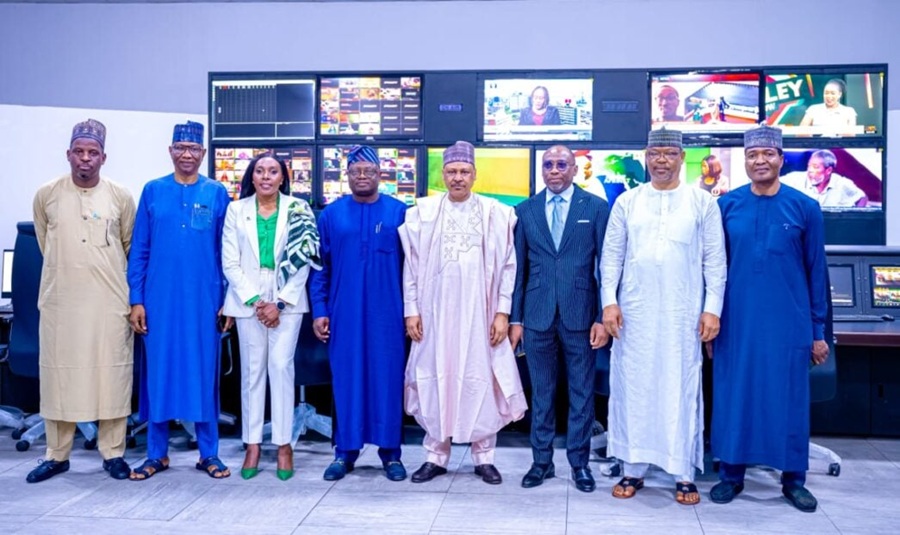
Mohammed Idris, minister of Information and National Orientation, disclosed the (new) development during a facility tour of Nigerian Communications Satellite Limited headquarters in Abuja.
According to the minister, the long-delayed migration from analogue to digital broadcasting is now ready for nationwide rollout after several years of postponements and failed attempts.
Idris said the new platform would offer Nigerians free access to over 100 television channels while introducing improved audience measurement technology capable of tracking real-time viewership patterns for advertisers and broadcasters.
He explained that the initiative is expected to deepen competition in the broadcasting sector, improve content quality, and expand opportunities for advertisers and content creators across Nigeria and sub-Saharan Africa.
“This service is free,” the minister said, noting that unlike previous DSO efforts that relied on expensive encrypted set-top boxes, the government has absorbed part of the infrastructure cost to make the platform more accessible to Nigerians.
Charles Ebuebu, the director-general of the National Broadcasting Commission, said the platform was designed to align with emerging technologies and changing audience consumption habits, especially among younger viewers.
Ebuebu disclosed that the platform would debut with about 100 channels at launch, while more content providers are already in discussions to join the ecosystem.
He added that the NBC has also established six regional studios nationwide to support local content creators and reduce dependence on Lagos, Abuja, and Kano for production facilities.
Also speaking during the tour, Jane Egerton-Idehen said NigComSat is working towards uninterrupted service delivery and broader technological expansion, revealing plans to launch two additional satellites to strengthen coverage and operations.
Industry observers believe the nationwide DSO rollout could intensify competition in Nigeria’s television broadcasting space, particularly within the pay-TV market, while accelerating the country’s transition to high-definition digital broadcasting.