


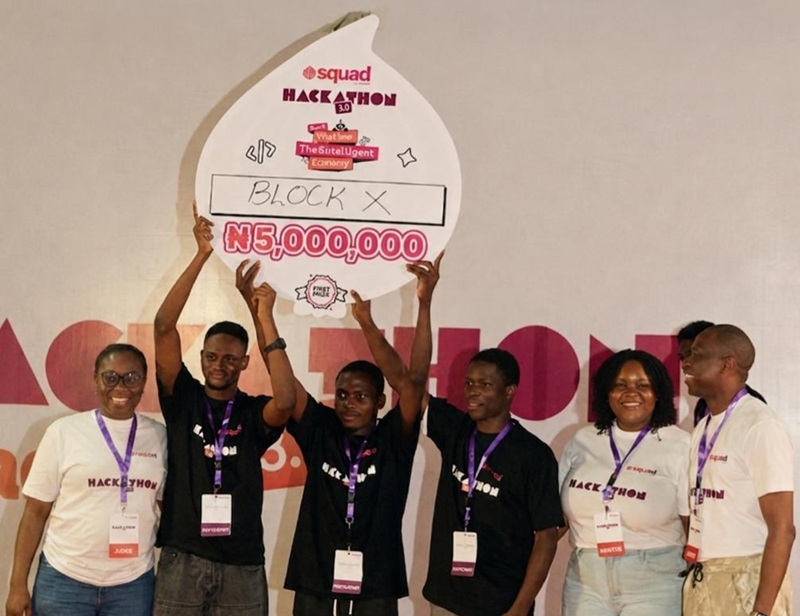
HabariPay Ltd., the fintech subsidiary of Guaranty Trust Holding Company Plc (GTCO), has concluded the Grand Finale of its Take on Squad Hackathon 3.0.
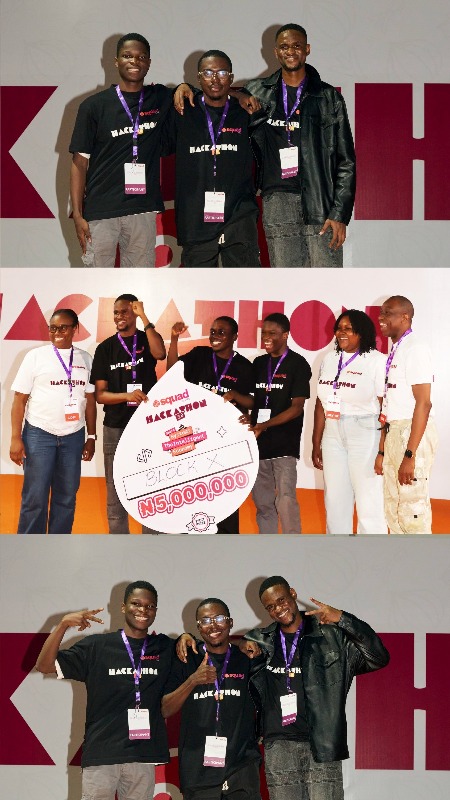
Team Block X from Obafemi Awolowo University emerged as champions and taking home a ₦5 million prize.
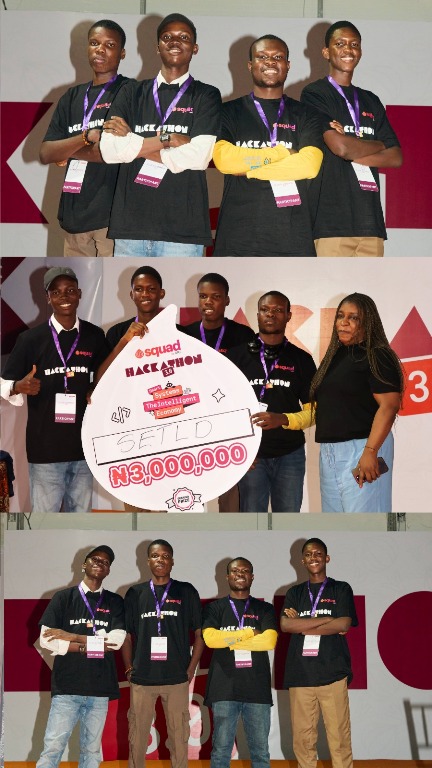
Team Setld claimed second place with ₦3 million.
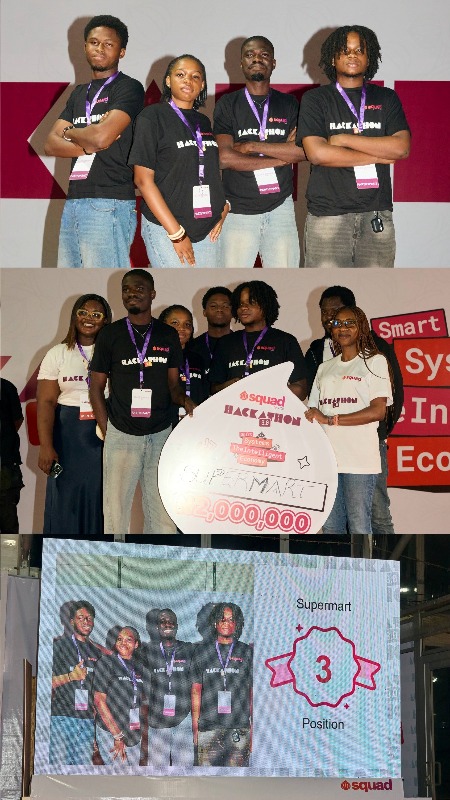
Team Supermart earned ₦2 million in third.
The competition, themed: “Smart Systems: The Intelligent Economy,” recorded its most impressive turnout since inception, attracting over 1,600 undergraduate applicants from universities across Nigeria, more than ten times the participation figures from the previous edition.
Segun Agbaje, GTCO group chief executive officer, delivered the keynote, urging participants to recognise the global weight of their capabilities.
“You are not just among the brightest minds in Nigeria; you are among the finest talents anywhere in the world,” he told the audience. “If this hackathon were held in any country, your skills, ideas, and determination would still earn you a place here.”
Agbaje also made a case for the undervalued strengths of introverted thinkers.
“Charisma may open doors, but it is thoughtful minds that build lasting impact,” he said. “This hackathon is a platform for those quiet but brilliant minds to show the world what they are capable of.”
A Competition That Has Found its Footing
Eduofon Japhet, managing director of HabariPay, attributed the surge in interest to a growing community of alumni who have become vocal advocates for the programme.
“We’ve grown more than tenfold in participation,” she said. “Past participants from previous editions have become our strongest ambassadors, sharing how the experience transformed their skills, confidence, and careers. Their success stories created anticipation long before applications opened.”
From the 1,600-plus submissions, 600 teams were shortlisted, with over 500 proceeding through multiple competitive rounds to the grand finale. Japhet described a selection process designed for transparency, with evaluators assessing team quality, core skill sets, and prior work documented through GitHub portfolios.
The Stakes and the Rules
Organizers made clear from the outset that integrity was non-negotiable. Several teams were disqualified for violations including submitting multiple entries under different email addresses, participating remotely, and using AI tools such as ChatGPT. The decisions, Japhet noted, were necessary to preserve fairness for all participants.
The top three finishers earn more than prize money. Winners advance into the Squad Pinnacle Program, a three-year initiative offering structured training in front-end and back-end engineering, cybersecurity, and product development, with the explicit aim of preparing participants for employment in Nigeria’s tech industry.
A Standout Pitch: Guild
Among the solutions that drew attention during the finals was Guild, a platform designed to connect informal workers, artisans, tradespeople, and daily wage earners, with employers and the broader financial system.
The concept uses a voice agent named Tola, operable in Nigerian English, to match workers such as bricklayers to job opportunities and process payments through Squad’s infrastructure.
After 90 days of activity, users accumulate a financial record that formal lenders can assess, a potentially significant step toward financial inclusion for millions of Nigerians historically locked out of the banking system.
From Participant to Mentor
One of the event’s more telling narratives came from Oluwamuyiwa, a third-place finisher in a previous edition who returned this year not as a competitor but as a mentor, guiding teams through the pressures of building a functional product under tight time constraints.
“The main challenge was building the app from an idea within a short time before presenting on stage,” he recalled, a challenge he now helps others navigate.
Not every team made it to the finals, but the spirit of the event extended beyond the podium. Moses, team leader of Team Sapphire from Zaria, described overnight build sessions and travel disruptions on the road to the competition. Despite not advancing to the top 50, the team’s AI-driven agricultural e-commerce concept, which holds buyers’ payments in escrow until product verification, is one they intend to continue developing independently.
Looking Ahead
Hackathon 3.0 marks a measurable step forward in HabariPay’s stated mission to close the gap between university education and the practical demands of Nigeria’s tech economy. With each edition expanding its reach, the programme is quietly becoming one of the more credible pipelines for engineering talent in West Africa.
For HabariPay and GTCO, that appears to be precisely the point.



