

Industrial software company AVEVA is increasing its investment in Nigeria, with plans to partner with universities, technology firms and industrial companies as it seeks to develop local talent and expand its operations across Africa.
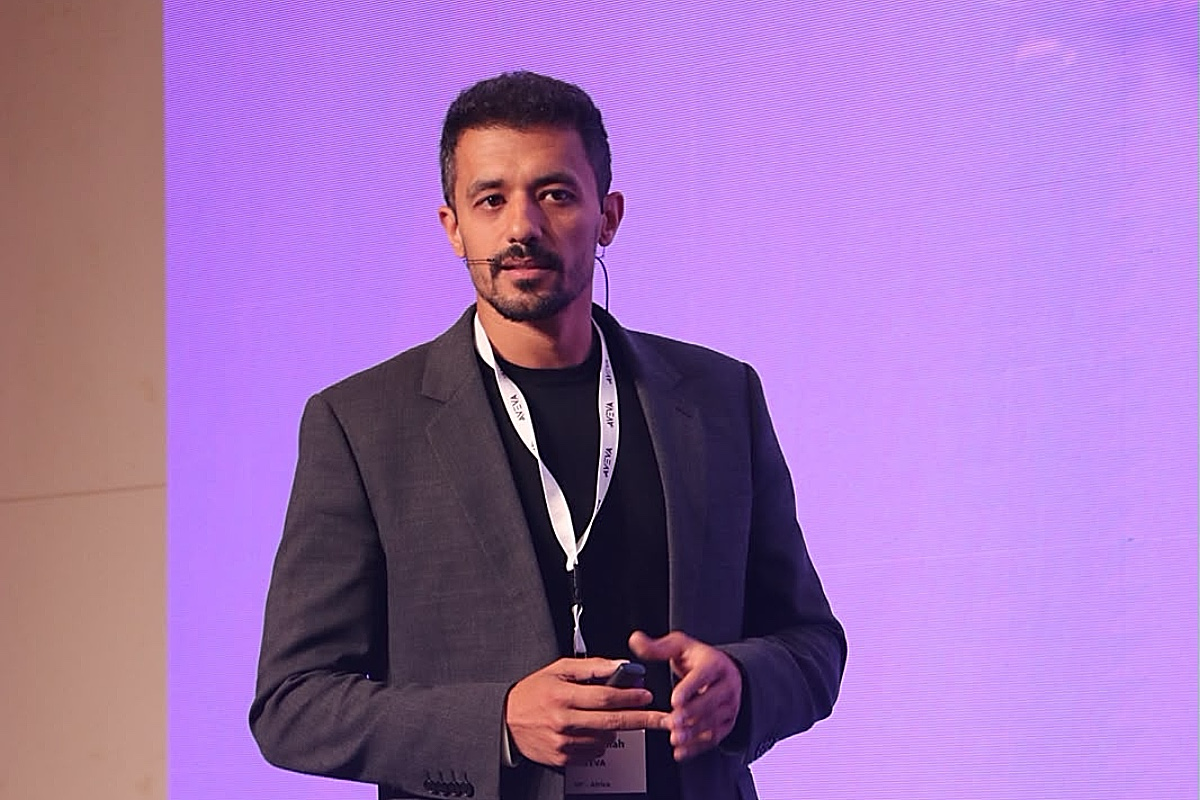
Speaking during AVEVA Day Nigeria in Lagos on Thursday, Khaled Salah, the company’s vice president for Africa, said discussions were already under way with universities to give engineering students practical experience with industrial software before entering the workforce.
Salah said the company increased its focus on Africa earlier this year after separating its former Middle East and Africa business into two standalone regions.
Under the new structure, he oversees the company’s growth strategy across Africa, with particular attention on six countries: Nigeria, South Africa, Egypt, Morocco, Algeria and Kenya.
For AVEVA, however, Nigeria stands out. “Nigeria is really the heart of the digital transformation in Africa,” Salah said.
He pointed to the country’s young population, established oil and gas industry and ongoing government digitalisation efforts as fundamental factors behind the company’s growing interest in the market.
According to him, AVEVA is backing that interest with increased investment in its local presence, stronger customer engagement and plans to expand its leadership footprint in the country.
“We need to tailor our technology, our go-to market strategy and model to Africa,” he said. “Africa should be Africa for Africa.”
Salah argued that multinational technology companies cannot simply import global models into African markets and expect the same results. Instead, he said solutions must be adapted to local realities, local industries and talent.
As part of that approach, AVEVA plans to strengthen investment in Nigerian technology partners while opening more opportunities for students and young engineers.
He revealed that the company is already engaging universities and plans to provide students access to gain hands-on experience with industrial software in laboratory environments.
Salah explained that many graduates leave school with strong theoretical knowledge but limited exposure to real industrial environments. Hence, introducing students to digital industrial technologies earlier, will shorten the transition from university to the workplace.
Beyond education, Salah said AVEVA is investing heavily in its partner ecosystem by providing training, technical support and access to global expertise.
He added that the long-term goal is to increase the number of Nigerians working in leadership positions within AVEVA’s operations across Africa.
On the technology side, Salah said many organisations already possess vast amounts of operational data but find it difficult to use it effectively.
According to him, one of the most common concerns raised by business leaders is how to increase production while reducing the costs of energy.
AVEVA’s response, he said, is to bring operational and engineering data together on a single platform, creating what the company describes as a digital twin, a digital representation of physical assets that gives executives real-time visibility into operations.
Once organisations achieve that level of visibility, they can make faster decisions, improve productivity, reduce costs and identify equipment issues before failures occur.
Salah noted that strong data foundations are also essential before companies can fully benefit from artificial intelligence.
“You cannot achieve that without the first foundation layer of data,” he said.
While AI is taking over conversations across industries, Salah believes many organisations are still failing to unlock its full value.
He said businesses usually focus on dashboards and visualisations but stop short of using AI to drive action. “If you don’t tell me what I should do to make it 90%, you didn’t really capture the AI,” he said while explaining how industrial AI differs from basic analytics.
For him, AI delivers value only when it helps operators make practical decisions, whether that involves maintenance, reducing energy consumption, improving efficiency or preventing equipment failures.
Even then, he stressed that human oversight will always be highly essential.
“We always put humans in the center of AI,” Salah said. “I will not let AI make a decision to shut down the factory. I will let AI advise to shut down the factory, and then the human will say, ‘Okay, I will shut down the factory.’”
Addressing the state of digital transformation in Nigeria, Salah identified scalability as the biggest challenge facing businesses.
While many companies have already launched pilot projects involving AI, automation and data analytics, he said, relatively few have expanded those projects across entire organisations.
“The technology exists. We have the technology right now,” he said. “The challenge that I see right now for Nigeria is moving from pilot to scalability.”
He argued that the next phase of growth will come when organisations stop testing isolated use cases and begin deploying proven technologies across multiple operations and facilities.
Salah also highlighted the role digital technologies can play in addressing energy challenges.
Rather than relying solely on the construction of new power infrastructure, he said, substantial growth can be achieved by improving the efficiency of existing industrial assets.
In helping operators optimise ageing factories, machinery and production systems, companies can reduce wasted energy and free up capacity for growing sectors such as artificial intelligence, data centres and advanced manufacturing.
Salah said AVEVA intends to focus on this, while expanding its engagement in Nigeria through closer collaboration with customers, universities, partners and stakeholders as the company pursues its vision of an Africa-led approach to digital transformation.