


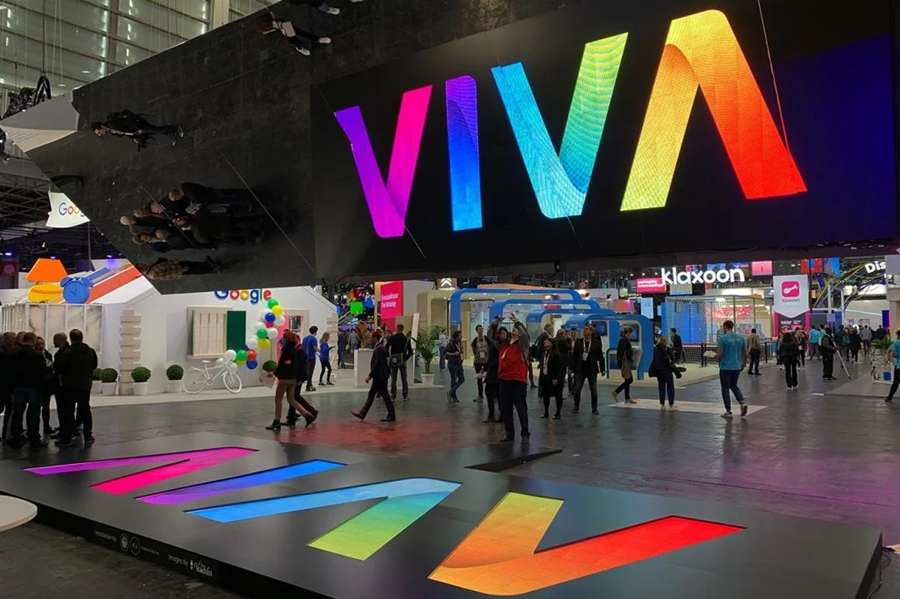
VivaTech 2026 once again reaffirmed why it has become one of Europe’s biggest technology and startup events.
Held in Paris this week, the event brought together thousands of startups, investors, policymakers and industry leaders from around the world to showcase the latest advances in technology and discuss the future of innovation.
While VivaTech has long been a leading European event, it also gave Africa a major international platform to showcase its fast-growing technology ecosystem, highlighting the continent’s shift from an emerging market to a growing centre for innovation.
Before looking at Africa’s role and what it gained from the event, here are some of the biggest developments that shaped VivaTech 2026 as it celebrated its 10th anniversary.
Agentic and Physical AI
As expected, artificial intelligence remained the dominant theme at VivaTech 2026, but conversations stretched well beyond generative AI.
Much of the attention centred on agentic AI, a new phase in which AI systems are evolving into autonomous agents capable of carrying out workflows and business operations across multiple systems with little human involvement.
Open-source developers such as Alibaba presented their AI models as strong global alternatives. At the same time, OpenAI said enterprise adoption of AI is now growing faster in Europe than in the United States.
During his keynote, Jeff Bezos introduced Prometheus, a software platform that is not focused on robotics or text generation. Instead, it is trained entirely on engineering, visual and physics-based data to automate the design and manufacturing of complex physical systems.
Bezos said the goal is to make building new technologies easier and speed up the pace of innovation.
Connected Care and Open Health Ecosystems
Healthcare innovation was another major focus at VivaTech 2026, with Samsung Electronics among the companies drawing the most attention.
Rather than treating smartwatches as standalone devices, Samsung demonstrated how wearables, smartphones and health platforms can work alongside specialised startups to bring hospital-grade health monitoring into people’s homes.
During sessions featuring SiPhox Health, Generation Lab and Xealth, the company showed how users could carry out blood biomarker analysis and monitor biological ageing without visiting a healthcare facility.
Samsung also disclosed that Samsung Health now serves more than 77 million monthly users, while SmartThings connects over 460 million devices worldwide.
Together, the demonstrations pointed to a future where healthcare becomes more preventive, personalised and built around connected digital ecosystems instead of individual devices.
Quantum Computing and Infrastructure Sovereignty
Although AI dominated discussions throughout VivaTech 2026, deep technologies such as quantum computing also drew significant interest.
Speakers described quantum computing as the next major leap after AI, with companies including IBM showcasing technologies designed to solve scientific and industrial problems that conventional computers cannot easily handle.
European policymakers and researchers also argued that leadership in quantum technology could become just as important as leadership in artificial intelligence over the coming decade.
Another major topic was data infrastructure sovereignty. Henna Virkkunen, Executive Vice-President of the European Commission, outlined plans to triple Europe’s data centre capacity by 2035.
The plan is intended to ensure Europe retains control of the computing infrastructure needed to support artificial intelligence, cloud services and future digital industries. The push for sovereign AI and stronger domestic computing capacity was evident throughout the event.
What Did Africa Gain From VivaTech 2026?
Africa’s growing community of software developers, AI engineers and startup founders attracted considerable interest. As global demand for skilled technology professionals continues to grow, the continent is increasingly being recognised as a source of technical talent rather than simply a market for technology products.
One of the biggest opportunities at VivaTech was access to investors. The event gave startup founders the chance to meet potential backers, secure funding and build partnerships with organisations from around the world.
The AfricaTech Lab was created specifically to connect African innovators with venture capital firms, corporations and key decision-makers attending the exhibition.
VivaTech 2026 showed that the future of technology extends well beyond generative AI.
From agentic AI and advanced engineering software to quantum computing, healthcare and space technology, the event highlighted the innovations expected to shape the next decade.
Africa’s growing presence also showed that the continent is no longer just participating in the global technology conversation. It is steadily becoming one of the places where the next wave of innovation is being built.





