


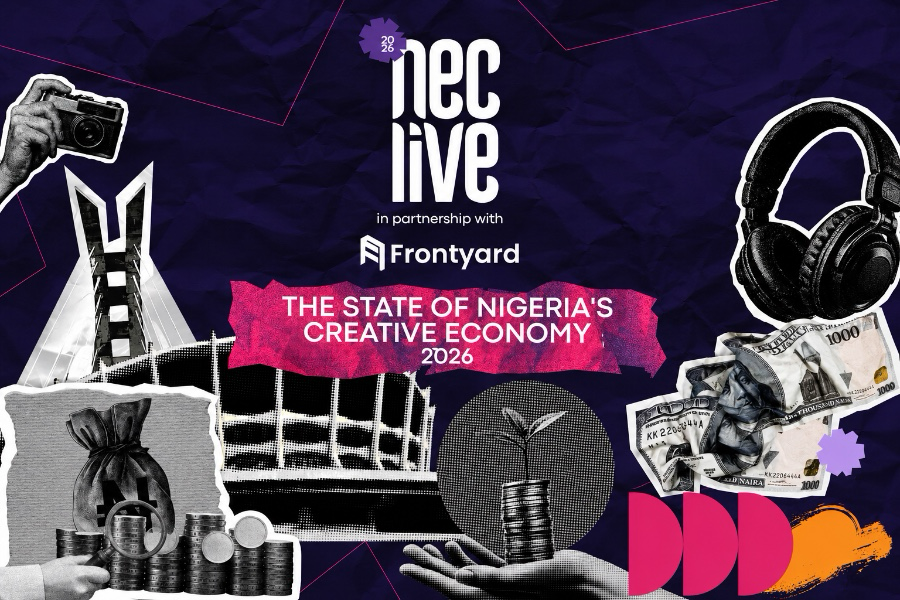
The creative industry in Nigeria is losing valuable time and money because of poor electricity and unreliable internet services, with professionals saying both are the biggest obstacles to growing their businesses and competing internationally.
Revealed in The State of Nigeria’s Creative Economy 2026 report released by NECLive on Monday, the findings are based on responses from 377 professionals working across advertising, film, music, fashion, photography, gaming, publishing, public relations, digital content creation, visual arts and other creative sectors.
Participants were asked to rank seven common challenges affecting their work. Power outages and poor internet connectivity came out on top, recording an average score of 2.98 and ranking ahead of funding delays, equipment shortages, regulatory bottlenecks and intellectual property concerns.
“The single most impactful intervention for Nigeria’s creative sector is reliable electricity and broadband. Until that foundation exists, every other creative economy programme builds on sand,” the report stated.
The findings reveal that while the creative industry in Nigeria attracts global attention, many businesses still find it difficult to access basic infrastructure needed to operate efficiently.
Beyond unreliable electricity and internet access, respondents identified poor team coordination, limited access to dependable equipment, funding delays for materials and travel, visa and export restrictions, regulatory hurdles and piracy as other factors slowing growth.
The report also found that managing projects has become very expensive for creative businesses.
Unexpected costs during production ranked as the biggest reason projects exceed their budgets. Equipment breakdowns and repair costs followed closely, with many respondents saying both contribute to delays and higher operating expenses.
Administrative work is also taking time away from creative output. According to the report, many professionals spend a significant part of their working hours handling paperwork and other non-creative tasks, while chasing payments from clients emerged as another major drain on productivity.
Collaboration within the industry is also proving difficult. More than half of those surveyed said unclear project briefs usually create avoidable problems during production.
Payment disputes were also identified as a major source of tension between clients and creative professionals.
Although respondents noted several day-to-day operational challenges, they said improving access to finance and expanding distribution opportunities are essential for the industry’s long-term growth.
Nigeria’s creative economy currently employs an estimated 4.2 million people, according to the Federal Ministry of Art, Culture, Tourism and the Creative Economy. The Federal Government expects the sector to contribute $100 billion to the economy by 2030.
The report, however, said reaching that target will be difficult unless long-standing infrastructure problems are addressed.
Around 90 million Nigerians still lack access to electricity, representing roughly 40 to 42% of the population. As a result, many creative businesses rely on petrol and diesel generators or invest in solar power systems, adding significantly to their operating costs.
Power supply is unstable despite ongoing reforms. Nigeria recorded two national grid collapses in January after experiencing 12 grid collapses in 2024. Additional system failures were also reported in 2025 because of persistent weaknesses in the national grid and gas supply constraints affecting electricity generation.
Although the Electricity Act 2023 gives states greater authority to generate, transmit and distribute electricity, the report indicates that many businesses in the creative sector have yet to see any meaningful improvement in power supply.



