


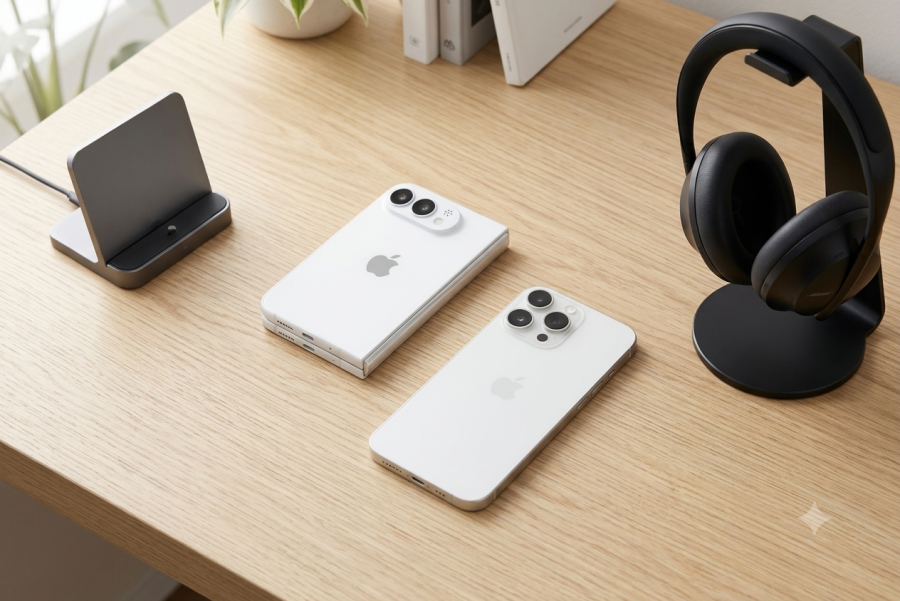
Rumours about Apple entering the foldable smartphone market have been spreading around, with reports revealing the company is preparing a new premium iPhone Ultra model that could bring a completely different form factor to its flagship lineup.
The speculation increased following reports of a cyberattack involving Tata Electronics, one of Apple’s manufacturing partners in India.
Documents allegedly linked to the incident have reportedly revealed details about a possible foldable iPhone, including its design direction, expected features, and potential launch timeline.
If the reports are accurate, the iPhone Ultra could become Apple’s most expensive smartphone yet, making it an ultra-premium device aimed at consumers willing to pay significantly more for new technology.
Unlike the iPhone 17e series, which focused on attracting more users into Apple’s ecosystem, the iPhone Ultra appears to target the highest end of the market. However, Apple will not be entering a space without competition.
The company is not the first smartphone manufacturer to explore foldable devices. Brands such as Samsung, Huawei, Oppo, Honor and even more affordable-focused manufacturers like TECNO have already launched multiple foldable models, giving them valuable experience in design, durability and consumer adoption.
This leads to the question of whether Apple can redefine the foldable smartphone market, or if the iPhone Ultra will find it difficult to stand against companies that have already built a strong foundation.
Expected Features of the iPhone Ultra
The iPhone Ultra is expected to represent Apple’s most advanced smartphone yet, with premium hardware designed to justify its expected high price.
Reports linked to the Tata Electronics leak suggest that the device could feature Apple’s upcoming A20 chip, reportedly built on a 2nm process and expected to power future iPhone models, including the iPhone 18 series.
Apple is also expected to continue reducing its dependence on external suppliers by using its own C2 cellular modem instead of Qualcomm’s hardware.
On the camera side, the iPhone Ultra may not introduce a completely redesigned system compared with the iPhone 17 lineup. Apple already made major improvements to its camera technology in recent generations, meaning future upgrades could focus more on computational photography, artificial intelligence features and improved telephoto capabilities.
Battery life will also be a huge focus because foldable smartphones require additional power to support larger displays and more complex hardware.
While the A20 chip is expected to improve efficiency, the iPhone Ultra could require a larger battery, potentially approaching the 5,000mAh range.
Can the iPhone Ultra Compete With Samsung’s Galaxy Z Fold Series?
Apple’s biggest challenge will be entering a market where competitors have already spent years refining their foldable smartphones.
The initial demand for the iPhone Ultra will likely come mainly from existing iPhone users who want to experience Apple’s version of a foldable device, rather than consumers already committed to foldable phones from other brands.
Battery capacity and charging technology could also become areas where Apple faces competition. Some rival foldables now feature larger batteries and significantly faster charging speeds, areas where Apple has traditionally taken a more conservative approach.
However, Apple’s biggest advantage could be its processor technology.
The rumoured 2nm A20 chip is expected to deliver improved efficiency and stronger performance compared with current-generation processors. If Apple achieves those improvements, the iPhone Ultra could have a significant advantage in processing power and software optimisation.
Most premium foldable smartphones currently rely on Qualcomm’s Snapdragon flagship processors, which already deliver strong performance. However, Apple’s tight integration between hardware and software has historically helped its devices compete strongly despite differences in specifications.
Beyond performance, the biggest test for any foldable smartphone remains the display and hinge system. Since the screen is designed to bend repeatedly, durability has become one of the most important factors influencing consumer confidence.
Reports suggest the iPhone Ultra could measure around 9mm when folded, which would make it relatively slim, although some competitors have already pushed foldable designs closer to traditional smartphone thickness.
Display technology may also not provide Apple with a major advantage. Most premium foldables now offer high-resolution AMOLED screens, 120Hz refresh rates and support for billions of colours, setting a high standard for any new entrant.
Apple’s Biggest Foldable Challenge
The iPhone Ultra could become one of Apple’s most innovative smartphone launches in years, as the company’s brand strength, loyal customer base and software ecosystem will likely help generate strong early interest.
However, entering the foldable market presents a different challenge from launching another traditional iPhone. Apple will have to convince consumers that its approach offers something way better than existing devices from companies that already understand the category.
The success of the iPhone Ultra will depend on both specifications and whether Apple can solve the biggest concerns around foldable smartphones. These include durability, price and long-term value.
If Apple gets it right, the iPhone Ultra could boost mainstream adoption of foldable devices. But if the product fails to provide a clear advantage over existing alternatives, it could become one of the company’s most challenging smartphone launches.
Discover more from Tech | Business | Economy
Subscribe to get the latest posts sent to your email.



