


It is no surprise that AI is demanding much more from not just the software industry but hardware manufacturers as well.
Unlike the pre-generative AI era, today’s consumer-focused computing systems require significantly more computing power, energy, memory, and storage.
This has created challenges in global technology supply chains as manufacturers find it difficult to meet growing demand.
These supply imbalances naturally make production more expensive. We are already seeing this with semiconductor shortages affecting parts of the consumer electronics industry in 2026.
To stay profitable, manufacturers have little choice but to pass some of these additional costs on to consumers, making products that were once relatively affordable more expensive.
Beyond component shortages, tech companies are gradually moving away from relying solely on hardware sales and are instead building recurring subscription businesses around their products.
If current market trends continue, some of today’s gadgets may become noticeably more expensive or offer less value by next year.
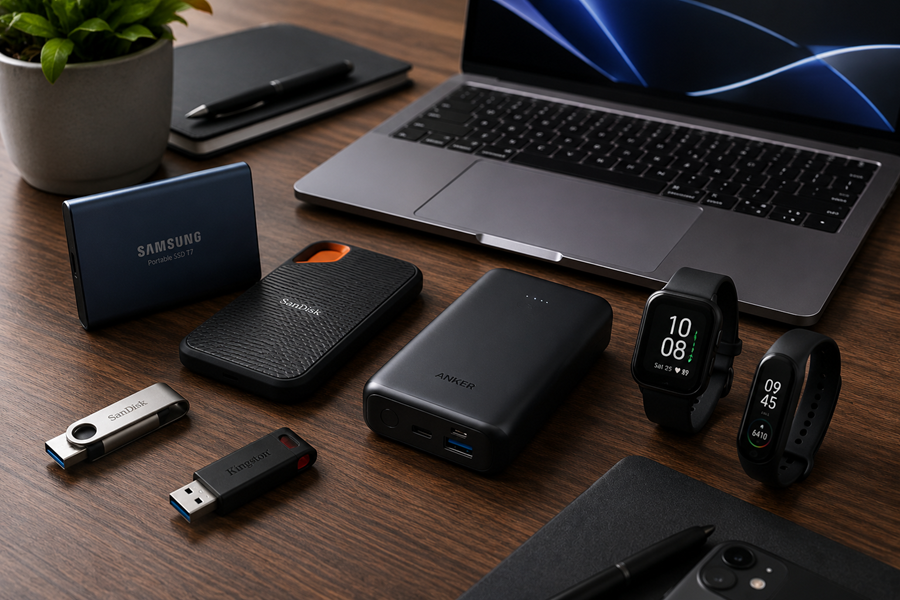
Here are four gadgets worth buying before 2027.
Compact Solid-State Storage (SSDs and USB Flash Drives)
For more than 50 years, storage devices followed a predictable trend: they became smaller, faster, more reliable, and surprisingly cheaper every year.
That trend is beginning to reverse.
Flash memory technology is still improving, but manufacturing costs are rising alongside demand. One of the biggest reasons is AI.
Modern AI data centres require enormous amounts of high-speed NAND flash storage for model training, inference, caching, and enterprise storage systems. This growing demand is putting increasing pressure on global flash memory production.
As a result, SSDs and even USB flash drives have become more expensive throughout 2026 after years of falling prices.
Why buy now?
If you have been planning to buy an external SSD, USB flash drive, or portable storage device for backing up files, now is a good time. Market prices have already increased by roughly 15% in many segments, and analysts expect supply conditions to remain tight through the first half of 2027. Waiting may simply mean paying more for the same storage capacity.
Portable Power Banks
Power banks may not seem like an obvious addition to this list, but they are also quietly becoming more expensive for several reasons.
The first is demand.
Power banks are no longer seen as simple emergency chargers. With larger smartphone batteries, faster charging standards, frequent travel, and unreliable electricity in countries like Nigeria, they have become everyday essentials. Premium, high-capacity models are now effectively portable power stations rather than simple battery packs.
The second reason is battery production.
Power banks are built with lithium-ion or lithium iron phosphate (LFP) battery cells, meaning their manufacturing costs are directly linked to global battery material prices.
After falling for some time, lithium carbonate prices climbed sharply again in early 2026, while key battery chemicals such as lithium hexafluorophosphate (LiPF₆) also became more expensive.
Competition for these materials is increasing as well.
Smartphones are no longer the biggest consumers of battery resources. Electric vehicles, grid-scale energy storage systems, and AI data centres all require enormous battery installations for backup power and energy management.
As these industries continue expanding, battery manufacturers will likely continue facing higher production costs.
Why buy now?
If you already plan to purchase a quality power bank, especially a high-capacity or fast-charging model, buying now could save you money before further battery price increases reach consumers.
Premium Laptops
If you have been considering buying a premium laptop, this may be one of the best times to do so.
Modern flagship laptops are no longer judged only by CPU or GPU performance. AI processing has become a major selling point, with dedicated Neural Processing Units (NPUs) now playing a much bigger role in premium computing.
These advanced chips are expensive to design and manufacture, particularly as the industry transitions to newer process technologies. As AI hardware becomes more powerful, production costs are also increasing.
That means future generations of premium laptops, including Microsoft’s Surface lineup and Apple’s MacBooks, could carry even higher starting prices than today’s models.
There is, however, some good news.
The affordable PC market is becoming more competitive thanks to better ARM processors. Manufacturers are producing efficient sub-$300 laptops that offer excellent battery life and enough performance for everyday computing.
If you do not need flagship performance, there will still be good-value options. But if your goal is a premium AI laptop, buying sooner rather than later could save you money.
Subscription-Free Health Trackers
Health-tracking wearables are also entering a major business transition.
Traditionally, buying a smartwatch or fitness tracker meant paying once and accessing most of your health data for free. That model is already changing.
Many manufacturers now realise that one-time hardware sales generate far less revenue than subscriptions. Instead of charging only for the device, companies are increasingly placing advanced health insights, sleep analysis, readiness scores, coaching, and long-term health trends behind monthly subscriptions.
Why buy now?
Buying a subscription-free health tracker today gives you long-term access to many health features without monthly payments. More importantly, it allows you to retain greater control over your personal health data before subscription-based ecosystems become the industry standard.
Technology is constantly redefining what is considered affordable and what becomes premium. While innovation will continue to deliver better products, it will not always make them cheaper.
If there are gadgets you already plan to buy, especially those affected by memory, battery, AI silicon, or subscription trends, purchasing them now could be one of the smartest ways to stay ahead of rising costs.




