


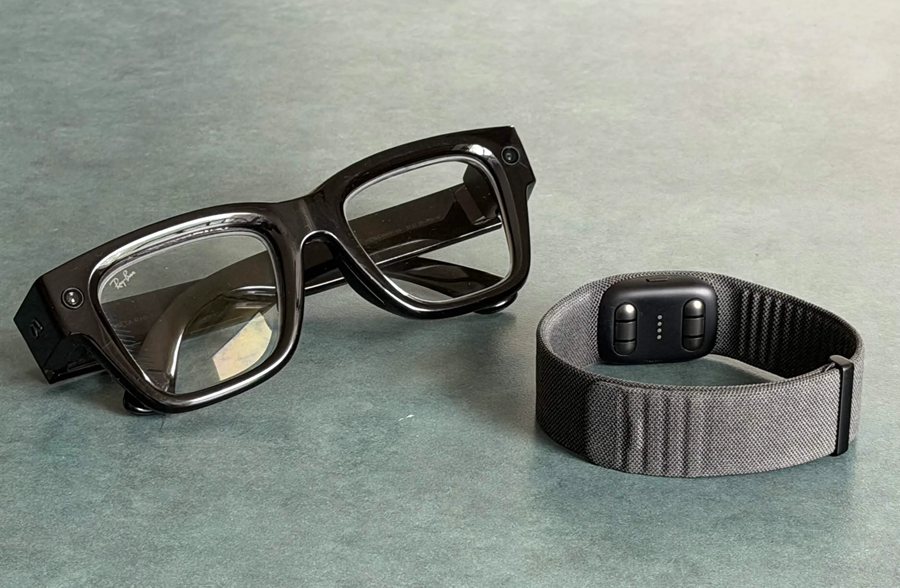
Even Realities recently secured another $150 million in a pre-Series B funding round to expand production of its privacy-focused smart glasses, pushing the Shenzhen-based startup’s valuation above $1 billion.
Backed by investors including Meituan and Tencent, the company is taking a different approach to the smart glasses market.
While rivals continue to add cameras and more advanced AI features, Even Realities is betting that users want privacy-first wearable technology with a built-in heads-up display (HUD).
Founded in 2023 by former Apple engineers alongside designers with experience in luxury eyewear, the startup has reportedly sold more than 10,000 units. Although that is a solid start for a young company, it remains a long way behind Meta, which controls about 70% of the global smart glasses market.
Meta’s Ray-Ban smart glasses have become the benchmark in the category, but Even Realities is targeting two areas where some users remain unconvinced: privacy concerns linked to onboard cameras and the absence of a display on Meta’s mainstream models.
Those concerns gained renewed attention after Meta faced regulatory scrutiny in 2026 over the privacy implications of the cameras and AI features built into its smart glasses.
Even Realities has responded by taking the opposite route. Its latest flagship, the Even G2, launches without a camera, placing privacy ahead of photography. Starting at $599, however, the question is whether buyers will pay a premium for that approach.
Even G2 vs Meta Ray-Ban: Key Differences
Camera
- Meta Ray-Ban Gen 2/Ray-Ban Display: 12MP camera for photos, videos and AI-powered visual recognition.
- Even G2: No camera.
Build
- Meta: Premium bio-plastic frame.
- Even G2: Lightweight aluminium alloy frame designed for extended wear.
Battery and Controls
- Meta: Up to eight hours on a single charge and up to 40 hours with the charging case, using touch controls and a neural wristband.
- Even G2: Similar battery life, with controls through a smart ring or touch-sensitive frame.
AI and Smart Features
- Meta: Powered by Llama AI, allowing users to identify objects, translate text, answer questions and interact with AI using voice commands and the built-in camera.
- Even G2: Offers real-time translation, turn-by-turn navigation, live notifications and information projected directly into the wearer’s field of view through its display.
The Even G2’s biggest selling points are its privacy-first design and integrated heads-up display. By removing the camera completely, the company hopes to address one of the biggest concerns surrounding smart glasses: the possibility of discreet photo or video recording in public.
Instead of acting as a wearable camera, the G2 focuses on displaying useful information directly in front of the user, eliminating the need to repeatedly check a phone.
Meta’s Ray-Ban glasses are built around a different vision. They are designed for taking photos, recording videos, livestreaming and using AI features that rely on the onboard camera. Those capabilities have helped drive adoption but have also attracted criticism from privacy advocates.
Meta’s standard Ray-Ban smart glasses do not include a heads-up display, relying mainly on voice interaction and audio feedback. The company has since introduced the Ray-Ban Display, adding an in-lens screen similar in concept to the Even G2.
Meta’s version, however, offers a full-colour display with refresh rates of up to 90Hz, while the Even G2 uses a green microLED display designed to maximise clarity and battery efficiency.
Comfort is another area where Even Realities is trying to stand out. Its aluminium alloy frame is lighter than Meta’s bio-plastic construction, making it better suited for all-day wear.
Battery performance is largely comparable, with both devices delivering around eight hours of use on a single charge and up to 40 hours when paired with their charging cases.
Price Comparison
At $599, the Even G2 costs more than Meta’s mainstream Ray-Ban smart glasses, which retail between $299 and $499, depending on the model.
However, compared with Meta’s newer Ray-Ban Display, the Even G2 undercuts its rival by roughly $200, making it the more affordable option for buyers looking specifically for smart glasses with an integrated display.
Meta remains the market leader thanks to its wider ecosystem, stronger AI capabilities and lower entry price. Those advantages make its glasses more appealing to mainstream consumers.
Even Realities, however, is not trying to beat Meta on volume. Instead, it is targeting users who value privacy, lightweight design and a built-in display over photography, content creation and camera-powered AI.
Verdict
Meta still leads when it comes to AI performance, ecosystem integration and overall smart features. For users who want the most capable AI-powered wearable, its Ray-Ban lineup remains the stronger choice.
Even Realities is taking a different path. Rather than competing head-on with Meta’s camera-first strategy, it is carving out a niche among professionals and privacy-conscious users who prefer a camera-free device that delivers information through an always-on heads-up display. Whether that niche is large enough to challenge Meta’s dominance remains to be seen, but the company has shown there is room for a different vision of smart glasses.



